In this story
- Inside an Espresso Machine
- Heating Systems and Boiler Designs
- Pump Types and Brewing Pressure
- Group Heads, Portafilters and Baskets
- Valve Types and Functions
- Set Temperature and the Water Reaching the Coffee Bed
- Recording Beverage Yield and Flow
- Producing Steam and Heating Plant-Based Beverages
- Water Quality, Coffee Flavor and Machine Life
- Cleaning and Preventive Maintenance
- Components Users Should Not Open Themselves
- The History of Espresso Machines
- Factors to Consider When Choosing a Machine
- What to Record Before Concluding There Is a Fault
- Frequently Asked Questions
- Espresso at Mahina
An espresso machine delivers hot water to a coffee bed at a controlled pressure and flow rate. The pump moves the water, a boiler or heating block heats it, and the group head distributes it over the basket. After extraction, a valve closes the water supply and manages the remaining pressure. Understanding how these components control water and heat helps connect machine specifications with brewing results.
The machine alone does not determine flavor. Beans, roast, grind size and particle distribution, dose, basket, even tamping, water composition, beverage yield, temperature and flow all contribute. A “15 bar” or “20 bar” label usually describes the pump's maximum pressure, not the pressure at which coffee should continuously be extracted.
The competition machine settings for the 2026 World Barista Championship range from 8.5–9.5 bar and 90.5–96°C. Alongside such reference values, consider how consistently temperature and flow are maintained during extraction and whether they can be adjusted to suit the coffee.
Inside an Espresso Machine
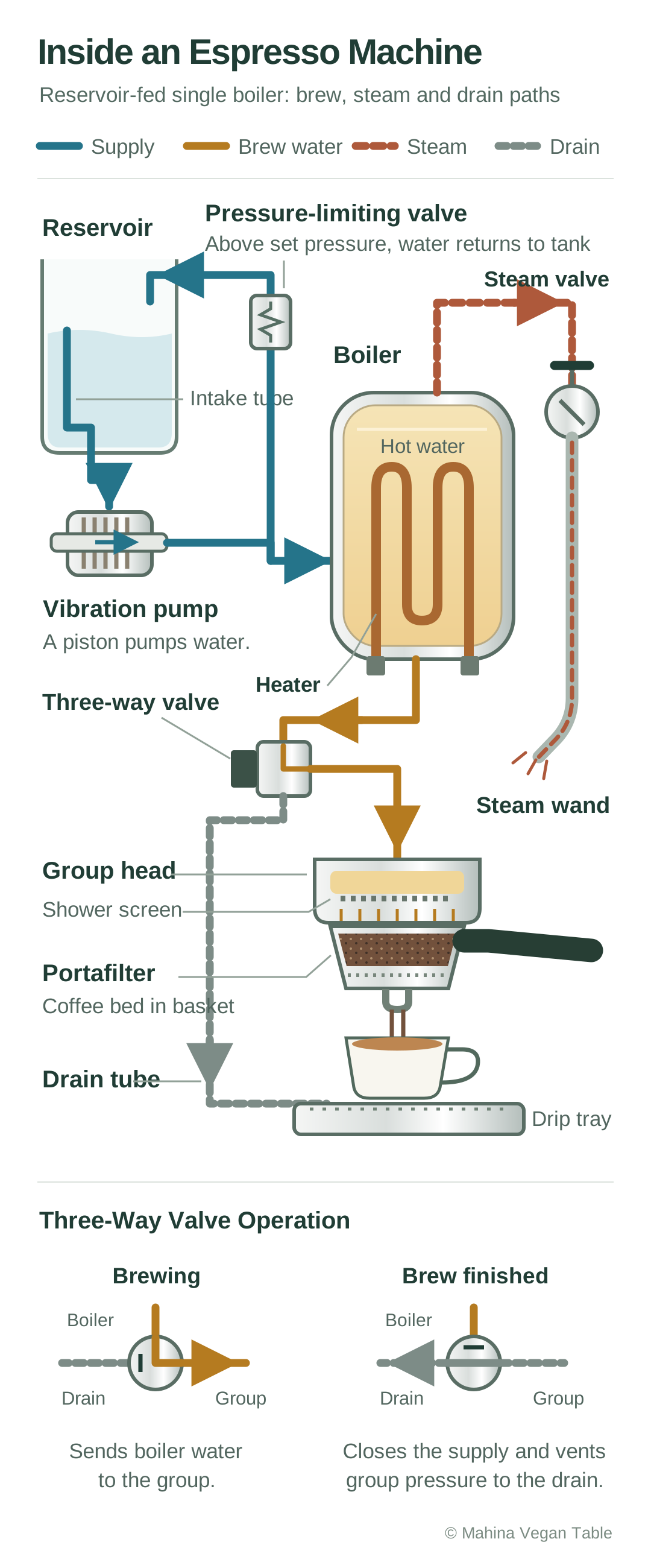
In a reservoir-fed single-boiler machine, the pump sends water from the tank to the boiler. A heater inside the boiler heats the water. Opening the brew valve allows hot water to pass through the group head and shower screen onto the coffee bed. Coffee flows through the small holes in the basket floor, through the portafilter spout and into the cup.
Brew water and steam leave the boiler through separate lines. Brew water travels to the group; steam passes from the top of the boiler through a manual valve to the steam wand. A single-boiler machine changes the temperature of the same boiler between brewing and steaming modes.
Pressure-control plumbing also serves two different functions. The pressure-limiting valve returns some water to the reservoir when pressure exceeds its setting. A three-way solenoid valve connects the boiler to the group during brewing; when brewing stops, it closes the supply while connecting the group to the drain. Residual pressure and water in the group are then released into the drip tray.
Reservoir-Fed and Plumbed-In Machines
- Reservoir-fed machines are simple to install, but require frequent water-level checks and care to prevent tank contamination and stagnant water.
- Plumbed-in machines suit busy cafés, but their installation must account for supply pressure, shutoff valves, backflow prevention, drainage and filter capacity.
- Water-level sensors and automatic fill valves help prevent the boiler from heating without water. Sensor types and operating conditions vary by machine.
Heating Systems and Boiler Designs
Thermoblocks and On-Demand Heating
A thermoblock heats a metal block containing narrow water channels, then passes water through them. It permits a compact machine and short warm-up time, but changes in flow rate can affect the outlet water temperature.
Temperature stability depends on the heating unit's thermal mass, heater power, sensor placement, temperature-control method and plumbing design.
Single Boiler
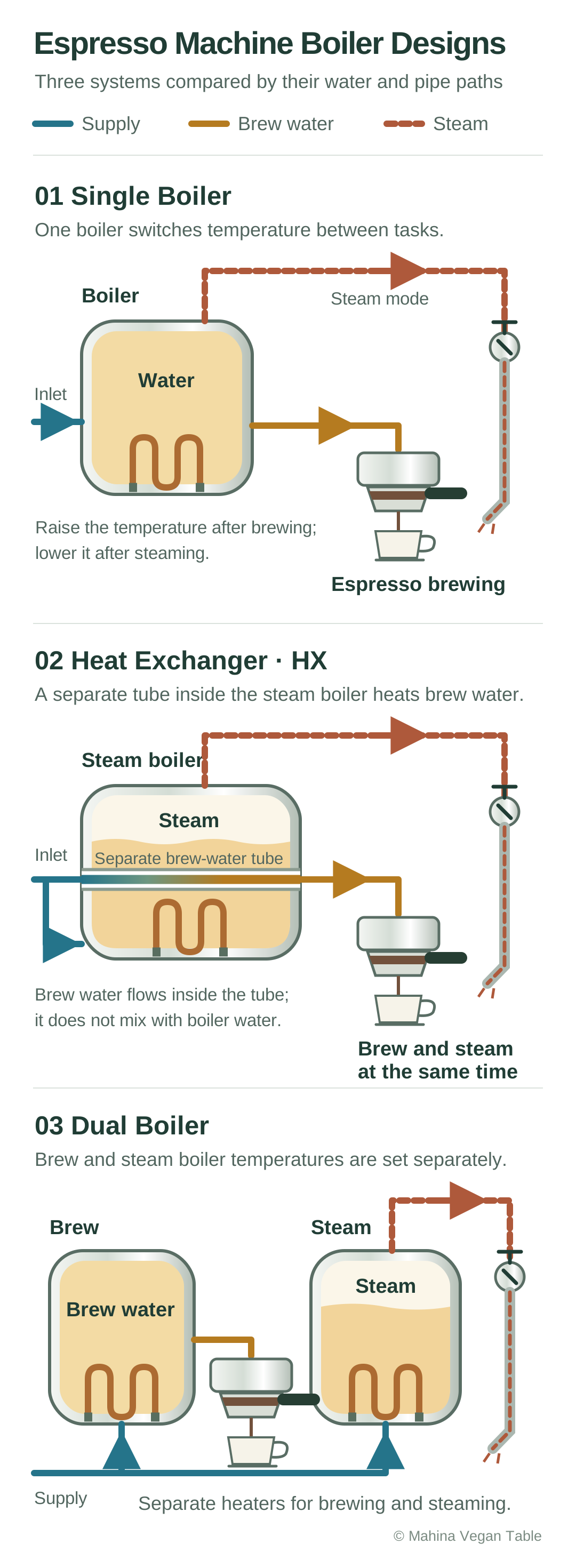
One boiler alternates between producing brew water and steam. Because brewing and steaming require different temperatures, the boiler must heat up after brewing and cool down after steaming. This alternating use can create a wait when making several plant-based lattes in succession.
Heat Exchanger
A heat-exchanger system runs brew water through a separate tube inside a larger boiler held at steam temperature. It allows simultaneous brewing and steaming, but the water temperature inside the tube changes with idle time, consecutive brewing volume and incoming water temperature.
Running off overheated water after the machine has been idle is called a cooling flush. The required volume depends on the heat-exchanger tube and group design, idle time and temperature-control system.
Dual and Multiple Boilers
Separate brew and steam boilers allow the two temperatures to be controlled independently. Each boiler has its own heater, enabling simultaneous brewing and steaming. Introduced in 1970, the La Marzocco GS was an important early example combining independent brew and steam boilers with saturated groups.
Multi-boiler machines can set different temperatures for individual groups or handle more work during busy periods. They also add components, power consumption, installation expense and repair costs. Capacity suited to a café's order volume and menu matters more than the number of boilers alone.
Pump Types and Brewing Pressure
Vibration Pump
A vibration pump uses an electromagnet to move a small piston rapidly and deliver water. Compact and inexpensive, it is common in reservoir-fed home machines. It produces operating noise and pulsating flow, and may have limits on continuous running time. Actual group pressure depends on the pressure-regulating valve and water supply conditions.
Rotary Vane Pump
Rotating vanes move the water. Widely used in plumbed-in commercial machines, these pumps are relatively quiet and well suited to continuous delivery. An accessible adjustment screw is not an invitation to adjust it yourself. Misinterpreting supply pressure or pressure measured against a closed flow path can lead to incorrect settings or safety problems.
Gear Pumps and Variable Flow
Gear pumps can finely vary motor speed to control flow or pressure over the course of extraction. This is called flow or pressure profiling. Keeping the coffee, grind and dose constant while changing the settings allows you to compare how a pressure change affects flavor.
Levers and Pistons
In a lever machine, the operator either drives a piston directly or compresses a spring. In spring-lever designs, pressure naturally changes as the piston descends. Their pressure curves differ from those of electric pump machines, so constant operation at 9 bar alone is not a sufficient basis for comparison.
Pressure Gauge Readings
A pump moves water. Pressure develops when a tamped bed of finely ground coffee resists that flow. With an empty basket, the same flow volume does not create high brewing pressure.
Static pressure measured with a blind basket, pressure at the group inlet and the continually changing pressure within the coffee bed are different values. A larger pressure difference encourages more flow; greater bed resistance reduces flow at the same pressure.
Grinding finer generally increases bed resistance. However, channeling creates gaps that concentrate water into particular paths, causing uneven extraction. This is why grind quality and coffee distribution can change the flavor even when the pressure gauge shows the same reading.
Group Heads, Portafilters and Baskets
Group Head
The group head comprises several components that deliver heated water above the portafilter and distribute it broadly.
- Boiler-integrated and saturated groups closely connect the group with water in the brew boiler to reduce temperature differences.
- E61-style groups are known for circulating hot water between boiler and group and controlling brewing with mechanical valves. The original 1961 model featured a positive-displacement pump, pressure gauge and thermal-balancing design. Modern machines bearing the E61 name do not all have identical temperature or preinfusion characteristics.
- Electrically heated groups regulate temperature independently using heaters and sensors inside the group.
Portafilter
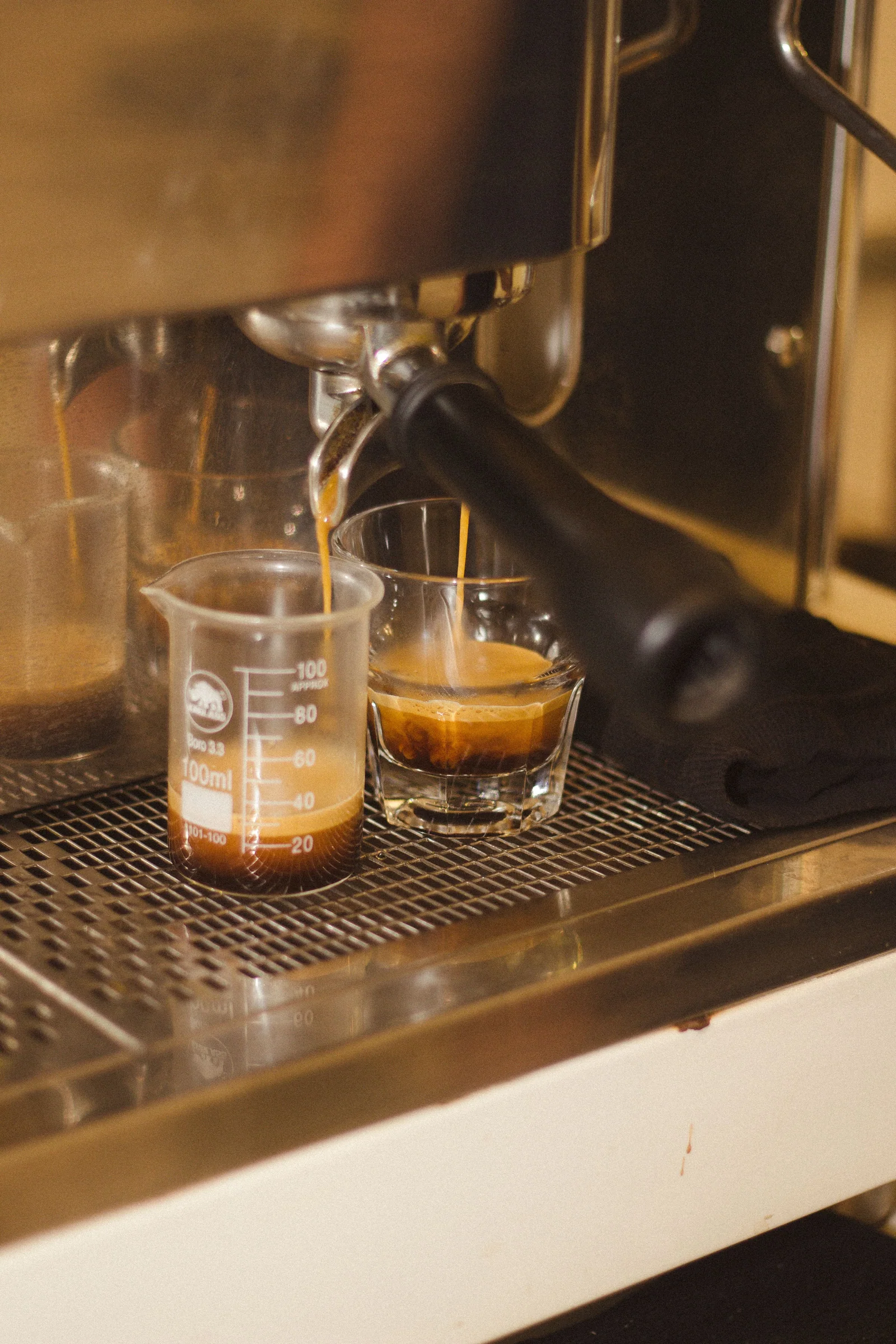
The portafilter secures the basket to the group and directs brewed coffee into the cup. Spouted versions readily split coffee into two streams and can reduce splashing. Bottomless versions leave the basket underside exposed, making it easier to see spraying or flow concentrated on one side.
Observing uneven or sideways-spraying flow with a bottomless portafilter, then adjusting the grind and coffee distribution, can help identify the cause.
Basket
Basket diameter, depth, hole count and hole shape determine the area available for water to pass through. The actual dose influences bed resistance. “58 mm” is closer to a portafilter family designation than a guarantee of universal fit: not every basket and tamper labeled 58 mm fits exactly. Check the actual internal diameter and rim shape.
The empty space above the coffee bed is called headspace. Too little can press the bed excessively against the shower screen; too much can allow water to disturb the bed. Within the manufacturer's recommended basket dose range, consider both the dry coffee weight and the marks left on the bed after brewing.
Shower Screen and Diffuser
The shower screen and diffuser spread water from the group across the basket. If flow is uneven, examine the pump, valves, scale and grind as well as the shower screen.
Valve Types and Functions
- Fill solenoid valves respond to electrical signals by opening the water path into the boiler or brew circuit.
- Check valves prevent water from flowing backward.
- OPVs or bypass valves return or release water when pressure exceeds the set point.
- Expansion valves relieve pressure caused by water expanding as it heats.
- Safety valves are the final safeguard against abnormally high steam-boiler pressure. Never block a leak from one yourself.
- Vacuum-breaker valves reduce abnormal vacuum formation and misleading pressure readings as the boiler heats or cools.
- Three-way solenoid valves send water to the group during brewing and release residual pressure to the drain afterward.
Set Temperature and the Water Reaching the Coffee Bed
Thermostats and Pressure Switches
A mechanical thermostat switches the heater on and off around a set temperature. In a steam boiler, a pressure switch may regulate the heater according to boiler pressure. Pressure and temperature are linked under saturated-steam conditions, but actual conditions can vary with boiler level, sensor error, atmospheric pressure and usage.
PID Control
PID control adjusts heater output by calculating the difference between target and measured temperatures. It accounts for the current error, accumulated error and the rate of temperature change.
Actual PID performance depends on sensor placement, boiler and group thermal mass, control settings, display offsets and warm-up condition.
What 93°C on the Display Means
A displayed 93°C usually comes from a sensor on the boiler or heating block. The temperature of water reaching the coffee bed depends on sensor placement, display compensation, heat gained or lost on the way to the group and cold incoming water during brewing.
Recording Beverage Yield and Flow
Brew Ratio and Average Flow Rate
- Brew ratio: A dose of 18g of dry coffee producing 36g of espresso gives a ratio of 1:2.
- Average flow rate: Collecting 36g of espresso in 27 seconds gives approximately 1.3g per second.
The coffee in the cup contains both water and dissolved compounds. Because crema volume falls substantially over time, weight in g is more useful than volume in mL for checking repeatability.
Brewing time alone cannot establish underextraction or overextraction. Two 28-second shots can taste different because of particle distribution, channeling, dose, temperature or actual extraction yield. Use brewing time to assess consistency when repeating the same recipe.
Preinfusion
Preinfusion wets the bed with low pressure or low flow before full pressure is applied. It can help release air between dry particles and distribute water. Systems range from mechanical designs using supply pressure to independently controlled pumps, so no single time applies to every machine.
Three Ways to Stop a Shot
- Volumetric control stops the shot by counting signals from water passing through a flow meter. Because some water remains in the coffee or goes to the drain, this may not correspond exactly to cup weight.
- Timed control stops the shot after a preset duration.
- Gravimetric control weighs the coffee in the cup and stops at the programmed beverage yield.
Producing Steam and Heating Plant-Based Beverages
The steam boiler heats water to produce pressurized steam, which travels to the wand when the valve opens. Nozzle hole count and diameter, boiler pressure and available steam capacity affect how quickly a plant-based beverage heats and how it circulates.
Steam wands can cause severe burns. A typical routine is to purge condensed water briefly before use, wipe immediately afterward with a dedicated damp cloth, then purge briefly to clear residue from the nozzle. Follow the machine's instructions for the exact sequence and cleaning method. Do not insert metal tools into coated wands or automatic steaming systems, or dismantle them yourself.
Water Quality, Coffee Flavor and Machine Life
Assess hardness, alkalinity, chloride and other water properties alongside TDS. TDS describes the total dissolved material, so waters with the same reading can contain different proportions of calcium, magnesium, sodium and other substances.
- Excessive hardness and alkalinity can cause scale to accumulate in heating components and narrow water passages.
- High chloride levels or excessively corrosive water can damage some metals.
- Using distilled or nearly demineralized water without adjustment can cause problems with flavor, water-level detection and components. Some reservoir-fed machines rely on minerals in the water for level sensing.
Manufacturers' water specifications differ according to machine metals and components, warranty terms and sales region. Choose filtration by comparing the model's requirements with your incoming-water test results.
Use the following sequence for safe water management.
- Test incoming water for hardness, alkalinity, pH, chloride and TDS.
- Check the water-quality limits and warranty exclusions in the machine manual.
- Set filter capacity and replacement intervals according to daily water use and seasonal changes in incoming water.
- Test water before and after filtration using the same method, and keep records.
- Do not add acidic cleaner to a boiler simply because scale is visible. Internal boiler descaling must follow the manufacturer's or a qualified technician's procedure.
Cleaning and Preventive Maintenance
After Each Brew
- Discard the used grounds and rinse the basket.
- Remove grounds from the group with a brief flush or brushing as permitted by the manual.
- Wipe the steam wand immediately after use and purge briefly to remove internal residue.
- Empty the drip tray before it overflows.
At Closing or Scheduled Intervals
- Remove coffee oils from baskets and portafilters with a dedicated cleaner. Soaking can damage wooden, rubber, plated or electronic parts.
- Use a blind basket for backflushing only on groups designed for it.
- Follow the machine manual and cleaner label for detergent quantity, running time and rinse cycles.
Backflushing relies on a system that directs water from the group to the drain. Using a blind basket to backflush a machine without this drainage design can damage it.
Signs That Servicing May Be Needed
- Water flow keeps declining despite an unchanged recipe.
- Temperature or beverage-yield differences between groups increase.
- The pump's sound changes or the boiler takes longer to refill.
- Water or steam continually leaks around the safety valve or vacuum breaker.
- The circuit breaker or residual-current protective device trips repeatedly.
- Boiler water level rises or falls abnormally, or the steam wand releases excessive water.
Do not guess the cause, attempt an improvised repair and continue service. Record the model, symptoms, time of occurrence, water-quality records and error codes, and arrange inspection by a qualified technician.
Components Users Should Not Open Themselves
An espresso machine contains hot water, pressurized steam and high-current electrical circuits in the same enclosure.
- Simply switching off the power button may not be sufficient before opening the casing. The machine must be unplugged or isolated at the breaker, with sufficient time allowed for pressure and temperature to fall and internal electrical components to discharge.
- Do not loosen valves, sensor probes or pipe fittings while the boiler is hot or still pressurized.
- Do not block a leaking safety valve or replace its spring with a stronger one.
- Do not reenergize a leaking machine to investigate the cause.
- Old gas-heated machines and lever machines with powerful springs present additional, distinct hazards.
The servicing technician must follow model-specific service documents and workplace safety rules, fully release pressure and use lockout/tagout procedures to prevent someone else from restoring power.
The History of Espresso Machines
It is difficult to credit a single inventor with the espresso machine. Devices for rapidly preparing large quantities of coffee, separate groups for brewing individual cups, high-pressure levers and electric-pump systems appeared at different times.
| Period | Technology and Product Developments | Significance |
|---|---|---|
| 1884 | Angelo Moriondo patented a steam-powered device for preparing large quantities of coffee quickly. | An early technology using steam power to prepare coffee rapidly. |
| 1902–1903 | Luigi Bezzera filed and obtained a U.S. patent for a device with separate coffee containers for individual servings and passages for water, steam and pressure release. | It provided a structure for brewing individual cups and releasing pressure. |
| 1906 | A Pavoni machine using Bezzera's brew-group design was first exhibited at the Milan International Exhibition. | It helped spread espresso machines capable of quickly preparing individual cups to order. |
| 1947–1948 | Achille Gaggia's spring-and-piston technology achieved approximately 9–10 atmospheres of pressure and crema resembling today's espresso, leading to a commercial machine in 1948. | Extraction developed from steam-pressure systems to high-pressure piston brewing. |
| 1961 | The Faema E61 was introduced with an electric positive-displacement pump and a thermal-balancing system. | The pump generated brewing pressure, while circulating water heated the group. |
| 1970 | The La Marzocco GS combined separate brew and steam boilers with saturated groups. | An important early commercial example of independent boilers combined with saturated groups. |
| Late 20th Century Onward | Electronic portion control, PID, integrated scales, flow and pressure control, and remote status monitoring were added. | Beverage yield, temperature and flow could be controlled and recorded in greater detail. |
Factors to Consider When Choosing a Machine
Home Machines
- How many cups you will make consecutively each day
- Whether you drink more espresso or plant-based lattes
- How long you are willing to wait for warm-up
- How easy the reservoir is to fill and clean
- Whether suitable filtration or mineral adjustment is available for local water
- How easily you can obtain gaskets, shower screens and baskets
- Whether local repair service is available and how long parts will be supplied
- Whether rated power, outlet and breaker requirements suit your home
Café Machines
- The number of orders in the busiest 15 minutes, including plant-based lattes
- Recovery speed when brewing, steaming and hot-water dispensing are used simultaneously
- Consistency of temperature and beverage yield at each group
- Suitable supply pressure, drain slope and filter capacity
- Closing-time cleaning duration and the extent of automatic cleaning
- Whether remaining groups can operate during a fault, and how quickly a technician can attend
- Whether cup clearance, portafilter weight and steam-lever placement suit the operator comfortably
- Power consumption in standby and energy-saving modes
Temperature and flow consistency during busy periods matter more than any single specification such as a large boiler, a 20 bar pump or PID control. Also consider ease of water management and cleaning, and access to repairs if the machine fails.
What to Record Before Concluding There Is a Fault
| Symptom | What to Record First | Possible Causes | What to Avoid |
|---|---|---|---|
| Coffee Flows Too Quickly | Dose, grind, beverage yield, time, basket and coffee date | Grind, dose, channeling or basket | Immediately assuming pump failure |
| Water Volume Suddenly Falls | Flow by group, reservoir and supply conditions, filter replacement date and sound | Blockage, filter, pump, valve or scale | Adding acidic cleaner indiscriminately |
| Temperature Differences Increase | Warm-up time, sequence of consecutive shots, displayed values and results by group | Sensor, control, thermal demand or operating procedure | Changing PID settings arbitrarily as the first response |
| Water Leaks Around the Portafilter | Gasket, locking position, basket rim and coffee dose | Gasket, contamination, overfilling or wear | Forcing the portafilter tighter |
| Weak Steam | Boiler pressure, recovery time, nozzle blockage and simultaneous use | Nozzle, water level, heater or pressure control | Adjusting the safety valve |
| The Breaker Trips | Conditions at occurrence, leaks, other appliances in simultaneous use and error codes | Earth leakage, heater, wiring or power supply | Repeatedly resetting the breaker and continuing operation |
Frequently Asked Questions
Is a 15 bar pump better than a 9 bar machine?
That figure alone cannot establish which is better. Maximum pump pressure, pressure-regulating valve settings, pressure measured against a blocked group and pressure through the coffee bed are different. Reliable pressure and flow for the actual recipe are more important.
Must espresso be brewed at 9 bar?
Around 9 bar is a widely used reference for modern espresso, but not the only approach. Lever machines and flow-controlled machines vary pressure during extraction. Comparisons need to account for where and how pressure was measured.
Is a dual boiler always better?
It can be advantageous when brewing and steaming simultaneously or controlling the two temperatures independently. However, it adds cost, power consumption, warm-up requirements and serviceable parts. For low usage, a single boiler or well-designed heat-exchanger machine may be more suitable.
Does PID guarantee accurate temperature?
PID is one temperature-control method. If sensor placement, settings, group thermal management, warm-up or display compensation are unsuitable, the displayed temperature can differ from the coffee-bed temperature.
Is bottled water safe for the machine?
A brand name alone cannot establish this. Composition can vary with the water source or production date, even for the same product. Compare hardness, alkalinity, chloride and pH from the label or test results with the machine manufacturer's requirements.
Can I descale the machine myself with vinegar or citric acid?
It is not recommended unless the manual explicitly permits it. The boiler, valves, plating or gaskets can be damaged, and loosened scale may block narrow passages.
Should every machine be backflushed daily?
No. First establish whether the machine has a three-way valve and is designed for backflushing. Even on compatible machines, water-only and detergent backflush intervals vary with use and manufacturer guidance.
Does a bottomless portafilter improve flavor?
It does not improve flavor by itself. It reveals the flow beneath the basket, making distribution and channeling problems easier to identify.
Is warm-up complete when the display reaches the target temperature?
Not always. The boiler sensor may reach the target while the group, portafilter and cups remain cold. Consider the manufacturer's recommended warm-up time alongside the results of repeated shots.
Espresso at Mahina
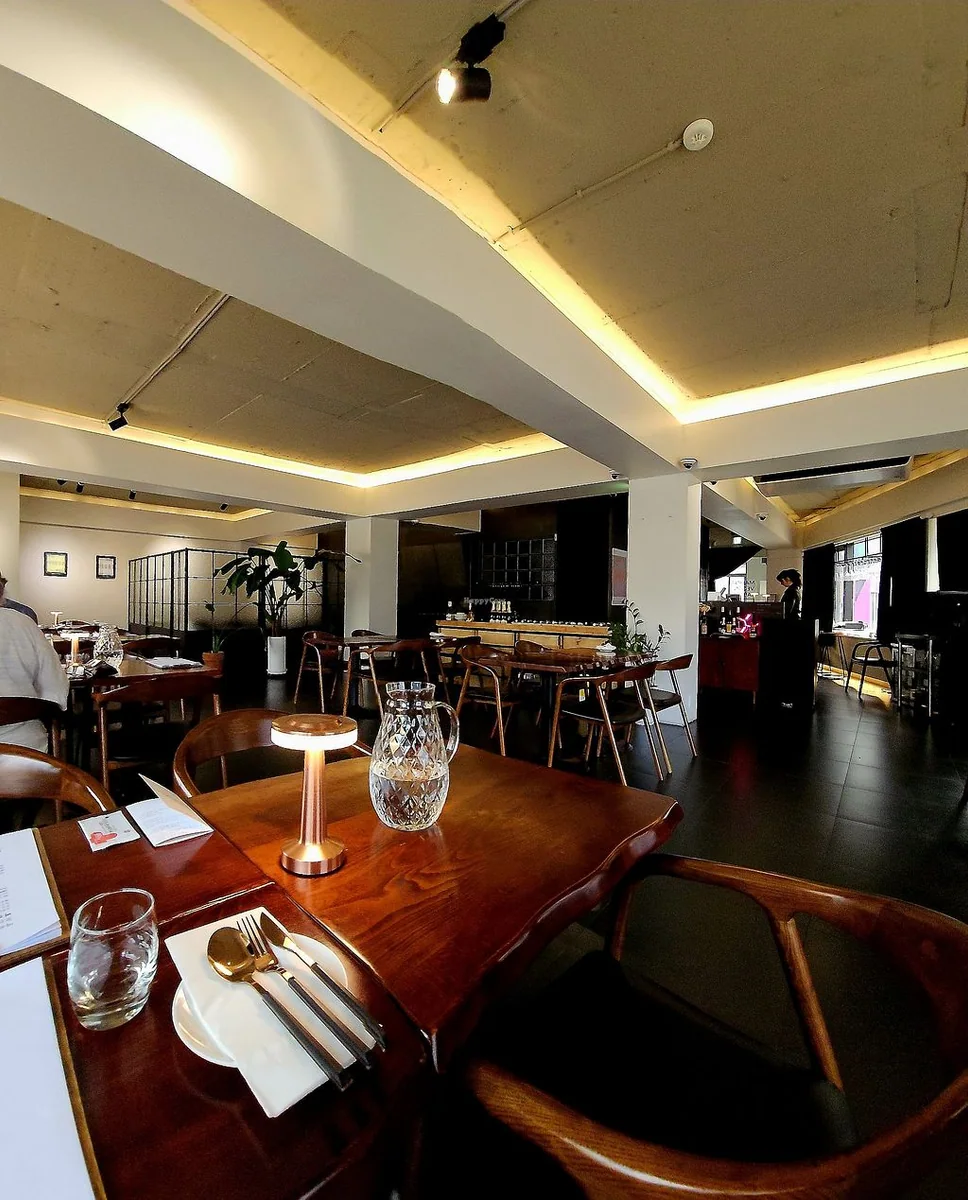
At Mahina, you can enjoy espresso on its own or as a vegan affogato, poured over plant-based ice cream.