In this story
- The starting point is an everyday object that once wrapped a meal
- Wrappers from 20 countries came together through the participation of many people
- City names preserve the places where the wrappers were collected
- The artist's intervention changes the surface and its relationship with light
- An everyday object of consumption meets a material associated with high exchange value
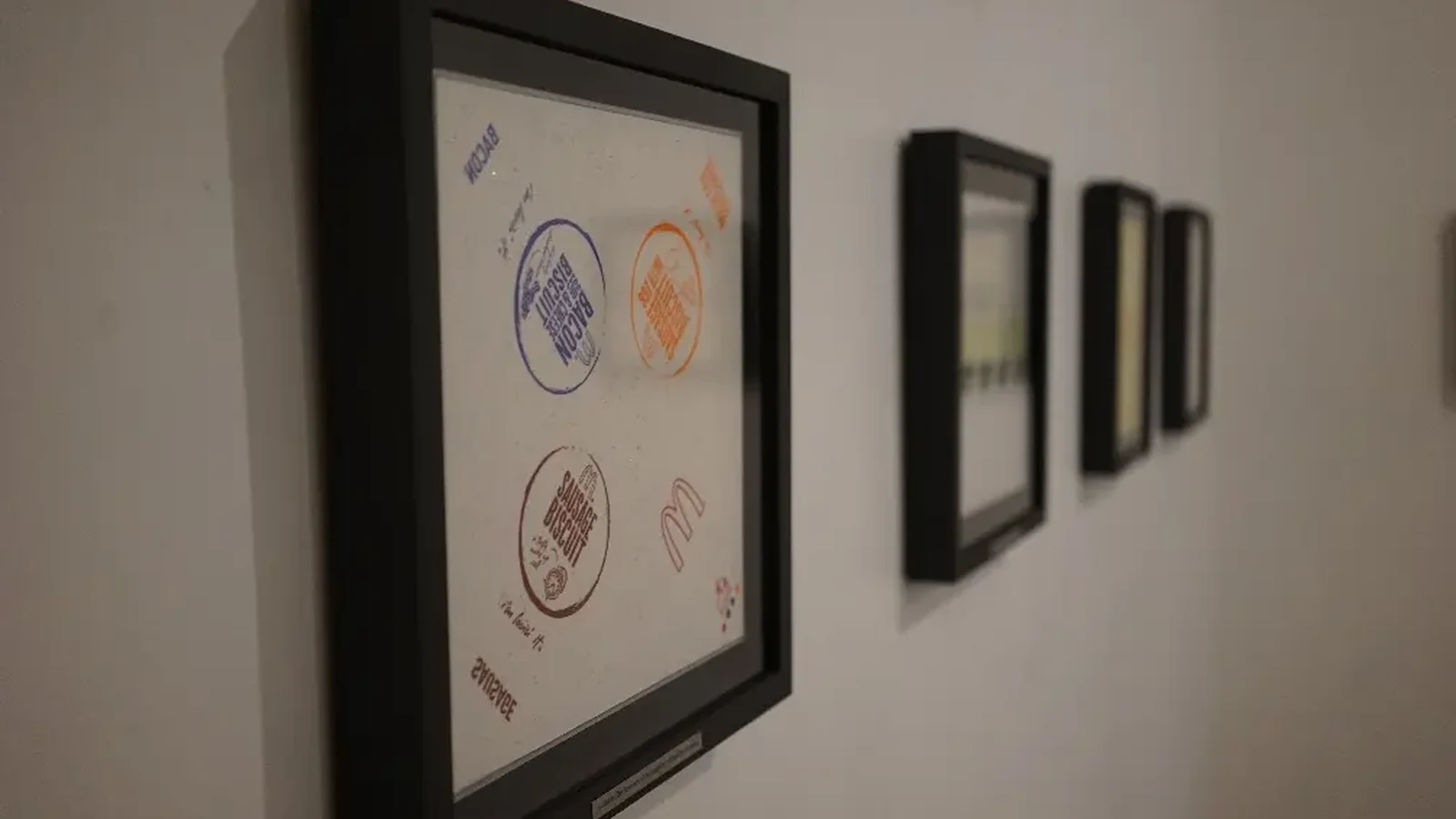
- One wall at Mahina Vegan Table brings the result of this collection into view
- About the wrappers and the making of the works
The short answer
With the help of many people, hamburger wrappers were collected from 20 countries. The cities and countries where they were gathered became part of the titles, and reflective material was applied to their surfaces before the works were exhibited in 2013 as the series ‘A Clue to the Recovery of Authenticity: McDonald's’. The wrappers are not a background; they are the physical medium of the works.
Three stages in the wrapper's transformation into art
- Wrappers from 20 countries were gathered with the help of many people.
- The names of the cities and countries where the wrappers were collected remain in the titles of the individual works.
- By adding reflective material to the wrappers, the artist placed an everyday object of consumption beside a material associated with high exchange value within a single image.
Into the story
The starting point is an everyday object that once wrapped a meal
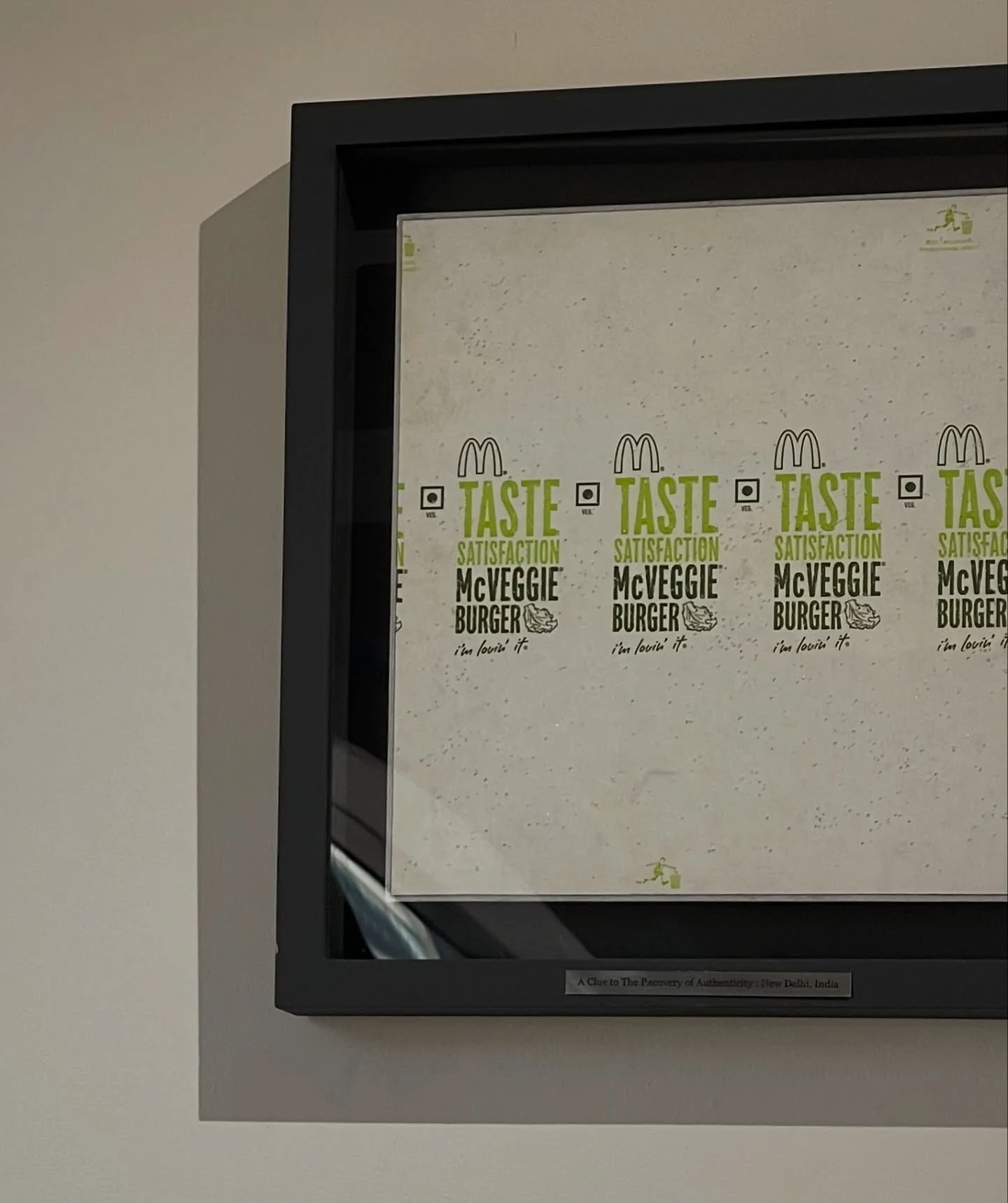
A hamburger wrapper keeps food clean and makes it easy to hold. Through the works, wrappers normally discarded after a meal remain as records of the cities and countries where they were collected.
In Kim Hongrok's series, that brief period of use becomes the starting point. The logos, lettering and colours remain, showing the brand and the period of consumer experience from which each wrapper came.
Wrappers from 20 countries came together through the participation of many people
Kim Hongrok explains that he collected wrappers from 20 countries with the help of people around the world.
The collection behind this series was not the record of one artist's travels; it was made possible by many participants. Through their contributions, wrappers from 20 countries became the material for a single series. The list of works is therefore a record of many collectors' participation rather than one person's journey.
City names preserve the places where the wrappers were collected
The titles name 30 cities, including Anchorage, Athens, Buenos Aires, Dubai, Seoul, Tokyo and Warsaw. Each work is distinguished by its city and country.
Each title records the city and country where its wrapper was collected. Once the origin of a material bearing the same logo becomes known, the image is at once a brand image and a record of many cities.
The artist's intervention changes the surface and its relationship with light
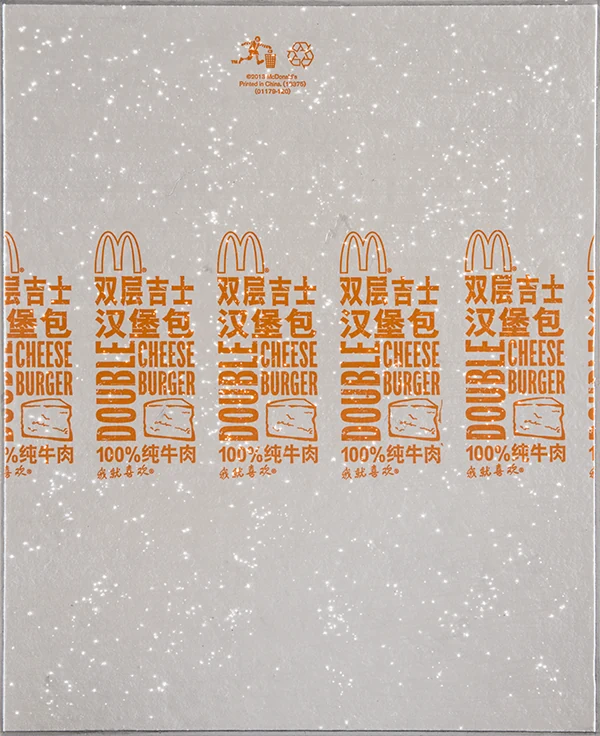
The wrapper does not remain merely a souvenir preserved inside a frame. The addition of small reflective material changes how it responds to the lighting, and the points that brighten also shift as the viewer moves.
The original printed colours and lettering do not disappear. A new layer of light forms over the familiar wrapper graphics, creating a surface on which both materials remain visible.
An everyday object of consumption meets a material associated with high exchange value
Kim Hongrok connects the works made by adding diamond dust to wrappers from 20 countries with his account of capitalism. This is the artist's stated point of departure for interpreting the series.
The artist's question begins in the contrast between wrappers consumed and discarded quickly and works of art preserved over time, between a printed surface and sparkling points of light.
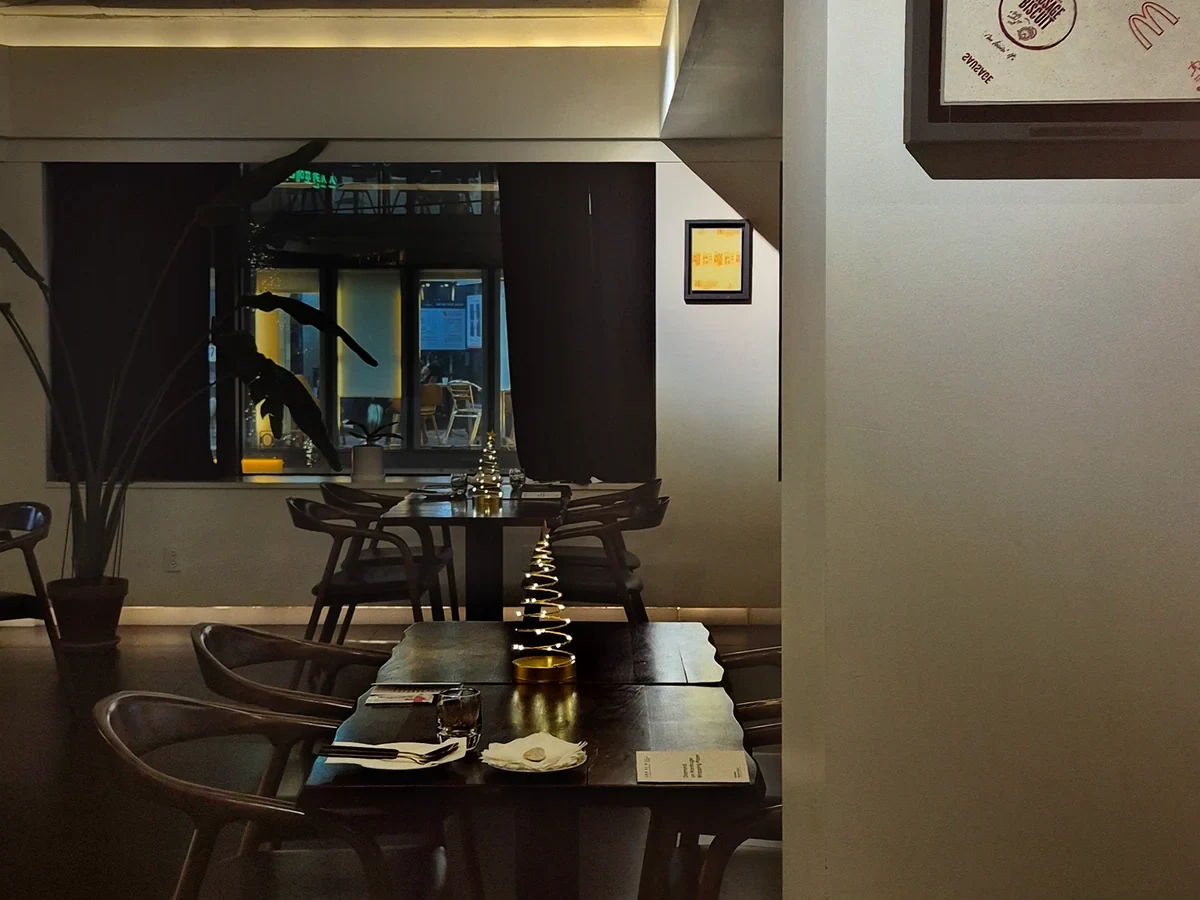
One wall at Mahina Vegan Table brings the result of this collection into view
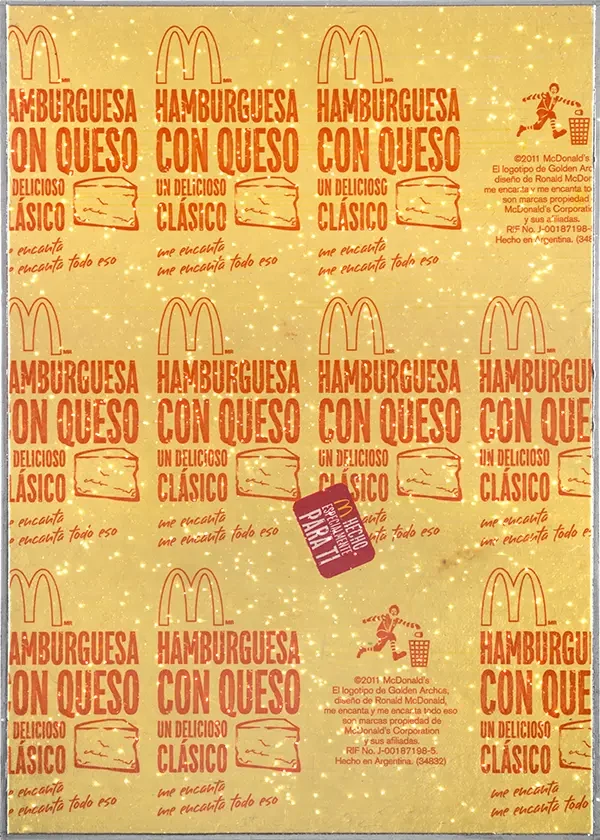
Works in the same format repeat across one wall, while the colours, lettering and graphics of the wrappers differ from city to city.
10 works from this 2013 series are on permanent display at Mahina Vegan Table. During a meal, you can look at their graphics and sparkle, then visit Kim Hongrok’s works list on kimhongrok.com to see all 30 works and the city and country recorded for each one.
About the wrappers and the making of the works
- Did the artist visit every city and collect all the wrappers himself?
- No. The wrappers were gathered from 20 countries with the help of people around the world.
- Are the wrappers simply a background?
- No. The hamburger wrappers are both the ground and the medium of the works. Their colours, lettering and logos, as well as the differences between cities, are important parts of the series.
- Who made these works?
- Kim Hongrok made the works in 2013, using hamburger wrappers as their material.
- Where can I see all the city works?
- The page for Kim Hongrok's second solo exhibition in 2013 presents all 30 city-titled works.
Kim Hongrok's official exhibition page presents the works that emerged from the collected wrappers, organised by city.
Kim Hongrok's McDonald's series