In this story
- Consider the Stated Medium Alongside the Surface Before You
- The sparkle resembles many points more than one continuous sheen
- A change in the angle between the light and your gaze changes the bright points
- Distance changes how the sparkle and the wrapper's graphics appear
- The light does not erase the wrapper's colour and lettering
- A changing line of sight during a meal gently alters the work
- About the work's materials and light
The short answer
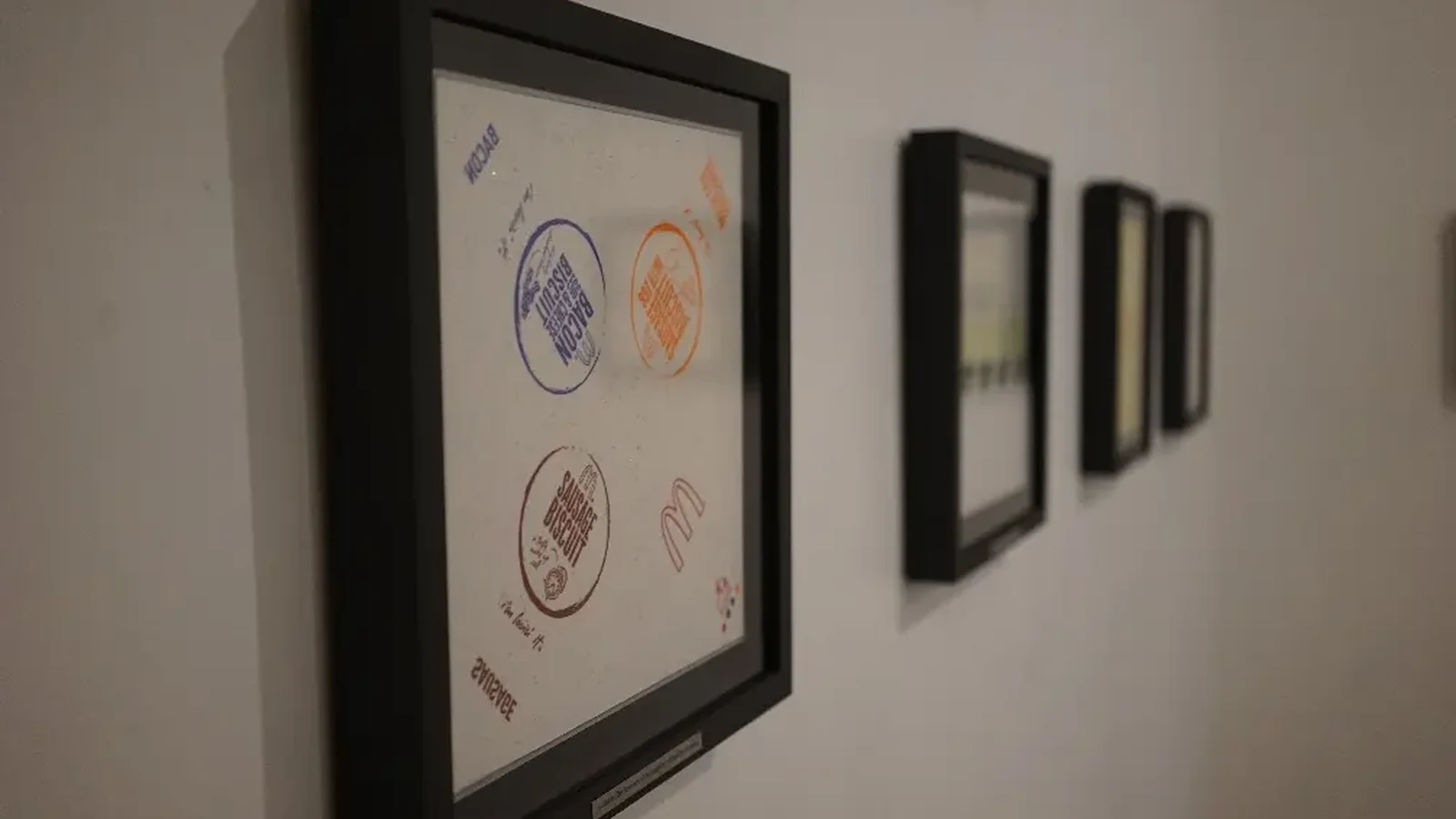
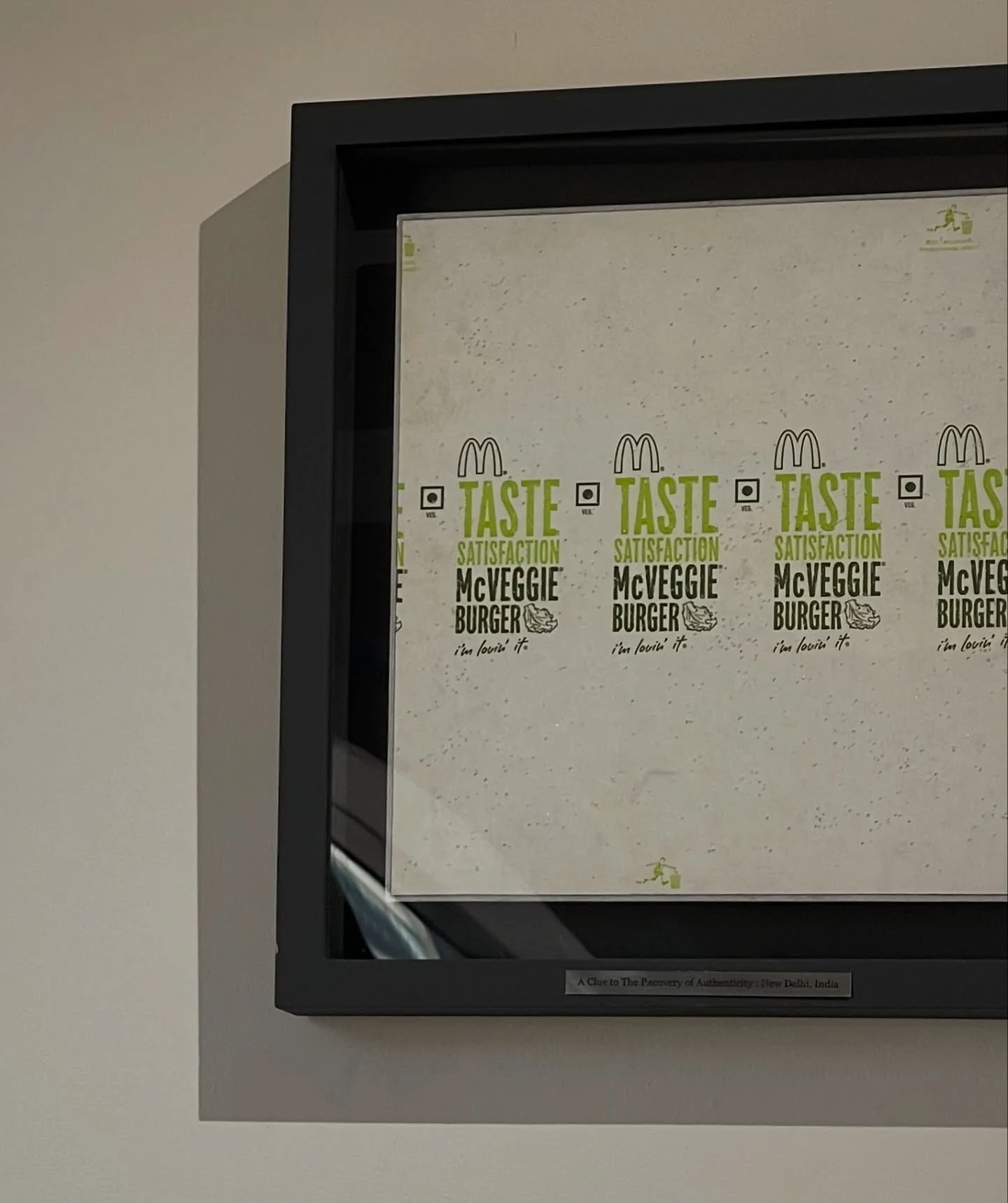
The medium is listed as ‘Diamond dust on Hamburger Wrapping paper’. Kim Hongrok explains that the material is not powder but natural diamonds: extremely small, yet retaining individual facets and angles that reflect light in several directions, and smaller than the stones normally set in jewellery sold to the public.
Three things to remember when looking at the sparkle
- ‘Diamond dust’ is the medium named for the work.
- As the lighting and the viewer's position change, so do the points that appear brightest.
- Up close, the reflective points come to the fore; from a little farther away, the wrapper's graphics and the overall arrangement become more prominent.
Into the story
Consider the Stated Medium Alongside the Surface Before You
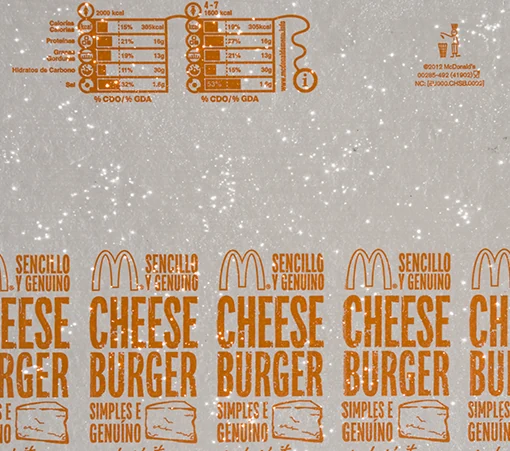
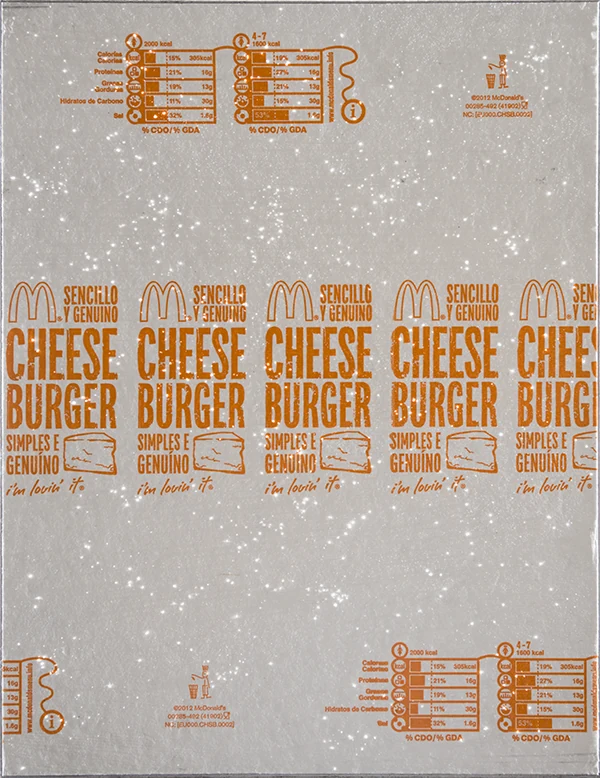
The medium is listed as ‘Diamond dust on Hamburger Wrapping paper’. Seen in person, the first thing to catch the eye is the point-like sparkle across the wrapper.
At close range, small points of reflection appear over the wrapper's colours and lettering.
The sparkle resembles many points more than one continuous sheen
As you approach the work, its entire surface does not shine with the same brightness at once. One or two points brighten first; shift your head or body slightly and other points come into view.
This creates an impression unlike a glossy coating spread evenly over the wrapper. The sparkle seems to move with the viewer, introducing a brief sense of change into a still work.
A change in the angle between the light and your gaze changes the bright points
After light reaches a surface, it travels in different directions. A small facet appears bright when it returns light towards the viewer; move your line of sight and that same point may become less bright.
There is no need to make a large movement in front of the work. Even from your place at the table, a slight shift of the upper body or gaze can change which parts sparkle first. Rather than looking directly at the light, it is more comfortable to look for newly brightened points on the surface of the work.
Distance changes how the sparkle and the wrapper's graphics appear
At close range, the small reflective points separate from the printed surface. A little farther away, the overall composition of logos, lettering and colour becomes clearer.
Up close, you can study the material's surface; from farther away, the graphics and arrangement associated with each city come into view.
The light does not erase the wrapper's colour and lettering
Even when the sparkle is at its strongest, the wrapper beneath remains visible. Red and yellow, black lettering and logos continue to show between the small flashes of light, placing a potentially disposable material beside one associated with high exchange value.
Kim Hongrok connects this contrast with his account of capitalism. Viewers can take that interpretation as a point of departure while first allowing themselves time to observe the two surfaces appearing together before them.
A changing line of sight during a meal gently alters the work
The works at Mahina Vegan Table are displayed within the dining space, so your position and line of sight may differ while waiting for a dish and after finishing the meal. Even from the same seat, the small movement of lifting or turning your head can reveal a new sparkle.
Please enjoy the work naturally from your own seat rather than moving close to another diner's table solely to view it. If an opportunity to see it at closer range arises, notice the small reflective points; once back at your seat, follow them into the wrapper's graphics and the overall arrangement.
About the work's materials and light
- Does the work's sparkle look the same in a photograph and in the actual space?
- A photograph fixes one moment and one angle. In the actual space, the points that brighten change with the lighting and viewing position. Shift your gaze slightly from one place and you may discover a change in the surface that a photograph cannot hold.
- Why do different points sparkle from different viewing positions?
- Because the angle formed by the small facets, the lighting and the viewer's line of sight changes. Move your head or body slightly and the points returning light to your eyes change as well.
- Do I have to stand very close to see the material?
- Individual points are easier to see up close. From a little farther away, you can take in the sparkle together with the wrapper's colours, lettering and arrangement. Each distance reveals something different.
- May I touch the surface of the work?
- Please enjoy the work with your eyes. A small change in your line of sight, made within your own table area and natural route through the restaurant, is enough to reveal changes across the surface.
Images of the works and the official medium descriptions are available on the artist's current exhibition page.
Kim Hongrok — Current exhibition