In this story
- Four Details to Consider When Choosing Tea
- Tea and Herbal Infusions
- Tea History Through Legends and Archaeology
- Tea Plant Varieties and Cultivars
- Plucking Standards and Leaf Maturity
- Turning Fresh Leaves into Tea
- The Six Main Tea Categories
- How Growing Regions Influence Flavor
- Major Tea-Growing Regions of the World
- Assessing Tea Quality
- Key Information on Tea Packaging
- Storing Tea
- Adjusting Tea That Tastes Bitter or Flat
- Caffeine in Tea
- Frequently Asked Questions
- Mahina's Blended Teas
A cup of tea takes its flavor from the cultivar, growing region, harvest time and production method. Leaves from the same tea plant can become entirely different teas—green, white, oolong or black—depending on when they are picked, how long they wither, how much they are rolled or cut, when they are heated, and how they are dried and stored. Even teas with the same name can differ in aroma and texture according to the producer, harvest year and brewing water.
Four Details to Consider When Choosing Tea
| Detail | What to Look For | What It Tells You |
|---|---|---|
| Tea Type | Green, white, yellow, oolong, black or dark tea | Gives an indication of the processing sequence |
| Production Information | Country, specific region, estate, producer and harvest time | Helps distinguish teas sharing a regional name |
| Production Method | Fixation, oxidation, post-fermentation, roasting and whether CTC is used | Helps explain differences in aroma, astringency and brewing speed |
| Storage Condition | Packing date, seal and exposure to light, heat and moisture | Helps assess possible deterioration during storage |
Tea and Herbal Infusions
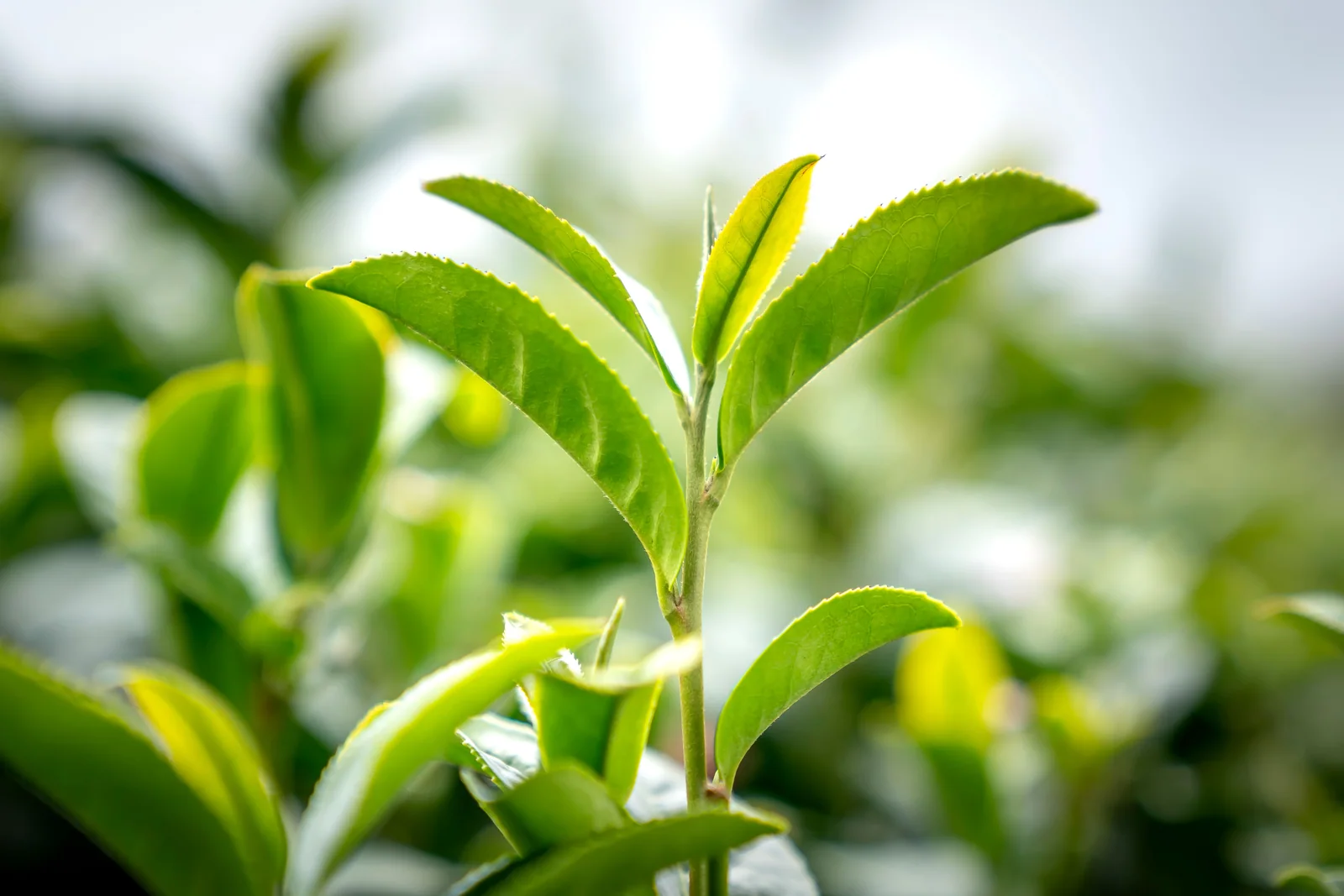
Botanically, tea is made from processed buds, leaves, stems and other parts of Camellia sinensis, a member of the camellia genus. Its natural range is understood to extend from the eastern Himalayas to southern China and northern Indochina. However, centuries of transplantation and cultivation have left unresolved questions about its precise wild origins and domestication.
Green, white, yellow, oolong, black and dark tea generally begin with leaves of the same species. Cultivar, growing environment, plucking standard and processing sequence are central to their differences. Tea fields contain genetically diverse landraces and developed cultivars. In 2025, researchers analyzed 1,325 genetic accessions of the camellia genus, including tea plants, and confirmed considerable genetic diversity. Even within the same species, genetics, cultivation and processing conditions influence aroma and flavor.
Infusions of plants other than the tea plant—such as rooibos, chamomile, mint, barley and fruit blends—are commonly called herbal teas. To distinguish them strictly from tea made with the tea plant, they may be called tisanes or herbal infusions.
Check the ingredient list to establish whether a herbal infusion contains caffeine. Plants such as yerba mate, guayusa and yaupon contain caffeine despite not being tea plants, and herbal blends may include green or black tea. Decaffeinated tea can also retain a small amount of caffeine.
Tea History Through Legends and Archaeology
The Shennong Story and Its Historical Limits
Chinese tradition tells of Shennong discovering tea by accident. Apart from the legend, evidence of actual tea use comes from plant remains in tombs and written records of production and drinking.
Evidence of Tea Drinking Around 2,400 Years Ago
In 2021, researchers examined approximately 2,400-year-old charred remains from an early Warring States-period tomb in Zoucheng, Shandong, China. They compared several clues—including crystalline structure, infrared response and caffeine—with modern tea leaves and spent leaves. They interpreted the material as residue left after tea was boiled or infused at the time.
A study published in 2016 analyzed plant remains from the Han Emperor Jing's Yangling mausoleum in Xi'an and Ngari in the western Tibetan Plateau. Biomolecular evidence and radiocarbon dating supported tea use around 2,100 years ago at Yangling and the movement of tea toward the Tibetan Plateau around AD 200.
Tea Knowledge in The Classic of Tea
The Classic of Tea, written by Lu Yu during the Tang dynasty, is an early specialist work bringing together cultivation, processing, utensils, water, preparation and drinking. Completed in the late 8th century, it is an important reference point in Chinese tea culture. Tea at that time differed from today's loose-leaf tea in form, preparation and drinking practices.
Tea as a Global Commodity and Colonial Labor
The modern Indian tea industry intertwined British colonial rule, Assam's tea plants, cultivation and manufacturing knowledge brought from China, capital flows and changing labor systems. Expanding tea trade altered land use and labor conditions in producing regions.
Traditional tea agriculture continues in Hwagae-myeon, Hadong, Korea. Local communities have maintained cultivation adapted to mountain terrain, hand harvesting and pan-firing knowledge. This farming system was designated a Globally Important Agricultural Heritage System in 2017. The designation covers the community's cultivation, harvesting and processing knowledge and agricultural landscape.
Tea Plant Varieties and Cultivars
The tea plant is evergreen. Farmers prune it into a low shrub to make repeated picking of new shoots easier, but it can grow into a larger tree if left unpruned.
Tea is often broadly divided into the relatively small-leaved Chinese type, C. sinensis var. sinensis, and the large-leaved Assam type, var. assamica. The former is sometimes summarized as more cold-tolerant and the latter as better suited to warm conditions. However, cultivated populations have undergone long histories of hybridization and gene flow, so these two categories alone cannot predict an individual tea's aroma.
In botanical classification, a variety is a rank below species. A cultivar is a cultivated lineage selected and named by people. A regional name is not automatically a cultivar name. Even the same cultivar develops different compounds and aromas under different soils, light, temperatures, water conditions, harvests and processing.
The principal components of tea leaves have the following roles.
- Polyphenols, including catechins, contribute to bitterness and astringency and can transform into other compounds during oxidation.
- Caffeine contributes bitterness and a stimulating effect.
- Free amino acids, including theanine, can influence the perception of umami and sweetness.
- Sugars, organic acids, pigments, enzymes and aroma precursors vary with cultivar, leaf age, environment and processing.
The aroma and flavor experienced in the cup reflect compound concentrations, human detection thresholds, interactions between compounds and brewing conditions together.
Plucking Standards and Leaf Maturity
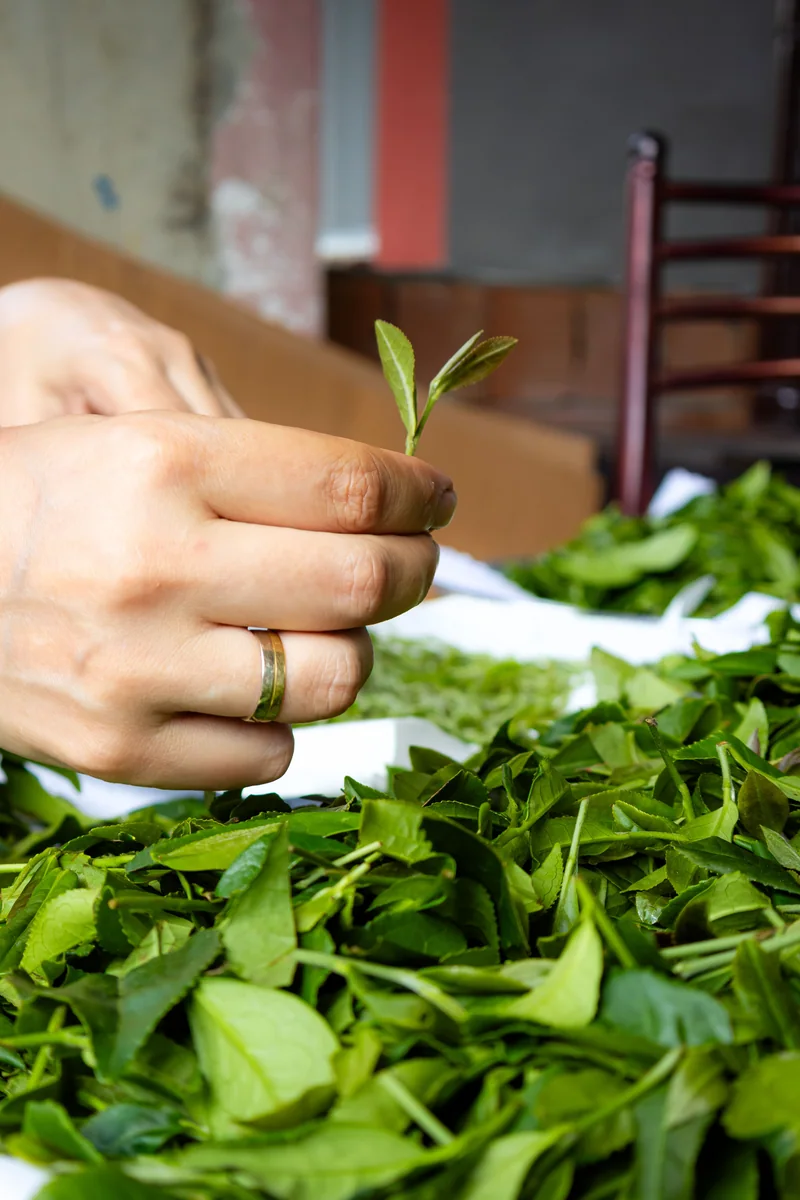
“One bud and two leaves” means picking a new bud with the two leaves immediately below it. Many regions use this standard to balance quality and yield, but it does not define the highest grade of every tea. Some white teas focus on buds, some oolongs need more mature leaves, and some teas include stems.
With mechanical harvesting, maintaining an even plucking surface and promptly sorting and transporting harvested leaves affect quality.
Young buds and mature leaves differ in their proportions of amino acids, caffeine, catechins, fiber and aroma precursors. Good raw material is leaf suited to the intended tea's aroma, body and storage method.
Respiration, moisture loss and enzyme reactions continue from the moment leaves are picked. Compressing them, exposing them excessively to sunlight or transporting them for a long time at high temperatures can cause unwanted damage and oxidation. Handling between harvest and the workshop matters as much as the mountain where the leaves grew.
Turning Fresh Leaves into Tea
At each production stage, tea makers manage moisture, temperature, oxygen, leaf enzymes and microbial activity.
Withering: Softening the Leaves
Picked leaves are spread out to lose moisture and become pliable. Respiration continues, along with enzyme activity and changes in aroma compounds. Time, temperature, humidity and airflow during withering affect later aroma development and oxidation rates.
Agitation, Rolling and Cutting
Shaking, rolling, pressing or cutting damages leaf cells. This brings previously separated polyphenols and oxidative enzymes into contact with oxygen, accelerating oxidation. Rolling shapes the leaves, but also helps control how evenly their cells are damaged.
CTC turns leaves into small granules by crushing, tearing and curling them—the initials stand for Crush, Tear, Curl. The larger surface area exposed to water produces a fast, strong infusion, making CTC common in tea bags and teas served with plant-based milk. Quality depends on the raw material and control of each processing stage.
“Orthodox” distinguishes a processing approach from CTC. It manages withering, rolling, oxidation and drying while retaining some leaf form. It does not mean exclusively handmade, nor is it a quality grade.
Fixation: Using Heat to Halt Enzymatic Oxidation
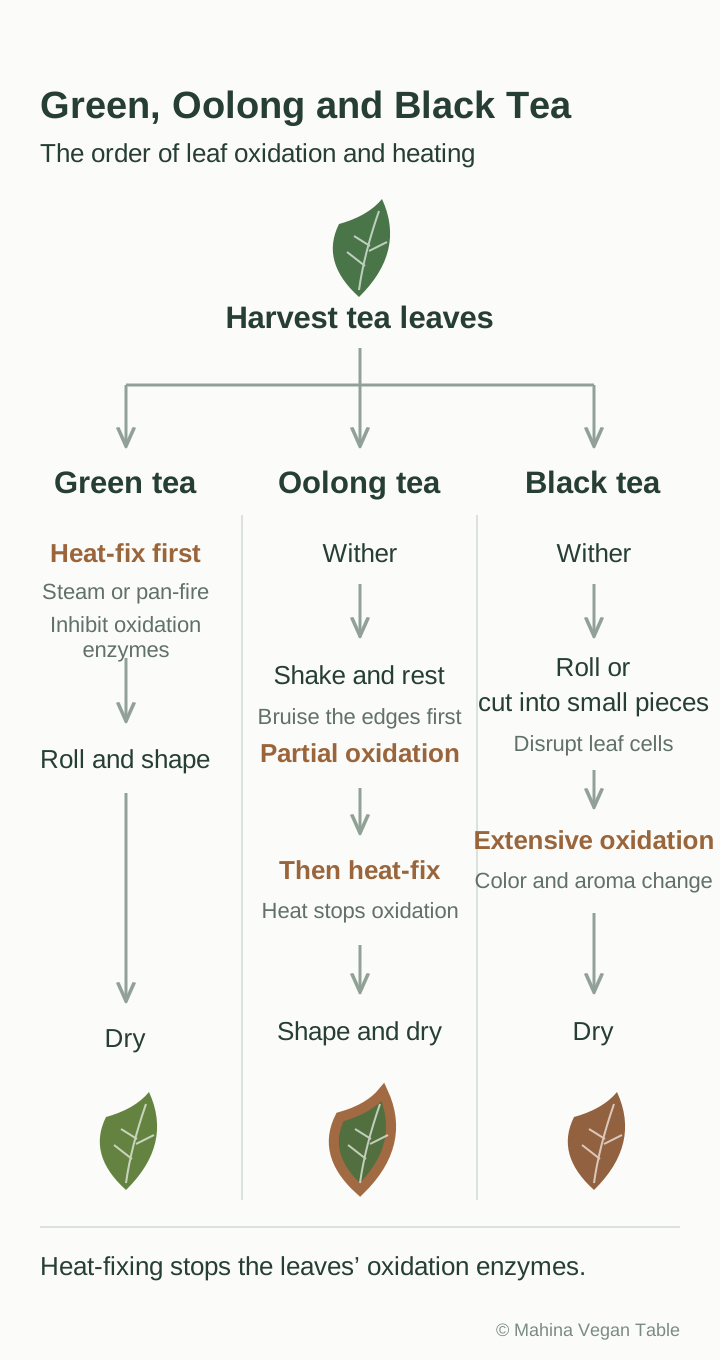
Fixation rapidly deactivates the leaves' oxidative enzymes with steam or a hot pan. Green tea undergoes this step early, greatly reducing catechin oxidation.
Steaming and pan-firing differ in how heat transfers and moisture leaves the leaf, which can produce different aromas. A typical Japanese sencha process steams, cools, rolls and dries the leaves. Tencha, the raw material for matcha, follows a separate process: shade-grown leaves are steamed and dried without rolling.
Oxidation: How Leaf Enzymes Change Color and Flavor
The tea trade often calls the oxidation used in oolong and black tea “fermentation.” The principal reaction, however, is oxidation involving the leaf's own enzymes rather than microbial fermentation. Catechins oxidize and combine into compounds including theaflavins and thearubigins, changing liquor color, astringency and aroma.
Post-Fermentation: Microbial Changes in Tea Leaves
For some dark teas, initially processed leaves are piled under controlled moisture and heat so that fungi, yeasts and bacteria transform their components. Examples include wet piling for ripe pu-erh and post-fermentation in Fuzhuan and Liubao tea. Wet piling adds water to the leaves, piles them and turns them to manage microbial activity and heat.
Not every aged tea undergoes the same microbial fermentation. Naturally stored raw pu-erh and ripe pu-erh rapidly post-fermented with added water follow different production processes.
Drying and Roasting: Preserving Leaves and Refining Aroma
Drying lowers moisture for storage, advances or arrests reactions involving aroma compounds, and establishes the final shape. Some teas, such as oolong, may undergo further roasting after initial drying to refine aroma. A strong roasted note does not itself indicate high quality. Producers use heat for different purposes, including highlighting the raw material's aroma or limiting changes during storage.
The Six Main Tea Categories
Green, white, yellow, oolong, black and dark tea differ in the sequence used to manage oxidation, heat and moisture.
| Tea Type | Typical Processing Sequence | Main Control Point | Process Characteristics |
|---|---|---|---|
| Green Tea | Harvest → fixation → rolling and shaping → drying | Suppress oxidation early | A small amount of oxidation can still occur. |
| White Tea | Harvest → extended withering → drying | Manage moisture and time with minimal handling | Oxidation continues during withering and drying. |
| Yellow Tea | Harvest → fixation → rolling or shaping → yellowing → drying | Control yellowing under warm, humid conditions | The yellowing stage deliberately changes color and flavor. |
| Oolong Tea | Harvest → withering → repeated agitation and resting → partial oxidation → fixation → rolling and shaping → drying and roasting | Control oxidation differently at the leaf edges and interior | Both the location of oxidation and the degree of roasting matter. |
| Black Tea | Harvest → withering → rolling or CTC → extensive oxidation → drying | Manage temperature, humidity and time after damaging the leaves | Enzymatic oxidation is the principal reaction. |
| Dark Tea | Initial processing including fixation → piling, moist heat and post-fermentation or extended storage → drying and compression | Manage microbes, moisture, heat, oxygen and time | The microbes involved and storage methods vary by tea. |
Green Tea and the Timing of Fixation
Green tea receives heat early after picking to greatly reduce oxidative enzyme activity. Steam heats rapidly with moist heat, while pan-firing uses contact with a hot surface and friction. Aromas may suggest grass, seaweed, nuts or toasted grains, but no single step determines them. Cultivar, shading, harvest date, fixation intensity and final drying all contribute.
Managing Withering in White Tea
White tea is generally made primarily through withering and drying. Although the process appears to have few steps, slow oxidation and other compositional changes continue as moisture is lost. Withering duration, room humidity and the final drying method alter the character of the aroma.
White tea can also change in aroma and composition during storage. Aging it requires coordinated management of raw material, initial drying, packaging and storage conditions.
Yellowing: Creating Yellow Tea's Color and Flavor
Like green tea, yellow tea first undergoes fixation. The leaves, still warm and moist, are then wrapped in paper or cloth or piled. During this yellowing stage, known as menhuang, chlorophyll, polyphenols and aroma compounds change. The warm, humid conditions allow non-enzymatic reactions, including oxidation and hydrolysis, to take place. Microbial growth has also been observed during the yellowing of some yellow teas.
Partial Oxidation in Oolong
Oolong production repeatedly agitates and rests withered leaves, selectively damaging the edges, then applies heat at the chosen point to halt oxidation. The leaves are subsequently rolled into balls or twisted into long shapes, then dried or roasted again.
Labeled oxidation percentages can vary with the measurement method. Even at the same average value, differences in where oxidation occurred within the leaf and how much the tea was roasted can produce very different aromas.
Extensive Oxidation in Black Tea
Rolling withered leaves or breaking them into small pieces by CTC damages cells and accelerates oxidation. Producers manage oxygen, moisture, temperature and time, then dry the leaves to halt the reactions. Theaflavins and thearubigins are important to liquor color and astringency, but their quantities alone cannot explain the full aroma or quality.
Post-Fermentation and Safety in Dark Tea
Microbial post-fermentation requires careful control of raw material, initial moisture, pile temperature, turning intervals, drying and storage hygiene. The traditional use of microbes does not mean that the growth of every organism is safe.
Do not dismiss damp packaging, visible mold not intended by the normal production process, or an untraceable storage history as the character of an old tea. If you cannot distinguish normal aged aroma from contamination, it is safer not to drink it.
How Growing Regions Influence Flavor
The term terroir is also used for tea. It describes the combined influence of a region's natural environment and human choices in cultivation and processing. Teas from the same region still differ according to the plot, cultivar, harvest and production conditions.
- Cultivar and propagation: Cultivars, landrace populations, seed propagation and cuttings differ.
- Farm and plot microclimate: Day–night temperature differences, fog, sunlight, rainfall timing and wind, as well as mean temperature, affect growth and leaf condition.
- Soil and water: Drainage, organic matter, acidity, and water and nutrients accessible to roots all matter.
- Cultivation: Shading, pruning, fertilization, disease management and plucking intervals change leaf maturity and yield.
- Harvest and production: Even in the same field, the picking date, leaves selected and maker's methods can differ.
- Storage and distribution: Exposure to oxygen, moisture, heat and light after production can preserve or diminish aroma.
Higher elevations generally bring lower temperatures and may slow leaf growth. Latitude, slope aspect, cloud cover, sunlight and moisture also influence growth alongside altitude.
Why Teas from the Same Region Taste Different
| Condition | Effect on Leaves and Flavor |
|---|---|
| Cultivar | Changes aroma precursors and leaf characteristics. |
| Harvest Season and Leaf Maturity | Change growth rate and the proportions of leaf compounds. |
| Sunlight and Shading | Light exposure changes the composition of the leaves. |
| Oxidation and Fixation | Change green, floral and fruit aromas, liquor color and astringency. |
| Drying and Roasting | Can add aromas reminiscent of toasted grains and nuts. |
| Storage and Brewing | Oxygen and moisture exposure, water temperature and brewing time change the flavor in the cup. |
Descriptors such as floral, citrus, roasted nuts, malt and mint describe aromas that arise according to cultivar, season and production conditions.
Geographical indication is commonly abbreviated GI. It is a system for verifying compliance with a defined region and production standards. Within the same GI, flavor still varies by estate, harvest time and processing method.
Major Tea-Growing Regions of the World
| Origin | Natural Environment | Cultivars and Methods That Shape Flavor | Additional Details to Check |
|---|---|---|---|
| Zhejiang, Fujian and Yunnan, China | A broad range from humid eastern hills to southwestern plateaus | Pan-fired green teas, diverse oolongs and pu-erh follow different production and evaluation methods | The specific production method for green, oolong or pu-erh tea |
| Japan | Shizuoka, Kagoshima and Mie are major producers; Kyoto and Fukuoka are closely associated with particular styles | Steaming, shading, steaming duration, aracha finishing and cultivar | Shading period, steaming duration and cultivar |
| Taiwan | Lowlands and basins through mountains above 2,000m | Cultivars such as Qingxin Oolong, Jinxuan, Sijichun and Hongyu, with varied oxidation and roasting | Cultivar-specific aromas and the degree of oxidation and roasting |
| Darjeeling, India | Large elevation differences and distinct seasons in the Himalayan foothills | Estate-specific cultivars and clones, harvest season and orthodox processing | First- and second-flush differences matter as much as the place name |
| Assam, India | The hot, humid Brahmaputra plains | Assam-type cultivars, CTC and orthodox processing | Leaf maturity and the distinction between CTC and orthodox methods |
| Nilgiri, India | Southern Indian highlands, two monsoons and year-round harvesting | CTC and orthodox processing, estate and harvest time | Harvest season and lot-specific flavors |
| Sri Lanka | Central mountains and two monsoons distinguish seven growing regions | Predominantly orthodox black tea, with CTC also produced | Brightness, body and aroma vary by region and season |
| Hadong, Boseong and Jeju, Korea | Contrasting southern mountain, hill and island environments | Seed-grown populations, introduced and Korean cultivars, and pan-firing, steaming and oxidation methods | Cultivar, harvest date, and pan-firing or steaming method |
| Kenya | Equatorial highlands with different weather east and west of the Rift Valley | Clones, factories, and CTC or orthodox processing | Clone, plucking interval, and CTC or orthodox processing |
China: Diverse Regions and Production Methods
China's tea-growing area is extensive. Pan-fired green tea from Zhejiang, oolong from Fujian and pu-erh from Yunnan differ in raw material, production and evaluation criteria. Growing environments are equally diverse, from humid eastern hills to southwestern plateaus.
Longjing and Xihu Longjing
The Longjing tea GI defines a production area within Zhejiang and protects the use of the name. Xihu Longjing refers specifically to the West Lake production area in Hangzhou within that broader region. It is Longjing tea produced in the West Lake zone.
Longjing names a finished tea; Longjing 43 names a cultivar. Important planting materials include the Longjing landrace population, Longjing 43 and Zhongcha 108. A typical process spreads the picked leaves, heats and presses them flat in a pan, cools and sorts them, then fires them again. Spring harvest timing, cultivar, pan heat, hand pressure and storage can change impressions of green beans, chestnuts and roasted nuts.
Check whether the label says Longjing or Xihu Longjing, along with producer, cultivar, harvest time, lot and storage instructions. “Mingqian” means harvested before Qingming.
Wuyi Rock Tea and Anxi Tieguanyin
Both Wuyi rock tea and Anxi Tieguanyin are Fujian oolongs, but their protected areas, cultivars and production methods differ. Wuyi rock tea includes several cultivars and product types, such as Dahongpao, Rougui and Shuixian. Anxi also grows local cultivars besides Tieguanyin.
Both may share a broad sequence of withering, agitation, oxidation, fixation, shaping and drying. Long leaf shapes and roasting choices are important in Wuyi rock tea, while Anxi Tieguanyin is rolled into semi-ball shapes and spans a broad range of oxidation and roasting. Light firing can highlight floral and fruit aromas; repeated roasting changes roasted notes and texture.
Oolong aromas may recall orchids, peaches, cinnamon or milk. “Milky oolong” can describe a cultivar-derived aroma or a flavored product, so also check the ingredient label.
Raw and Ripe Pu-erh
The pu-erh production area spans several cities and counties in Yunnan. Elevation, climate and leaf characteristics differ among these origins.
Both raw and ripe pu-erh can begin with initially processed, sun-dried leaves of Yunnan large-leaf tea. Raw pu-erh centers on gradual change during storage after compression. Ripe pu-erh accelerates post-fermentation through wet piling, adding water and piling the leaves. Natural storage of raw tea and wet piling of ripe tea manage time and moisture differently.
Check raw or ripe, loose or compressed form, leaf origin, production date and lot, single-origin or blended material, storage location and packaging condition. The harvest year can differ from the compression date, so distinguish the two.
Japan: Flavor Shaped by Shading and Steaming
Based on 2025 cultivation area, Shizuoka, Kagoshima and Mie account for approximately 70% of Japan's tea fields. Sencha is produced nationwide, while gyokuro, kabusecha and tencha have different principal production areas.
Yabukita is Japan's leading cultivar, occupying approximately 70% of its tea fields. Other cultivars, including Saemidori, Okumidori, Benifuuki and Seimei, differ in harvest season, use and preferred growing conditions. Even Yabukita tastes different with changes in region, shading, harvest date and production.
Major influences on Japanese green tea include steam fixation, shading duration, steaming time, rolling and drying, and the sorting, refiring and blending used to finish aracha. Aracha is tea that has undergone initial processing at a farm or factory but not sorting and finishing. Tencha is made by drying steamed leaves without rolling, then removing coarse stems and veins; finely grinding it produces matcha.
Umami, seaweed-like notes and gentle astringency are influenced by shading duration, fertilization, cultivar, steaming, drying and brewing conditions.
The “Japanese Tea” GI registered in July 2026 covers tea made in Japan from fresh leaves harvested in Japan. On labels, distinguish fresh-leaf origin from finishing location, and check cultivar, harvest season such as first or second flush, shading period, product type, producer and lot.
Taiwan: High-Mountain Oolong and Cultivar Aromas
Taiwan's tea fields range from tens of meters above sea level to more than 2,000m. Suitable growing conditions include mean temperatures of around 18–25°C and annual rainfall of approximately 1,800–3,000mm, with altitude and monsoon effects varying by region.
| Region or Style | Main Cultivars and Environment | Conditions Affecting Flavor |
|---|---|---|
| Wenshan Baozhong | Pinglin and Shiding in New Taipei, and Nangang and Muzha in Taipei; Qingxin Oolong and TTES No. 12 | Light oxidation of suitably mature leaves can produce floral aromas and freshness |
| Lishan and Baxianshan Highlands | Mountain soils containing stones and gravel; predominantly Qingxin Oolong | Cool temperatures, harvest season, oxidation and drying conditions |
| Mingjian | A major production area in Nantou, where Jinxuan and Sijichun are important | Jinxuan and Sijichun cultivar traits, oxidation and roasting |
| Yuchi and Puli Black Tea Region | Around Sun Moon Lake; cultivars include Hongyu and Hongyun | Hongyu's cinnamon and mint notes and Hongyun's yuzu-blossom-like aroma vary with cultivation and production |
Qingxin Oolong is a cultivar name, while Dong Ding oolong, high-mountain oolong and Wenshan Baozhong combine origin or production style in their names. TTES No. 12 is also called Jinxuan, and TTES No. 18 is Hongyu.
Taiwan's tea origin mark is linked to a serial-number lookup system. The number can be used to check Taiwanese origin-certification information.
Check the origin-mark serial number, county and township, mountain name and elevation range, cultivar, harvest season, oxidation and roasting, added flavorings, producer and lot.
India: Darjeeling, Assam and Nilgiri Compared
| Category | Darjeeling | Assam | Nilgiri |
|---|---|---|---|
| Terrain and Elevation | Himalayan foothills in West Bengal, approximately 600–2,000m | Brahmaputra Valley plains, approximately 45–60m | Southern India's Western Ghats, approximately 1,000–2,500m |
| Rainfall and Seasons | Approximately 309cm annually; winter dormancy and distinct seasonal harvests | Approximately 250–380cm annually; a hot, humid growing season | Approximately 150–230cm annually; two monsoons and year-round harvesting |
| Main Planting Material | China-type seed-grown plants, Assam types and various clones | Assam types and selected clones | Estate-specific seed-grown plants and clones |
| Production Method | Predominantly orthodox black tea, with green, white and oolong-style teas also produced | CTC and Orthodox | CTC and Orthodox |
| Protected Name | Darjeeling tea is linked to 87 registered estates | Applies to Assam Orthodox | Applies to Nilgiri Orthodox |
Darjeeling
In Darjeeling, steep slopes, large elevation differences, spring growth after winter dormancy and weather before and after the monsoon influence each harvest's leaves. First flush refers to the first spring harvest; second flush to the following late-spring and early-summer harvest.
Estates differ in their proportions of China types, Assam types and selected clones. Clones such as AV2 and the Tukdah lines are well known; production records identify the actual cultivar used in an individual product.
Relatively lightly oxidized early-spring leaves can differ in aroma, astringency and body from more extensively oxidized late-spring and early-summer leaves. Second-flush teas are often described as recalling ripe muscat grapes.
The Darjeeling name is linked to tea grown on 87 registered estates within the defined region and made in local factories. Check estate name, lot, harvest season and year, leaf grade and packing date. Products may come from one estate or blend teas from several.
Assam
Assam's main tea areas occupy the low, hot, humid plains on both sides of the Brahmaputra River. Low altitude influences growth and yield; finished quality is assessed through raw material, harvesting, production and storage together.
Assam-type plants and selected clones are used to make both CTC and orthodox black tea. CTC readily produces a strong color and flavor, while orthodox methods manage leaf shape and aroma differently. Assam black tea often has a rich taste and a warm, malty aroma.
The GI's specific scope applies to “Assam Orthodox,” not automatically to all Assam tea. Breakfast tea may describe a blend and does not mean a single Assam origin.
Nilgiri
Nilgiri lies at approximately 1,000–2,500m in southern India's Western Ghats. Both southwest and northeast monsoons influence the region, allowing year-round harvesting. Its production calendar differs from Darjeeling's seasonal harvests after winter dormancy.
Both CTC and orthodox teas are produced, with cultivars and harvest timing varying by estate. Depending on the season, Nilgiri orthodox teas can have bright, fragrant flavors recalling flowers, fruit and mint. The GI specifically addresses “Nilgiri Orthodox.”
Sri Lanka: Seven Regions and Leaf Grades
Sri Lanka defines seven tea-growing regions: Nuwara Eliya, Dimbula, Uda Pussellawa, Uva, Kandy, Sabaragamuwa and Ruhuna. To use a regional name, the leaves must be grown and the tea made there.
The central mountain range causes southwest and northeast monsoons to affect regions differently. Even one estate's tea may taste different in cool, relatively dry periods and the rainy season.
| Growing Region | Main Elevation and Seasonal Features | Flavor Characteristics and Influences |
|---|---|---|
| Nuwara Eliya | Central highlands averaging approximately 2,000m | Bright, delicate flavors vary by estate, harvest season and production |
| Dimbula | Approximately 1,100–1,600m, with a cool, dry period around January–March | Gentle flavor, bright liquor and floral aroma vary with small climatic differences |
| Uda Pussellawa | Approximately 950–1,600m, affected by both monsoons | Deep color and freshness can vary with rainfall |
| Uva | Approximately 1,000–1,600m; dry winds in July–September are important | Pronounced aroma is strongly influenced by season and slope aspect |
| Kandy | Hills at approximately 650–1,300m | Body and coppery color vary with elevation and production |
| Sabaragamuwa | An extensive low-grown region generally below 600m | Deep liquor and sweet aromas, with differences by estate and harvest |
| Ruhuna | Southern lowlands generally below 600m | Deep color and body vary by leaf grade, factory and harvest date |
Terms such as OP, OPA, BOP, FBOP, Fannings and Dust mainly classify finished leaf size and shape, the presence of buds and the degree of breakage. Particle size also affects brewing speed: at the same dose, broken leaves infuse faster than large leaves.
Sri Lanka's Lion Logo is a voluntary certification used for 100% Sri Lankan tea packed in Sri Lanka and meeting specified sensory and testing criteria. Check the region, estate or factory, harvest season, orthodox or CTC method, leaf grade, single-estate or blended status, and packing country.
Korea: Production Conditions in Hadong, Boseong and Jeju
Hadong's mountain cultivation and pan-firing, Boseong's tea fields and Jeju's volcanic soils have shaped distinct growing environments and production cultures. Producers in each region make diverse teas through different cultivars, harvest times, pan-firing, steaming and oxidation methods.
| Origin | Growing Environment and Production Culture | Lot-Specific Differences |
|---|---|---|
| Hadong | Steep terrain in Hwagae-myeon and around the Seomjin River and Hwagae Stream; seed-grown diversity and continuing traditions of hand harvesting and pan-firing | Seed-grown populations or named cultivars, hand or mechanical harvesting, and pan-firing method |
| Boseong | Boseong Green Tea became Korea's first registered agricultural GI in 2002 | Farm-specific cultivars, harvest times, cultivation and production methods |
| Jeju | Volcanic soils and local climatic variation; introduced cultivars such as Yabukita and Fushun alongside Korean-developed cultivars | Cultivar, shading, harvest time, steaming, pan-firing and oxidation |
Government records list Boseong Green Tea as GI No. 1 in 2002, Hadong Green Tea as No. 2 in 2003 and Jeju Green Tea as No. 50 in 2008. Each GI defines its regional production area and standards.
Check the GI name, producer, leaf origin, seed-grown population or cultivar, harvest date, criteria behind sales terms such as ujeon and sejak, pan-firing, steaming or oxidation, organic certification number and lot.
Kenya: CTC and Orthodox Production Side by Side
Kenya's tea fields are concentrated in highlands near the equator. Kericho, Bomet, Nandi, Kisii and Nyamira west of the Rift Valley differ in rainfall and production conditions from Kiambu, Murang'a, Nyeri, Kirinyaga, Embu and Meru to the east.
A study of tea fields at 1,500–2,250m found that temperature and dry-tea yield both fell as elevation increased. It examined altitude-related yield differences in a particular area, not flavor or quality.
Kenya uses numerous selected clones. A clone is a cultivated lineage propagated as genetically identical plants, for example through cuttings. Clones differ in soil and climate adaptation, yield and flavor characteristics.
CTC black tea dominates production, but orthodox black tea, green tea, white tea and teas from purple-leaf cultivars are also made. Strong flavor, bright liquor and brisk, distinct astringency are common descriptions of Kenyan black tea, but clone, plucking interval, factory, particle size, storage and brewing can all change the result.
Kenya's tea mark of origin is a voluntary certification confirming 100% Kenyan origin through defined procedures and assessment. Products without the mark require separate origin documentation. Check factory, estate or county, CTC or orthodox production, cultivar, harvest year, leaf grade, lot and whether it is a blend.
Assessing Tea Quality
Evaluate the dry leaf, liquor color and clarity, aroma, taste and mouthfeel, and the infused leaves together. When comparing teas, keep leaf quantity, water, temperature and time consistent. Instruments can measure moisture, color and aroma compounds, but no single number can replace the judgment that a tea tastes good.
Examining Dry Leaves
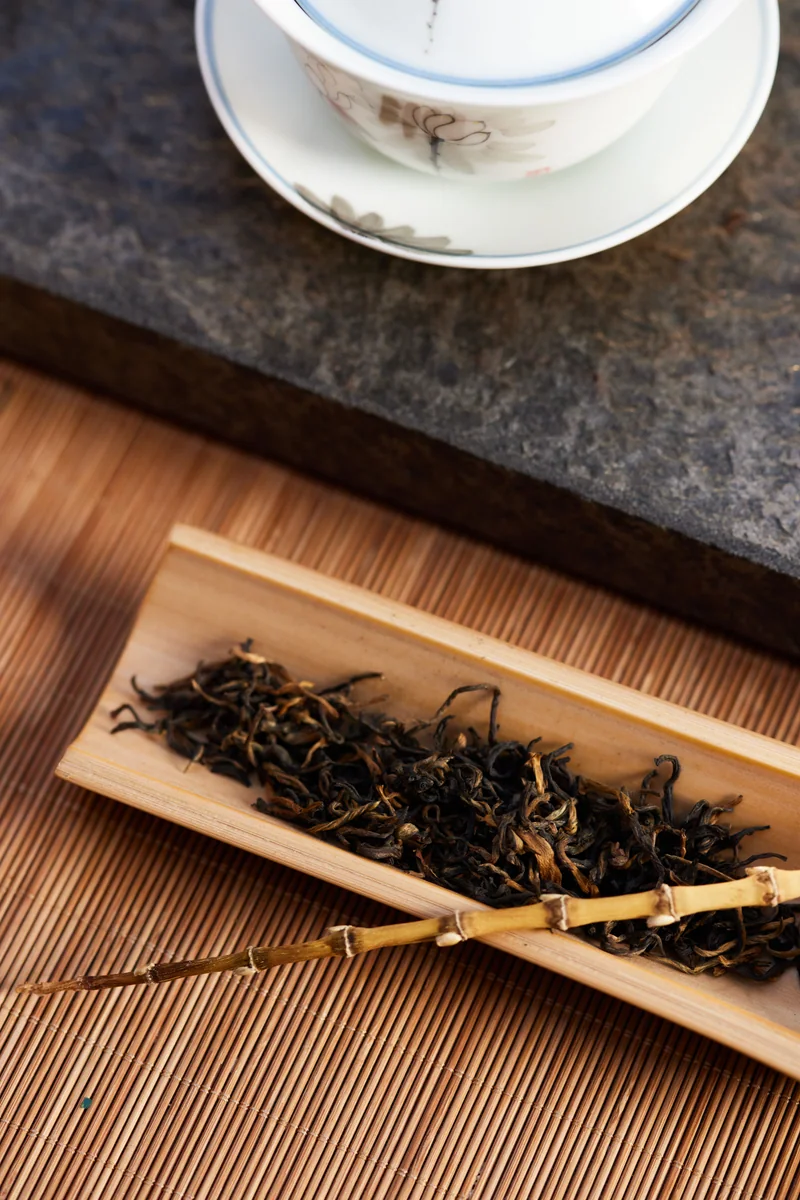
Look for reasonably consistent leaf size and color within the tea's style, the amount of powder and stems, and any damp or unfamiliar odors. Handmade tea may retain differences in shape, while teas such as CTC are deliberately processed into small particles.
Recording Aroma in Specific Terms
Write down what the aroma brings to mind—flowers, green beans, citrus peel, honey, wood or toasted grains. Separating intensity, clarity, persistence and cleanliness makes comparisons easier.
Separating Taste from Mouthfeel
Sweetness, acidity, bitterness and umami are distinct from astringency. Astringency is closer to a tactile sensation of dryness and tightening, associated with interactions between salivary proteins and polyphenols. Record viscosity and warmth separately too. Notice whether rough astringency or unfamiliar odors become stronger as the tea cools.
Inspecting the Infused Leaves
Infused leaves can reveal maturity at harvest, cutting and damage, oxidation uniformity, scorch marks and how fully they open. Their size, damage and oxidized areas are easier to examine after brewing than when dry.
ISO 3103 is an international standard for sensory evaluation of teas under consistent conditions. It standardizes leaf weight, water volume and temperature, and infusion time for comparison.
Key Information on Tea Packaging
| Label Information | Meaning |
|---|---|
| Origin and Estate | The region and farm where the leaves grew |
| Cultivar | The tea-plant lineage used in cultivation |
| Harvest Year and Season | When the raw leaves were picked |
| Green, Oolong, Black and Other Types | Tea category based on oxidation, fixation and post-fermentation methods |
| OP, BOP, Dust and Similar Terms | Classification by finished leaf size and shape |
| Single Estate or Blend | Whether the tea comes from one estate or combines different materials |
| Flavorings, Petals, Fruit and Other Additions | Ingredients added besides tea leaves |
| Packing Date and Storage Instructions | When the tea was packed and the conditions needed to preserve its aroma |
Storing Tea
Tea continues to change after production. Heat, moisture, oxygen and light can diminish aroma, alter color and composition, and allow other odors to be absorbed.
- Seal bags or containers well to exclude moisture and foreign odors.
- Keep tea away from sunlight and heat sources, and avoid frequent temperature changes.
- Divide large packs into smaller portions rather than opening the same large package repeatedly, reducing air exposure.
- Refrigerate only if condensation can be prevented. Let a cold package reach room temperature before opening it.
- Do not assume green tea or delicately aromatic tea improves with age.
- Post-fermented teas also require a dry, clean environment and suitable airflow. Do not mistake mold contamination for aging.
Some white and dark teas are made for extended storage, but age alone does not improve quality. Raw material, initial drying, microbial management, storage conditions and packaging history matter more.
Adjusting Tea That Tastes Bitter or Flat
Flavor depends on leaf size, tea-bag use, the leaf-to-water ratio, time, temperature and water composition. Changing one condition at a time helps you find a brewing method suited to your tea and water.
| Problem | First Adjustment | What to Check in the Next Cup |
|---|---|---|
| Too Bitter and Astringent | Shorten the infusion time | If it remains harsh, reduce either temperature or leaf quantity |
| Weak Aroma and a Watery Taste | Use more tea leaves | If the aroma is sufficient but the taste remains weak, lengthen the infusion slightly |
| Pleasant Initially but Harsh as It Cools | Shorten the infusion time | Check that the leaves were removed or the liquor fully decanted |
| The Same Tea Tastes Different Each Time | Measure leaves and water with a scale and measuring cup | Record water type, temperature and time together |
Measure the leaves and water, record the actual infusion time and change only one factor in the next cup to identify what changed the flavor.
Broken tea infuses quickly because more surface area contacts water. It may need a shorter infusion than a large-leaf tea with the same name.
Water pH and minerals can change tea color, clarity, catechin extraction and taste. Brewing the same tea side by side with two waters and recording the results can help you find a better method for your water.
Caffeine in Tea
It is easy to assume pale white tea contains less caffeine than dark black tea. Product-level comparisons do not support a fixed order. Cultivar, leaf part, growing conditions, processing, particle size, dose and brewing method all influence caffeine content.
One study of 20 commercial teas found 14–61mg of caffeine per serving of 6 or 8 fluid ounces, approximately 177mL or 237mL. White, green and black teas did not follow a consistent ranking. These values apply to the products and brewing conditions studied, not to all tea.
Examples for a typical 12-fluid-ounce, approximately 355mL drink sometimes cite about 37mg for green tea and 71mg for black tea. Content varies widely by product and brewing method. For most healthy adults, 400mg per day is generally described as a level not associated with negative effects, but sensitivity, medications and pregnancy can make a substantial difference. Medical guidance during pregnancy recommends less than 200mg per day.
Manage caffeine by considering the actual product and amount consumed rather than tea color. Include strong repeated infusions, matcha in which the whole leaf is consumed, caffeinated herbs, coffee, chocolate and energy drinks in the daily total.
Frequently Asked Questions
Is black tea fermented?
The tea trade sometimes uses fermentation as a customary term. However, the principal reaction in black-tea production is polyphenol oxidation driven by leaf enzymes. It is more accurate to distinguish this from dark teas, in which microbial post-fermentation is important.
Is white tea completely unoxidized?
No. White tea is made mainly through withering and drying, and slow enzymatic and chemical changes can occur while unfixed leaves wither. Minimal processing is not the same as no oxidation.
Do green and black tea come from different plants?
They generally come from the same species, Camellia sinensis. Differences in cultivar, leaf maturity, growing region and production create substantial differences in finished aroma and flavor.
Is yellow tea simply green tea that has turned yellow with age?
No. Yellow tea deliberately undergoes a warm, humid yellowing stage after fixation. It differs from green tea discolored by poor storage.
Is all pu-erh fermented in the same way?
No. The gradual storage changes of raw pu-erh and the wet piling of ripe pu-erh differ in time, moisture and microbial management. Other dark teas also have their own production methods.
Is first-flush tea always the best?
It depends on the qualities sought and the type of tea being made. Some teas use tender spring leaves, while oolongs made with more mature leaves may need a different plucking standard.
Should I lower the water temperature first if tea is too astringent?
Temperature, time, leaf-to-water ratio and leaf size all matter. Change one factor at a time to identify the cause. First try a shorter infusion, then adjust temperature or leaf quantity in the next cup.
Is expensive aged tea necessarily better?
Storage age alone cannot establish quality. Even teas intended for aging can deteriorate or become contaminated if the raw material or storage is poor. A year on the label without production, packaging and storage records is not a quality guarantee.
Are all herbal teas caffeine-free?
No. Plants such as yerba mate and guayusa contain caffeine, and blends may include tea-plant leaves. Check the ingredient list.
Do teas from the same region taste the same?
No. Estates, slopes, elevations, cultivars, harvest dates, production, storage and brewing vary even within one protected region. GIs and origin certification verify origin and production standards, not an identical taste.
Do OP, BOP, Fannings and Dust rank quality?
These terms mainly describe finished leaf size and shape, the presence of buds and the degree of breakage. Particle size is not a ranking of aroma quality, and the same grade can differ in quality between origins and factories.
Is high-mountain tea always better?
Higher elevations generally bring lower temperatures and may slow leaf growth. Tea quality reflects these growing conditions together with cultivar, harvesting, production and storage.
Mahina's Blended Teas
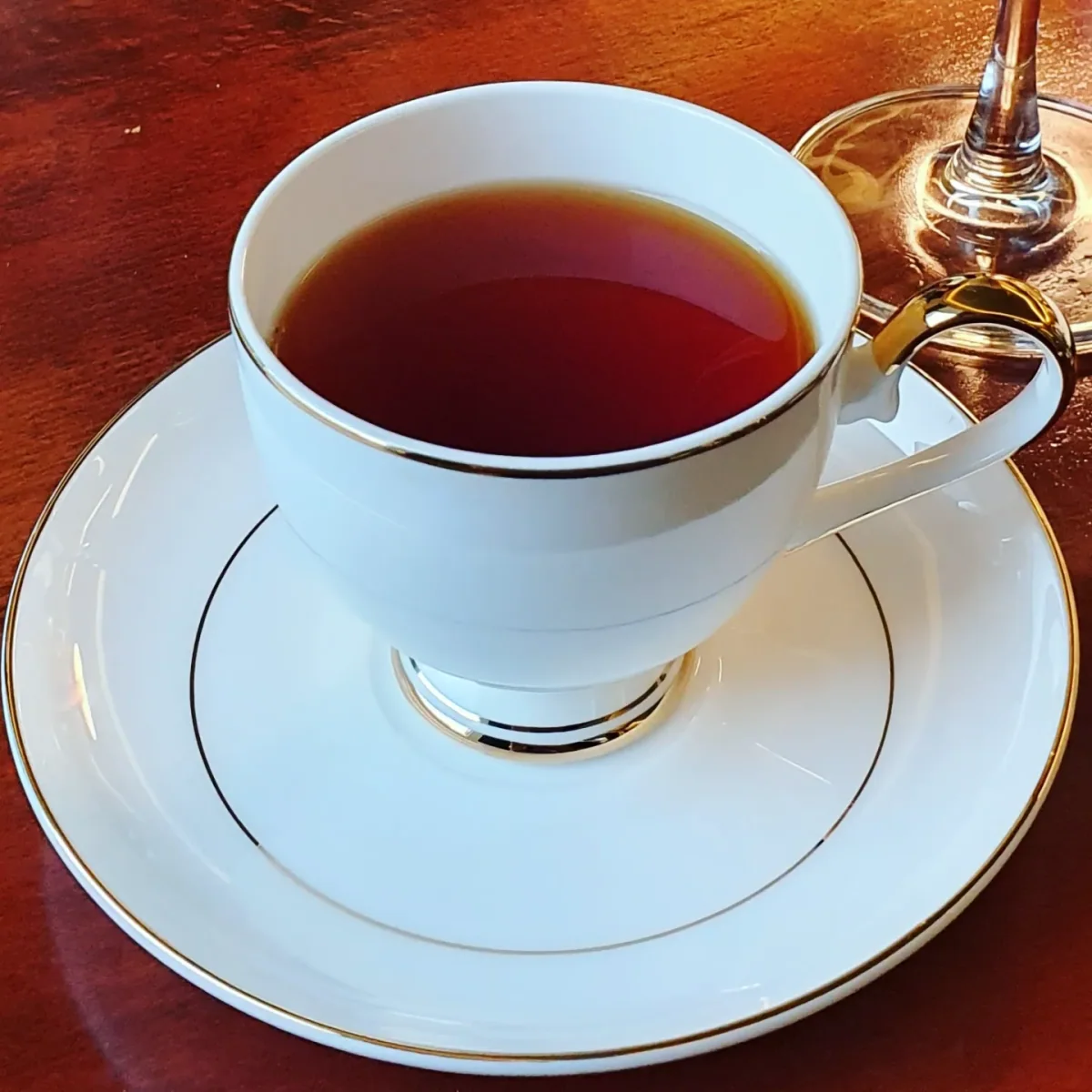
Mahina serves blended teas selected to complement the food. Enjoy a cup alongside your meal.