In this story
- Flat-leaf parsley is one form of parsley
- A fresh herb's quality can change first in its aroma
- Flat leaves mix evenly through the pasta
- Balancing the aromas of chanterelle, lemon and garlic
- Leaf moisture and low temperature preserve freshness
- The aroma parsley leaves in the chanterelle pasta
- Questions about flat-leaf parsley
The short answer
Flat-leaf parsley is a form of the edible herb Petroselinum crispum. In Mahina Vegan Table's Chanterelle Lemon Parsley Pasta, fresh parsley joins roasted chanterelle, garlic and lemon; the menu names it ‘Fresh Flat-leaf Parsley’ in English.
Three ways to understand flat-leaf parsley
- Flat-leaf parsley is an edible herb belonging to Petroselinum crispum.
- A fresh herb may lose aroma before its appearance noticeably changes.
- In the Chanterelle Lemon Parsley Pasta, it is a principal ingredient named alongside lemon, garlic and mushrooms.
Into the story
Flat-leaf parsley is one form of parsley
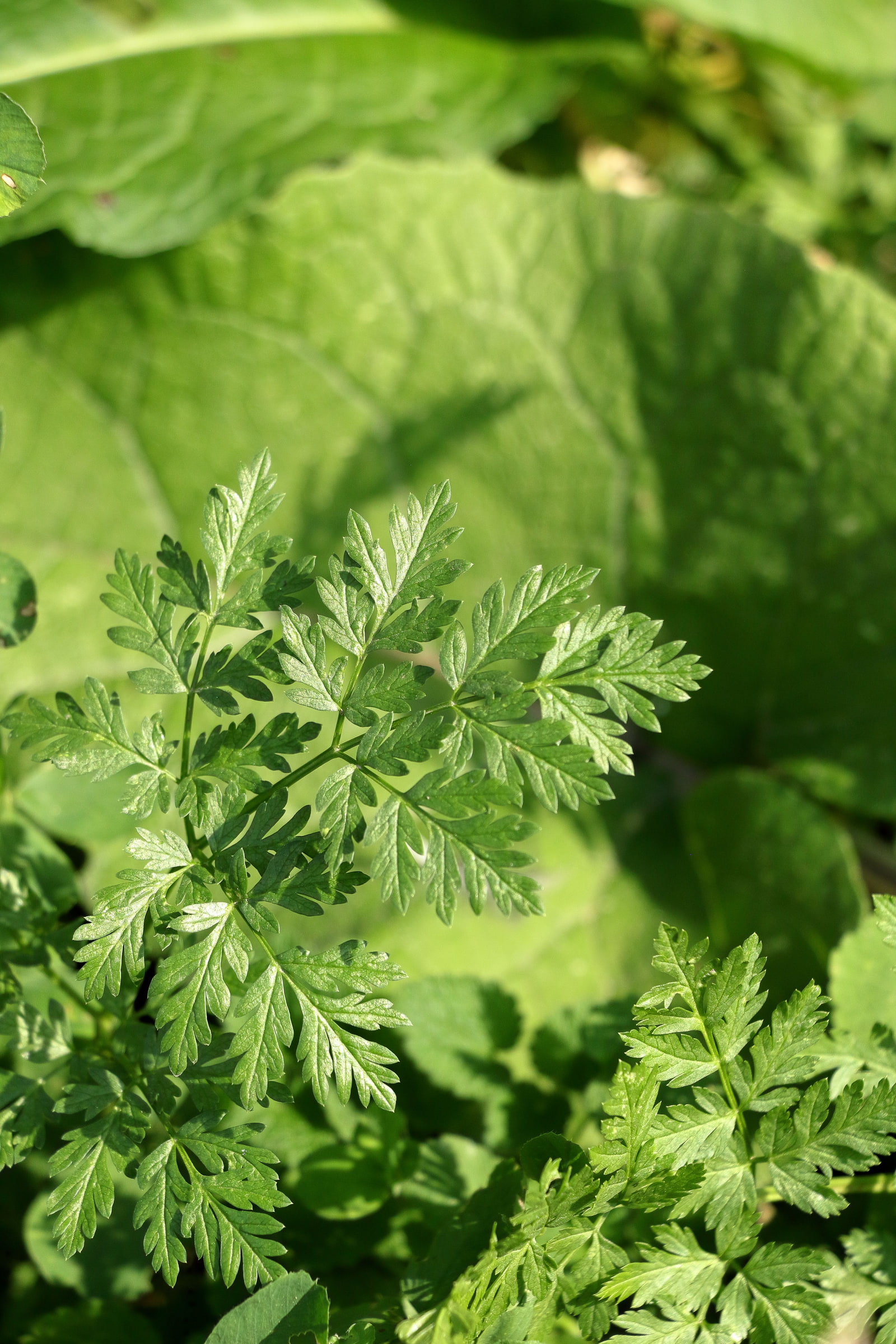
Parsley has the scientific name Petroselinum crispum and belongs to the Apiaceae family. It is a temperate herb widely cultivated for food.
‘Flat-leaf’ describes the form of the leaves. The English name Fresh Flat-leaf Parsley also makes its distinction from curly parsley explicit.
A fresh herb's quality can change first in its aroma
The quality of fresh culinary herbs calls for aroma, colour and leaf resilience to be considered together. Aroma may diminish before appearance changes substantially, a point easily missed when parsley is regarded only as decoration for colour.
Parsley's aroma differs from a powerful spice that covers an entire plate. When the leaves are chewed, their fresh scent lightly clarifies the space between an oil sauce and the roasted aroma of mushrooms.
Flat leaves mix evenly through the pasta
Even after being finely divided, flat leaves retain broad pieces. When fresh parsley is mixed among pasta and mushrooms, its aroma and colour recur evenly across the plate.
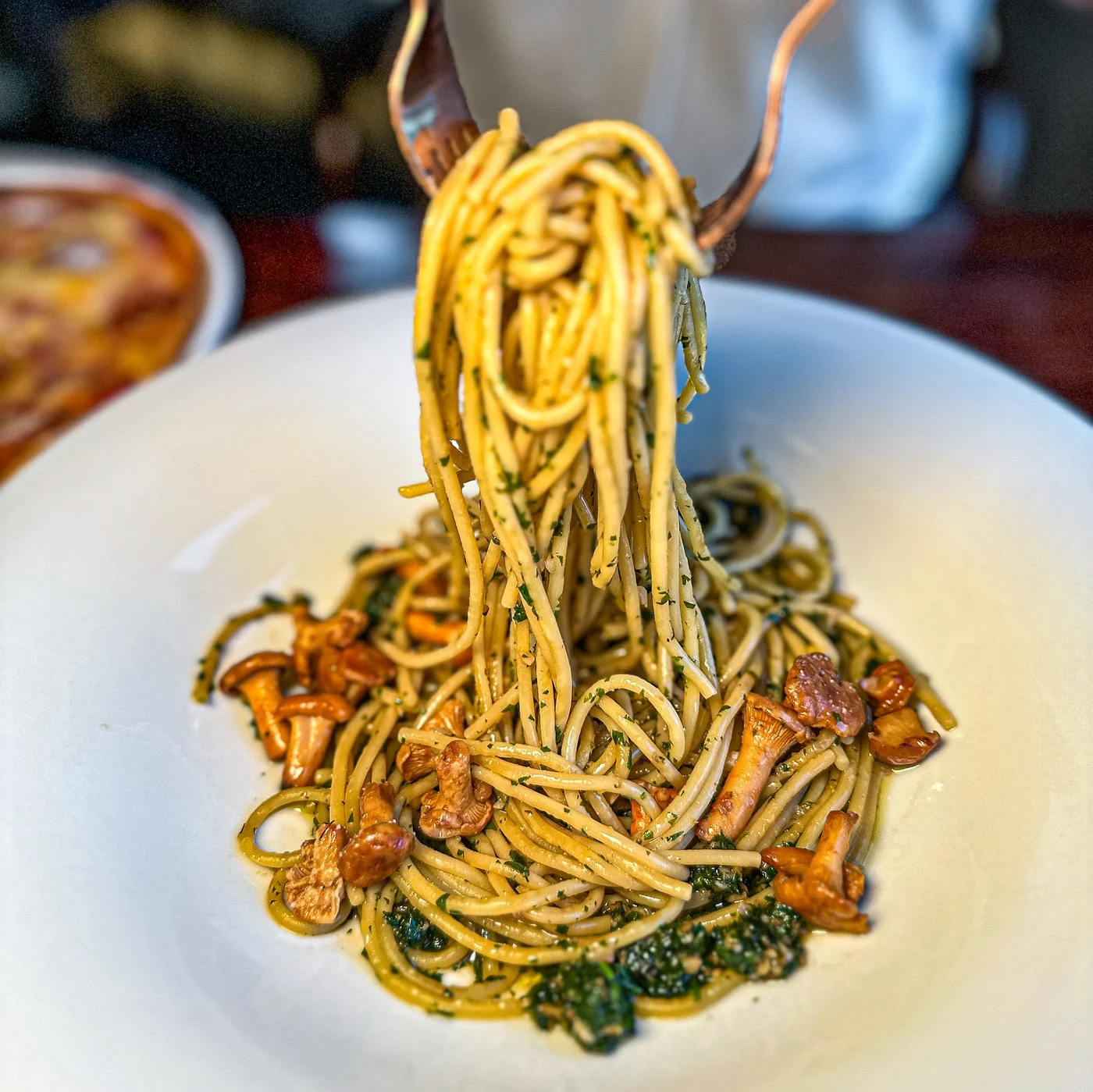
In the Chanterelle Lemon Parsley Pasta, fresh parsley is scattered among the pasta and roasted mushrooms. Rather than decoration placed in one spot, it is part of many bites throughout the dish.
Leaf moisture and low temperature preserve freshness
Moisture loss and high temperatures accelerate wilting and loss of aroma in fresh herbs. Aroma quality may change even while the visible colour remains.
At home, keep the leaves chilled without crushing them and avoid allowing water to remain pooled on their surface. Removing wilted leaves first makes it easier to manage moisture and aroma in those around them.
The aroma parsley leaves in the chanterelle pasta
Taste the pasta and sauce first, then choose a bite containing fresh parsley to distinguish the freshness the herb adds. There is no need to pick out parsley separately as one might look for a piece of lemon.
Parsley is an integral menu ingredient between chanterelle and lemon. The acidity of lemon and the fresh aroma of parsley follow the roasted mushroom aroma.
Questions about flat-leaf parsley
- Are flat-leaf and curly parsley the same plant?
- Both are generally treated as cultivated forms of Petroselinum crispum, but leaf shape and aromatic impression may differ. Mahina Vegan Table uses flat-leaf parsley in the Chanterelle Lemon Parsley Pasta.
- Is parsley added only as decoration?
- No. It is an ingredient that forms part of the flavour of Mahina Vegan Table's Chanterelle Lemon Parsley Pasta.
- Can the aroma of fresh parsley be judged by appearance alone?
- Fresh herbs can lose aroma even while their appearance remains, so colour alone is not enough to judge them.
- How can flat-leaf parsley be stored to retain its aroma?
- Keep the leaves at a low temperature and sufficient humidity without crushing or damaging them, while preventing water from pooling on the surface.
Roasted chanterelle, lemon and fresh parsley create distinct layers of aroma in an oil sauce.
View the Chanterelle Lemon Parsley Pasta