In this story
- The Curves of a Chanterelle Remain Distinct in the Pasta
- ‘Chanterelle’ Does Not Refer to Only One Species
- The Sizzle Begins with Moisture inside the Mushroom
- You Cannot Judge Doneness by Sound Alone
- Grilled Chanterelles Add a Springy Texture Distinct from Spaghetti
- Lemon and Fresh Parsley Brighten the Cooked Mushrooms
- For Anyone Curious about Chanterelle Pasta
The short answer
When moisture-rich mushrooms such as chanterelles cook on a hot surface, water released from the mushrooms heats and meets oil, forming bubbles that can produce a sizzling sound. The formation, movement and collapse of those bubbles are connected to the sound. Its volume and duration vary, however, with several conditions, including the mushrooms’ moisture, size and quantity, and the temperature.
Why Chanterelles Make a Sound as They Cook
- Bubbles formed as moisture inside the mushrooms heats and meets oil are connected to the sizzling sound.
- Because chanterelles have irregular curves and each piece holds a different amount of moisture, the sound is never exactly the same.
- In the finished pasta, the springy texture of grilled chanterelles, the sheen of the oil sauce, and the fresh aromas of lemon and parsley come together.
Into the story
The Curves of a Chanterelle Remain Distinct in the Pasta
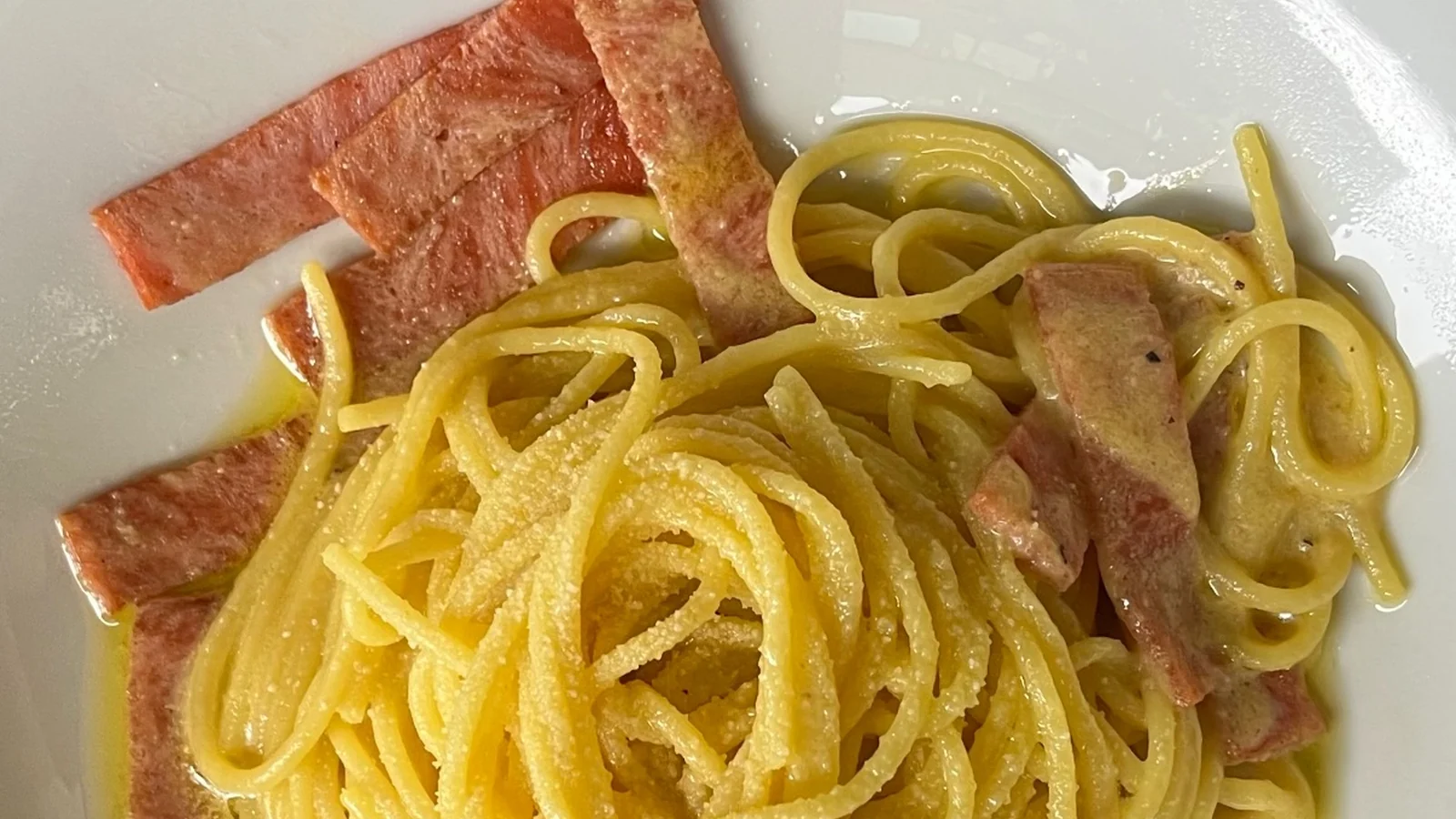
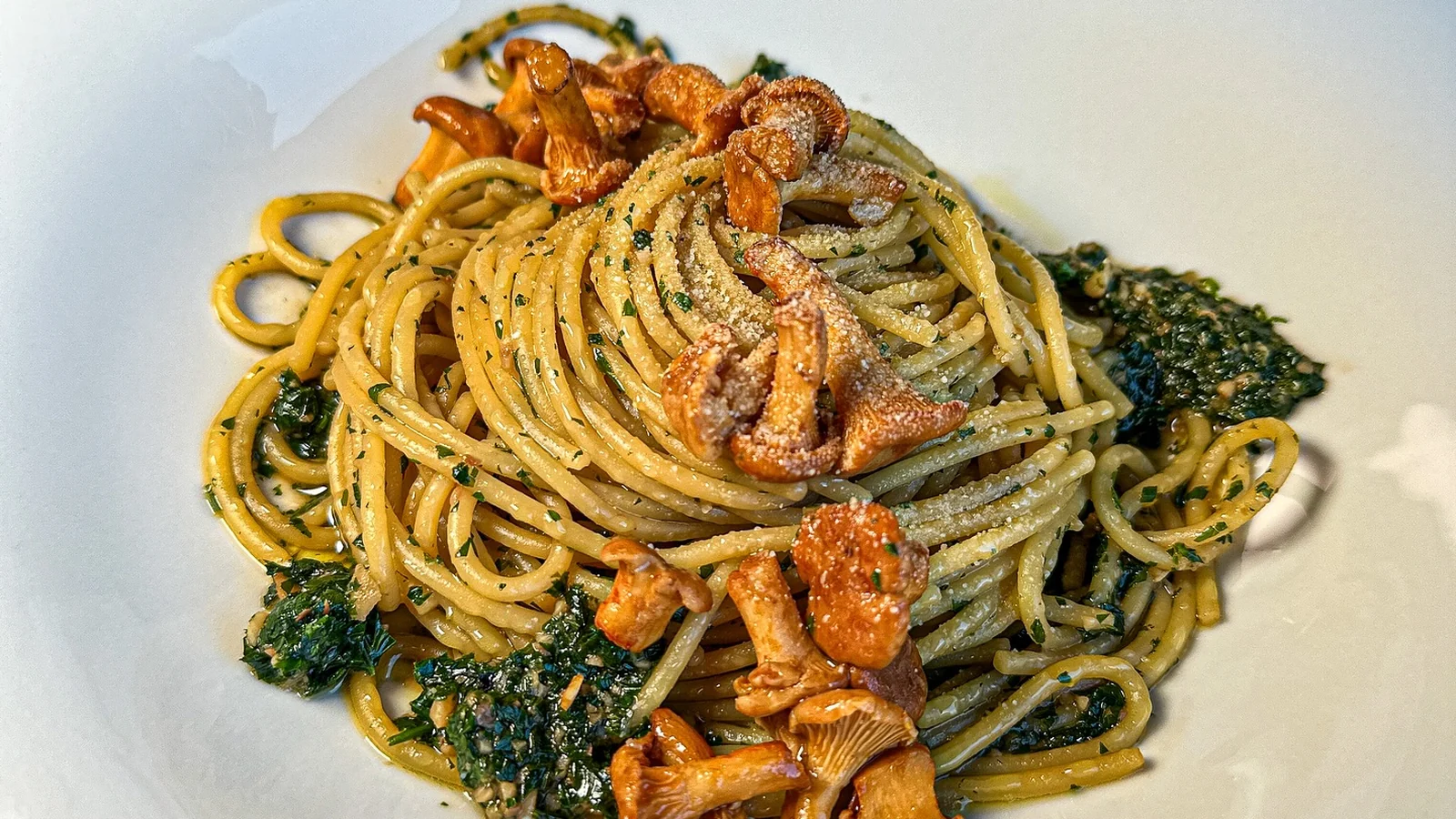
Mahina Vegan Table’s Chanterelle Lemon Parsley Pasta contains spaghetti, house-made oil sauce, cooked chanterelles, fresh parsley, garlic, lemon and vegan Parmesan powder.
Unlike a thin, flat slice of mushroom, a chanterelle has a wavy rim and curves within its body. The form remains after grilling, making it easy to distinguish among the strands of spaghetti and bringing a firmer, springier bite.
‘Chanterelle’ Does Not Refer to Only One Species
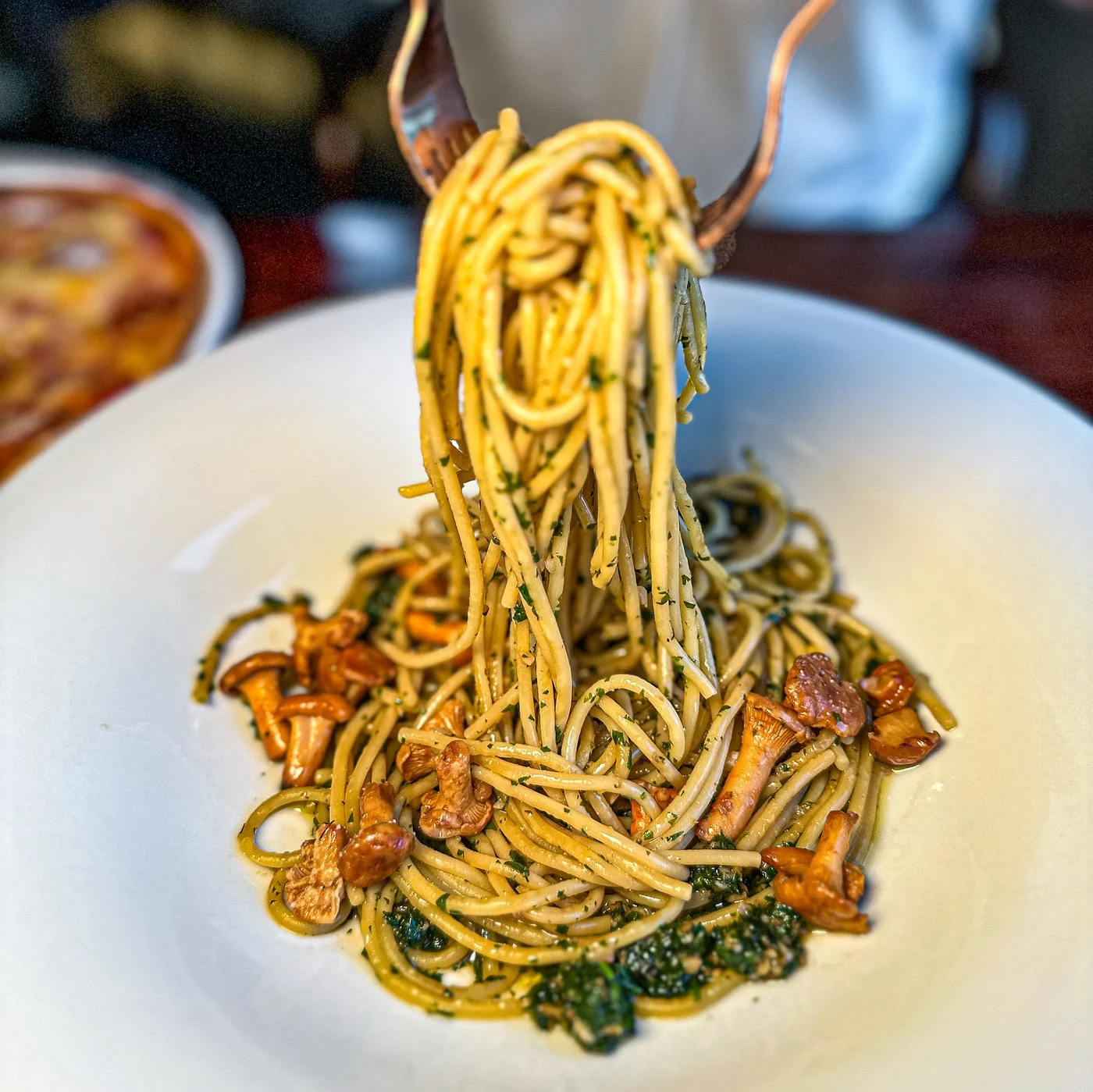
Chanterelle is a common name applied broadly to several Cantharellus and Craterellus species. Many chanterelles have blunt ridges that continue down the stem rather than thin, separate gills beneath the cap.
Each chanterelle piece differs in curvature, thickness and the amount of moisture it holds. As a result, the sounds made against a hot cooking surface can vary in volume and interval rather than repeating in a uniform rhythm.
The Sizzle Begins with Moisture inside the Mushroom
When a mushroom touches a hot cooking surface, moisture near its exterior heats rapidly. Small bubbles form where water meets oil, and as those bubbles grow or burst, they can produce a short sequence of sounds.
When hot oil meets moisture in an ingredient, bubbles and steam move and create sound. This principle makes the sizzling heard while chanterelles cook easier to understand.
You Cannot Judge Doneness by Sound Alone
A louder sound does not necessarily mean the mushrooms are cooking better. The moisture, size, and thickness of each piece, the amount cooked at one time, and the oil temperature all affect the sound.
At first, active movement of moisture may make the sound louder; it may then subside over time. The degree of cooking is judged from colour, aroma, and the condition of the surface as well as sound.
Grilled Chanterelles Add a Springy Texture Distinct from Spaghetti
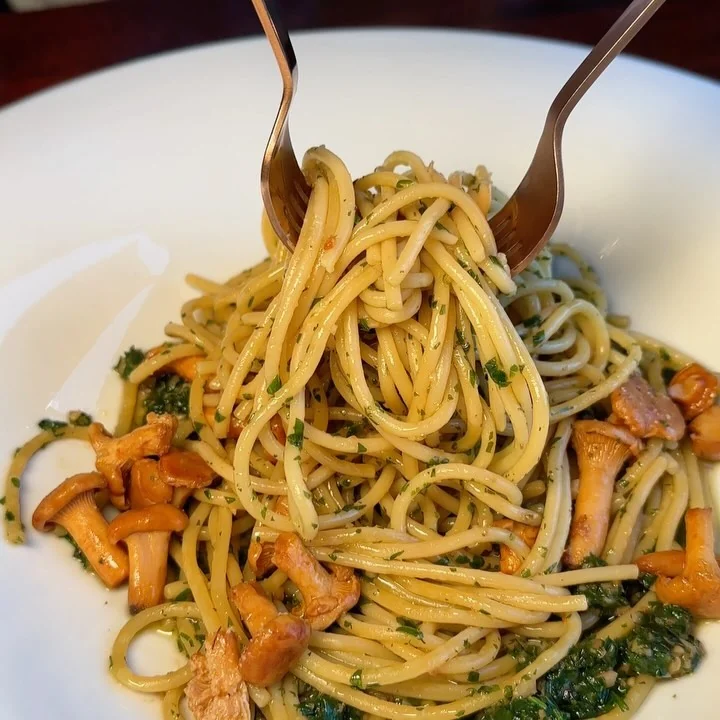
Grilled chanterelles retain their wavy rims and curved forms. When wound around a fork with the spaghetti, the mushroom’s springy texture remains clear among the softer noodles.
The house-made oil sauce coats the spaghetti and mushrooms evenly, while the chanterelles add a different shape and chew from the pasta.
Lemon and Fresh Parsley Brighten the Cooked Mushrooms
Lemon and fresh parsley add bright aromas to the cooked chanterelles and oil sauce. Garlic and vegan Parmesan powder also complement the flavours of the spaghetti and mushrooms.
Even if chanterelles are unfamiliar, the spaghetti and oil sauce provide a familiar foundation for their curved shape and springy bite, accompanied by the aromas of lemon and fresh parsley.
For Anyone Curious about Chanterelle Pasta
- Does ‘Chanterelle’ Refer to Only One Kind of Mushroom?
- No. Chanterelle is a common name used for several Cantharellus and Craterellus species.
- What Aroma and Texture Stand Out When Tasting Chanterelles for the First Time?
- Their wavy shape and springy bite, distinct from the spaghetti, are immediately apparent. Lemon and fresh parsley add bright aromas to the grilled mushrooms and oil sauce.
- Can the Sizzle Alone Tell You When the Mushrooms Are Done?
- No. The sound signals the movement of moisture and heat, but it varies with the size, moisture and quantity of the mushrooms and the cooking conditions. Colour, aroma and surface condition are considered together.
- Which Ingredients Accompany the Chanterelles?
- Spaghetti, house-made oil sauce, fresh parsley, garlic, lemon and vegan Parmesan powder.
Experience the curves and springy bite of grilled chanterelles, with the fresh aromas of lemon and parsley, on one plate.
View the Chanterelle Pasta