In this story
- A Surface Formed by Tubes, Not Gills
- A Mushroom That Lives with Forest Tree Roots
- The Combination Behind Its Earthy, Mushroom-Like Aroma
- Heat Changes the Balance of Its Aromas
- Porcini Is a Culinary Name, Not One Exact Species
- A Plate Where Tomato Sauce Meets Roasted Porcini
- What to Know Before Tasting Porcini
The short answer
Boletus edulis, the species most closely associated with porcini, is a bolete with a densely packed layer of fine tubes rather than gills beneath its cap. In Mahina Vegan Table's Porcini Pasta, roasted porcini is paired with tomato sauce, shallot and fresh basil.
Three Clues to Understanding Porcini
- The tiny openings beneath the cap are the ends of fine tubes that form a porous surface.
- Porcini and related boletes form mycorrhizal relationships with tree roots, exchanging materials with forest trees.
- Several volatile compounds contribute to aromas reminiscent of earth and mushrooms.
Into the story
A Surface Formed by Tubes, Not Gills
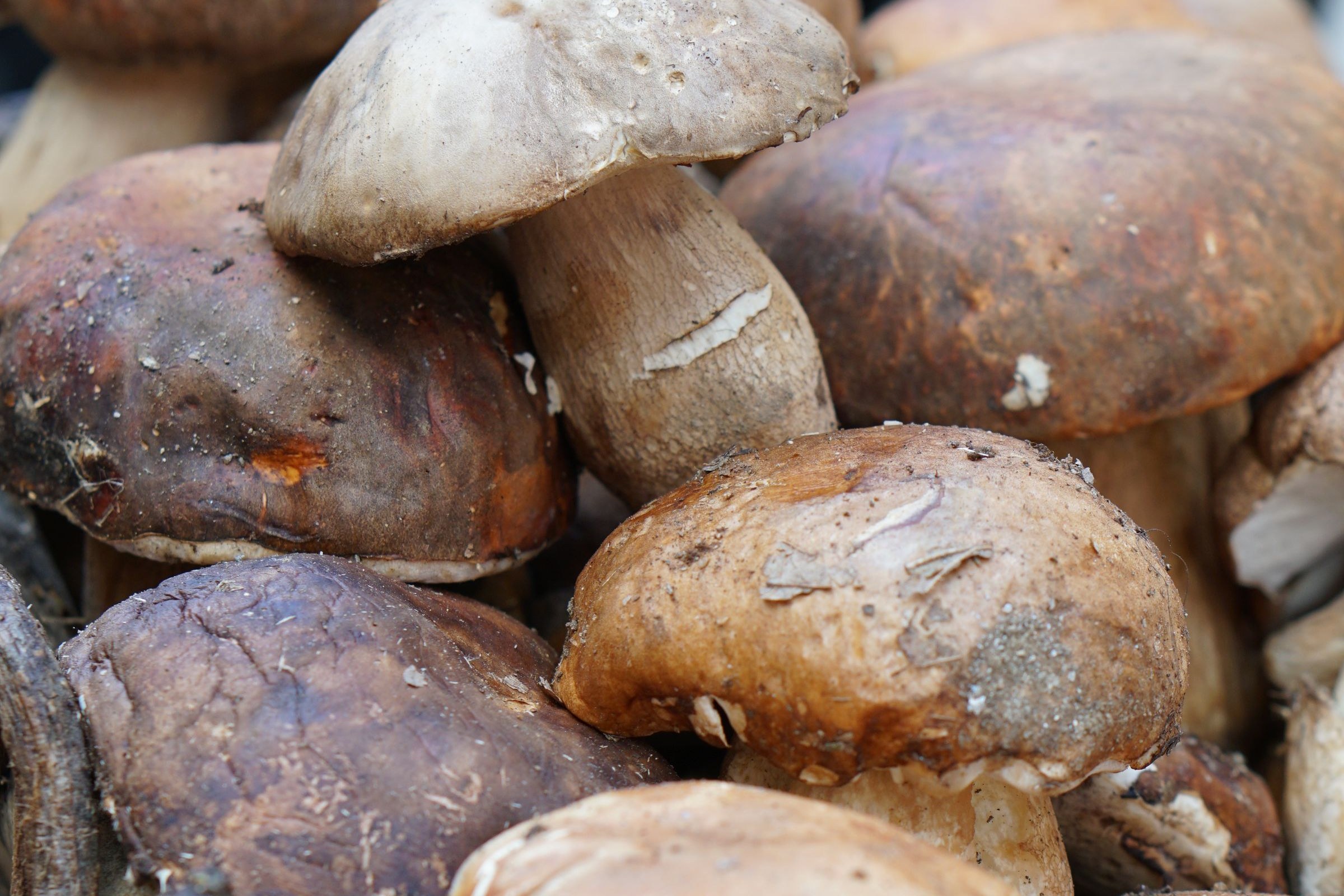
Unlike mushrooms such as the button mushroom, which have thin gills beneath their caps, Boletus edulis has fine vertical tubes packed together under its cap. Their ends appear as tiny openings on the outside, creating what is known as a pore surface.
In a young fruiting body, this surface is pale and closely packed; its colour and texture change as the mushroom matures. A broad cap, stout stem and sponge-like pore surface are useful features when examining porcini and related boletes.
A Mushroom That Lives with Forest Tree Roots
The principal porcini species forms ectomycorrhizae with tree roots. Its fungal threads spread through the soil and around the roots, extending the area from which water and minerals can be obtained, while receiving carbon compounds produced by the tree.
This relationship gives porcini an ecology quite different from that of a vegetable growing independently in a field. A piece on the plate is a fruiting body shaped by the forest, its trees and an underground fungal network.
The Combination Behind Its Earthy, Mushroom-Like Aroma
Several volatile compounds contribute to porcini's aroma, including 1-octen-3-ol, methional and 1-octen-3-one. Together, they create a complex profile with mushroom, earthy, vegetal and balsamic notes.
The proportions of aroma compounds can vary between cap and stem, and with the place of harvest and storage conditions. It is therefore more accurate to describe porcini in overlapping layers, such as mushroom, roasted and earthy notes, than to reduce its aroma to a single word.
Heat Changes the Balance of Its Aromas
Porcini's volatile compounds form different profiles when the cooking method changes, whether it is steamed, roasted, fried or boiled. At high temperatures, some pyrazines and aldehydes may increase, changing the impression of roasted aromas.
The way porcini's aroma changes during cooking depends on the size and moisture of the ingredient, as well as the sauce beside it. On the finished plate, the overall balance created by many aromas matters more than any single aromatic compound.
Porcini Is a Culinary Name, Not One Exact Species
In different regions, porcini is used as a trade and culinary name for several edible boletes. Although Boletus edulis is the best-known species, this does not mean that every porcini product contains the same species.
Because porcini is a culinary name encompassing several species, this article focuses on the pore structure and aromatic qualities they share.
A Plate Where Tomato Sauce Meets Roasted Porcini
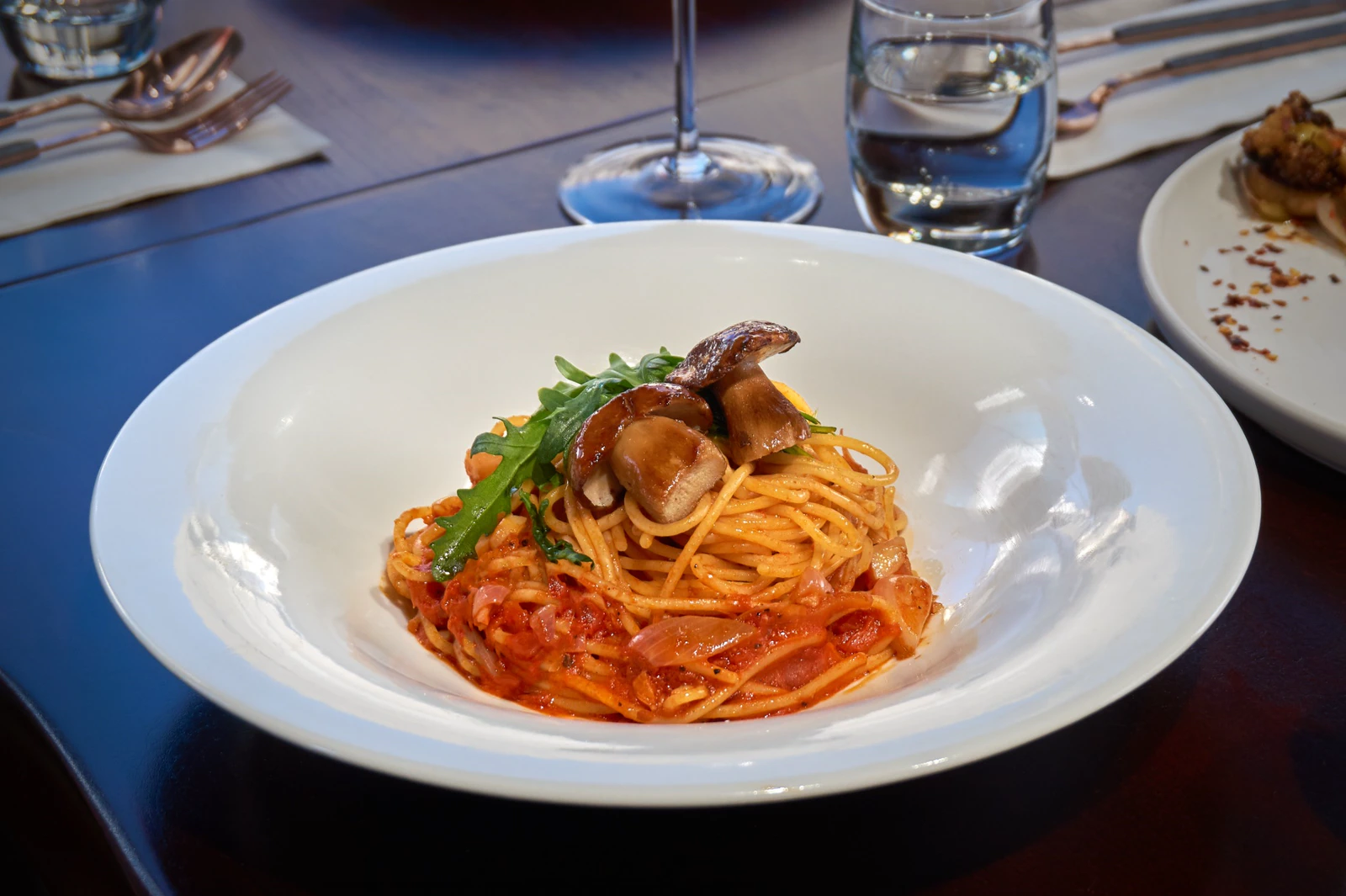
Mahina Vegan Table's Porcini Pasta combines spaghetti, house-made tomato sauce, roasted porcini, shallot, garlic, fresh basil and arugula. Broad pieces of mushroom and long strands of pasta create distinct shapes and textures on the same plate.
Thinking of porcini's pores and forest ecology changes the way the mushroom appears on the plate: it is more than a simple topping. Between the acidity of tomato and the fragrance of fresh basil, the roasted porcini's aroma and texture come to the fore.
What to Know Before Tasting Porcini
- Is Porcini the Same Mushroom as a Button Mushroom?
- No. The species most closely associated with porcini belongs to the bolete family, Boletaceae, while the button mushroom belongs to the family Agaricaceae. Their undersides also differ: porcini has pores, while the button mushroom has gills.
- What Are the Tiny Openings Beneath a Porcini Cap?
- They are the ends of a densely packed layer of fine tubes. The spore-producing tissue lines the inside of these tubes.
- Why Does Porcini Grow Near Trees?
- The best-known porcini species form ectomycorrhizae with tree roots and exchange materials with them. This ecological relationship is why fruiting bodies emerge around particular forest trees.
- Does a Single Aroma Compound Create Porcini's Scent?
- No. Several volatile compounds, including 1-octen-3-ol and methional, work together, and their proportions can vary according to the mushroom part, growing region, storage and cooking method.
Discover Mahina Vegan Table's Porcini Pasta, with roasted porcini, fresh basil and arugula over house-made tomato sauce.
View the Porcini Pasta