In this story
- Chanterelle is not the name of a single species
- False gills are ridges continuous with the mushroom's flesh
- Chanterelles are connected to tree roots in the forest
- Yellow colouring and an apricot aroma are possibilities, not rules
- Curved forms and firm flesh create a texture distinct from pasta
- Chanterelle pasta with lemon and fresh parsley
- Four questions for understanding chanterelles more clearly
The short answer
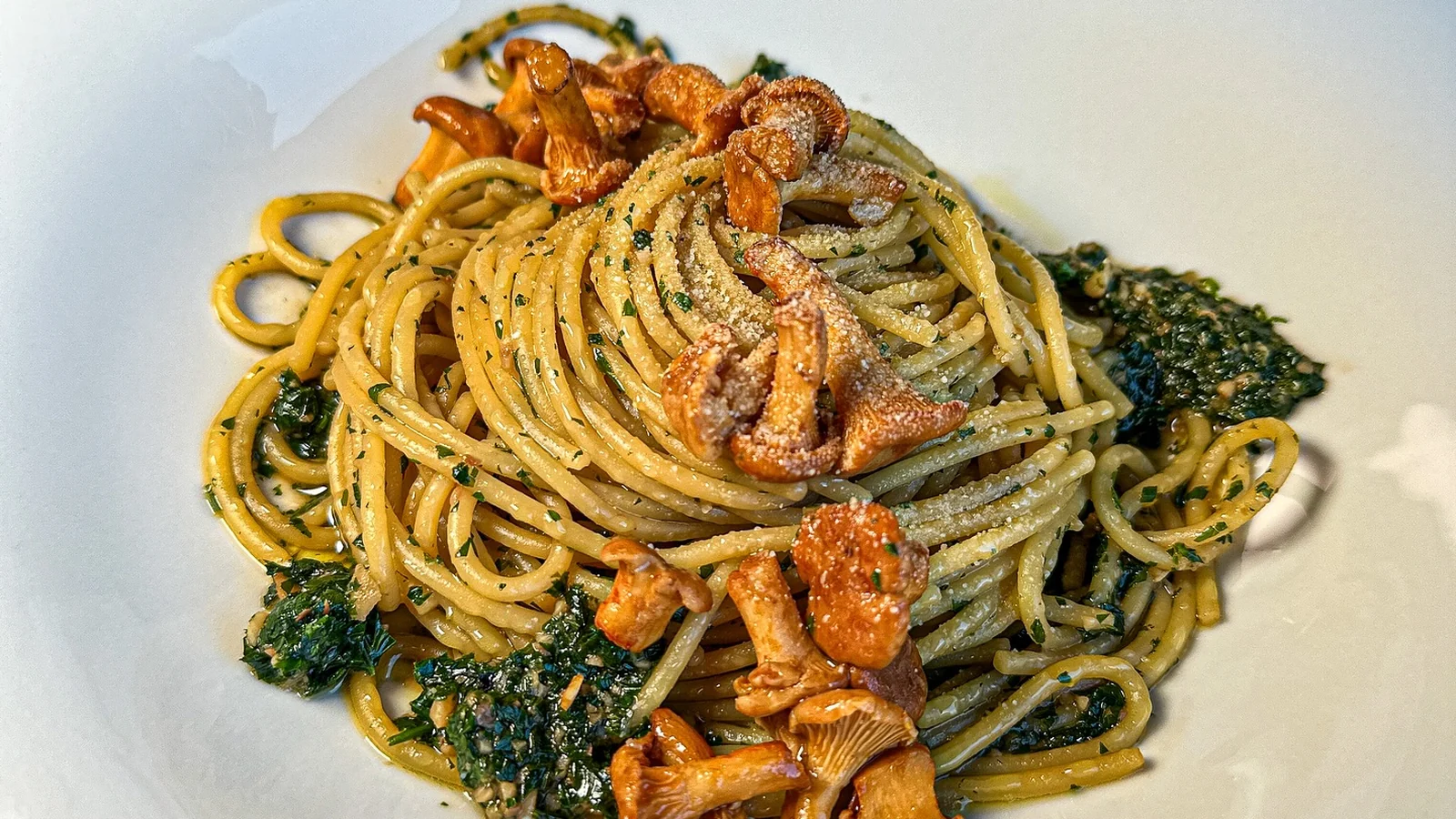
Many mushrooms called chanterelles, across the genera Cantharellus and Craterellus, have blunt ridges continuous with the flesh rather than true gills that separate like blades. In Mahina Vegan Table's Chanterelle Lemon Parsley Pasta, roasted chanterelles sit among spaghetti, lemon and fresh parsley.
Three clues for understanding chanterelles
- The lines beneath the cap are often blunt ridges, not blade-like true gills that can be separated individually.
- Chanterelles form mycorrhizae with tree roots, connecting them to living trees in the forest.
- Yellow colouring and an apricot-like aroma are common traits, but not every chanterelle has the same colour or scent.
Into the story
Chanterelle is not the name of a single species
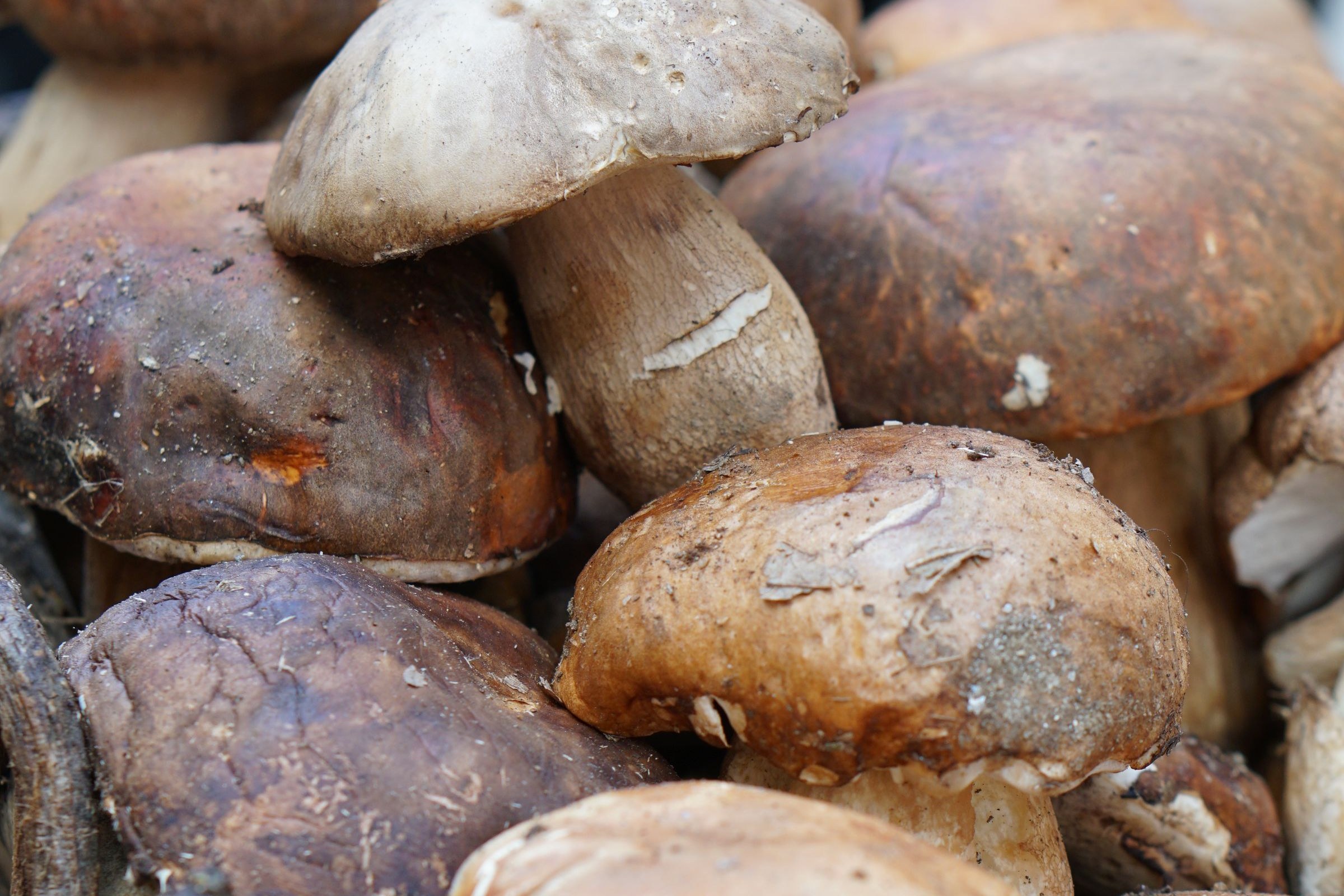
Chanterelle is a common name covering several edible mushrooms in the genera Cantharellus and Craterellus. Many species have similar appearances, and genetic information may sometimes be needed to distinguish them precisely.
Because the name chanterelle covers many species, this article focuses on the ridged structure and ecology shared by many of them.
False gills are ridges continuous with the mushroom's flesh
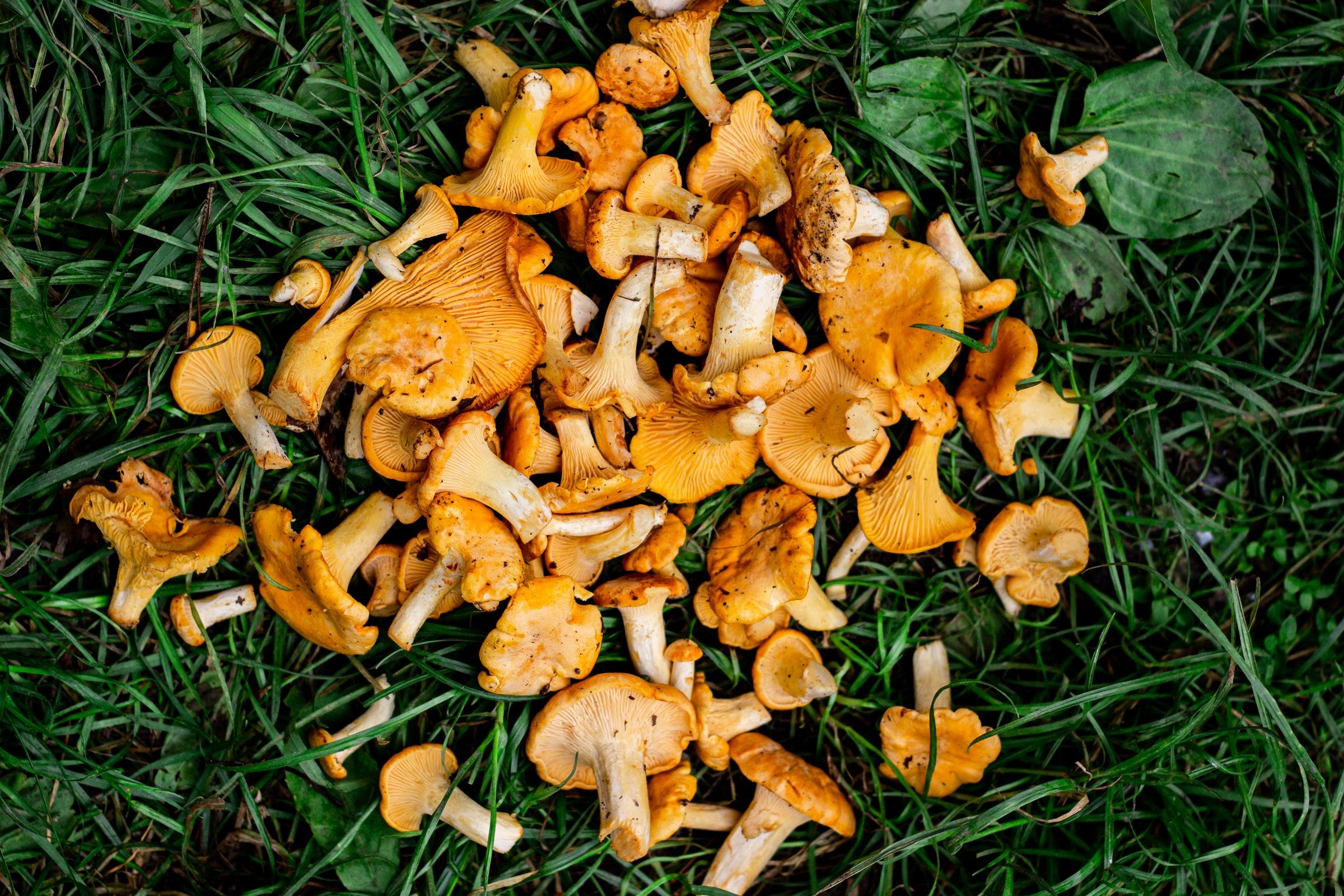
Beneath the caps of many chanterelles are blunt ridges that run down towards the stem. Unlike thin true gills that separate like individual blades, these ridges remain attached to the flesh and may merge with one another.
Many chanterelles also develop wavy cap margins and a depressed centre, creating a funnel-like form. In some species, however, the underside can be almost smooth and the ridges indistinct.
Chanterelles are connected to tree roots in the forest
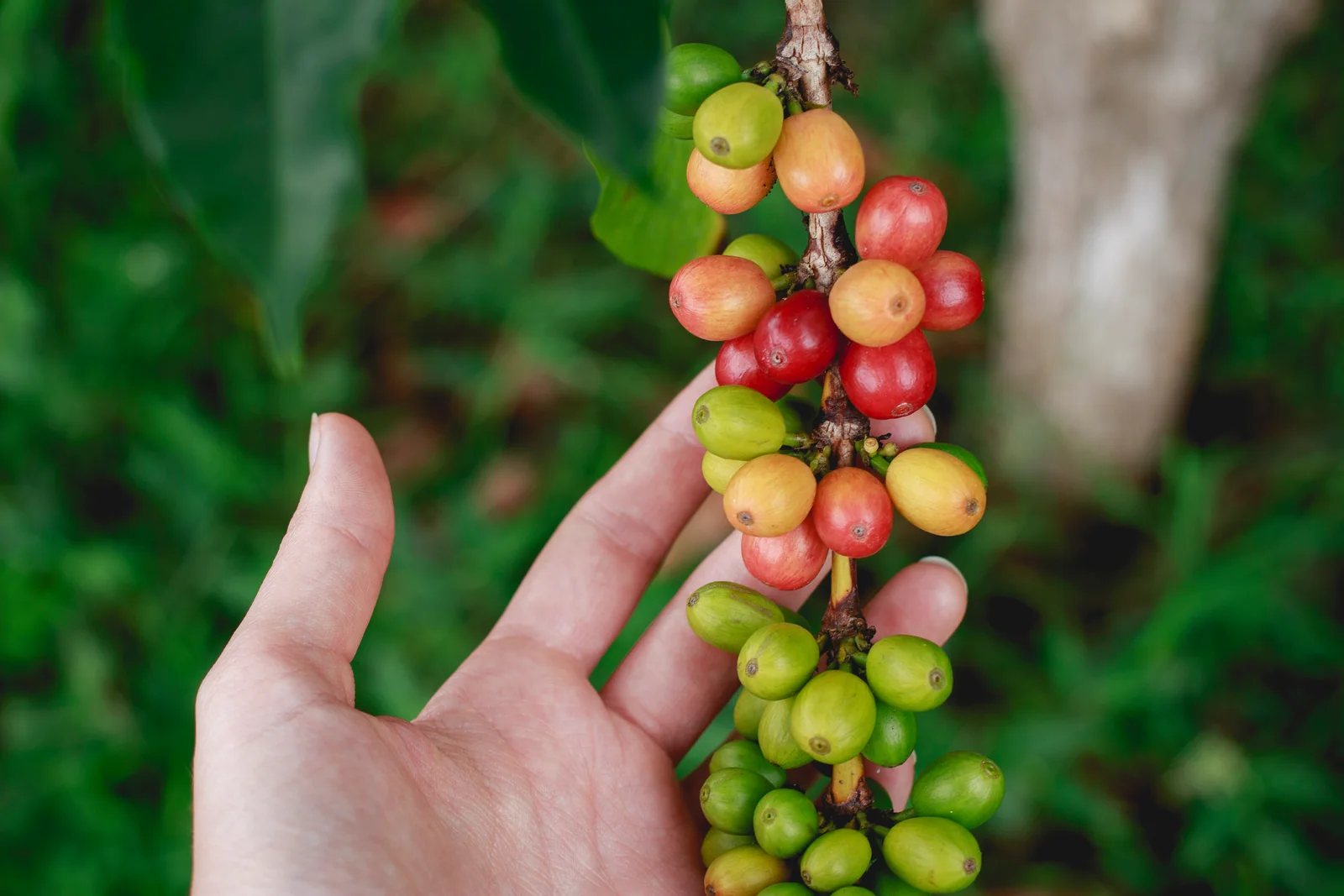
Chanterelles form mycorrhizae around tree roots and exchange materials with plants. Because their relationship with a living host plant is important to their life cycle, their ecology differs from that of mushrooms that decompose dead wood.
The cap and stem above the ground are not the whole fungus, but the fruiting body that produces spores. Knowing that the underground mycelium remains connected to tree roots makes it difficult to see a chanterelle as an isolated object in the forest.
Yellow colouring and an apricot aroma are possibilities, not rules
Chanterelle fruiting bodies range beyond yellow and orange to cream, pink, purple and black. Some species have a fruity aroma reminiscent of apricots, while others have no pronounced scent.
It is not safe to identify chanterelles by colour or aroma alone. This information provides context for understanding the variety of mushrooms on a plate; it is not guidance for foraging or determining whether a wild mushroom is edible.
Curved forms and firm flesh create a texture distinct from pasta
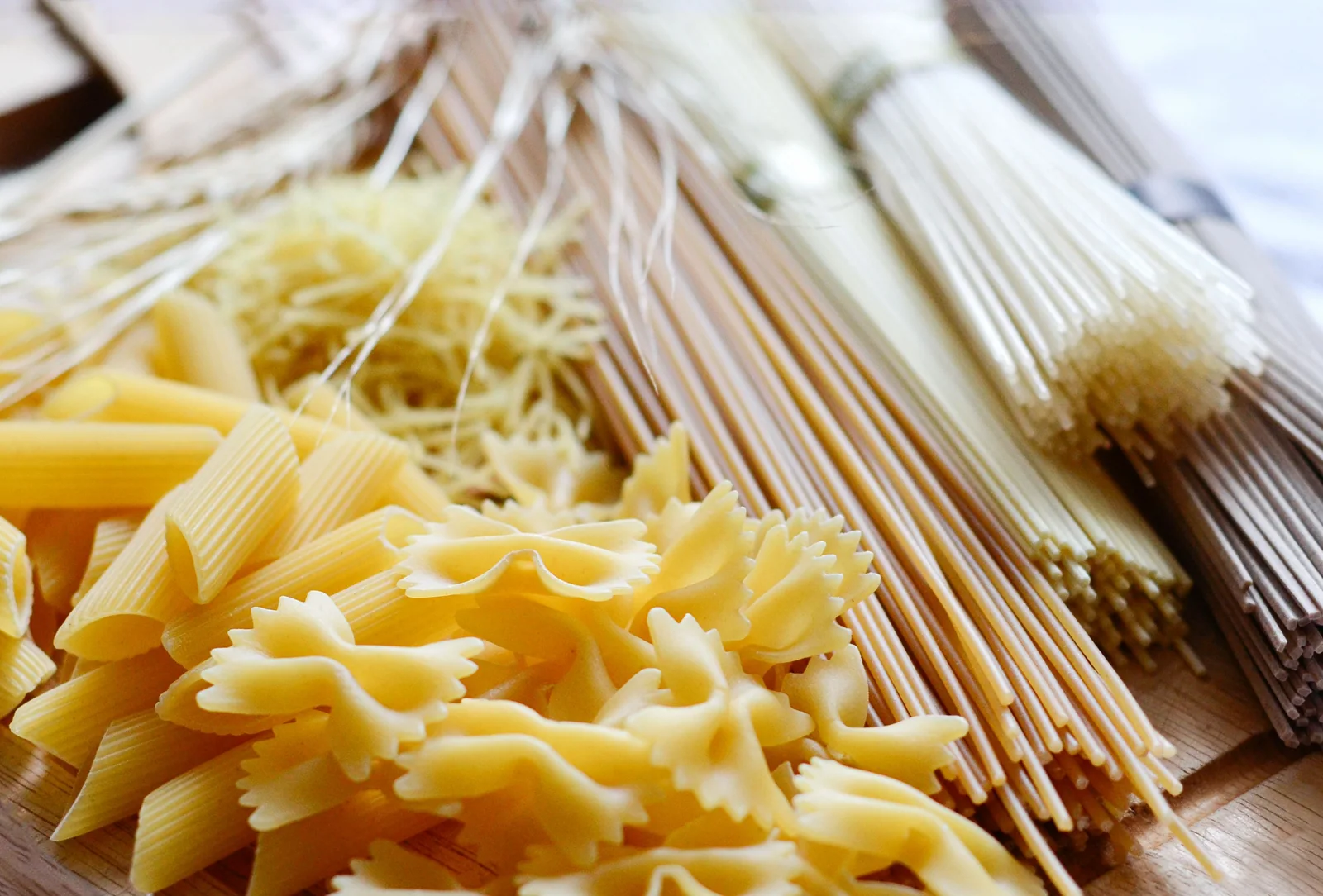
Chanterelle flesh is firm and dense. Eaten with long, slender spaghetti, the curved mushroom pieces provide a contrast in shape and resilience.
Within the broad name chanterelle, texture can vary with the species, the size of the fruiting body and its maturity. Not every piece therefore has exactly the same firmness or resilience.
Chanterelle pasta with lemon and fresh parsley
Mahina Vegan Table's Chanterelle Lemon Parsley Pasta combines spaghetti, house-made oil sauce, roasted chanterelles, fresh parsley, garlic, lemon and vegan Parmesan powder.
Once the wavy cap, blunt ridges and forest ecology connected to living trees are understood, chanterelle is no longer merely an unfamiliar name. Among lemon and fresh parsley, the mushroom pieces offer a form and resilience distinct from the spaghetti.
Four questions for understanding chanterelles more clearly
- Are all the lines beneath a chanterelle cap true gills?
- No. Many chanterelles have blunt ridges continuous with the flesh, structurally different from thin true gills that separate like individual blades.
- Are all chanterelles yellow?
- No. Yellow and orange are familiar, but some chanterelles can be cream, pink, purple or black.
- Do all chanterelles smell like apricots?
- An apricot-like aroma has been reported in some species, while others have no pronounced scent.
- Why do chanterelles grow in forests with trees?
- Because many chanterelles form ectomycorrhizae with tree roots and exchange materials with living plants.
Discover Mahina Vegan Table's Chanterelle Lemon Parsley Pasta, with roasted chanterelles, lemon and fresh parsley.
View Chanterelle Pasta