In this story
- Agaricus bisporus includes both white and brown forms
- The condition of the cap and veil reveals more about maturity than size alone
- The gills beneath the cap are revealed as the mushroom grows
- High moisture content makes drying and bruising happen quickly
- Browning is influenced by enzymes, damage and temperature
- Roasted button mushrooms in the burger and cauliflower steak
- Questions to ask when choosing and storing button mushrooms
The short answer
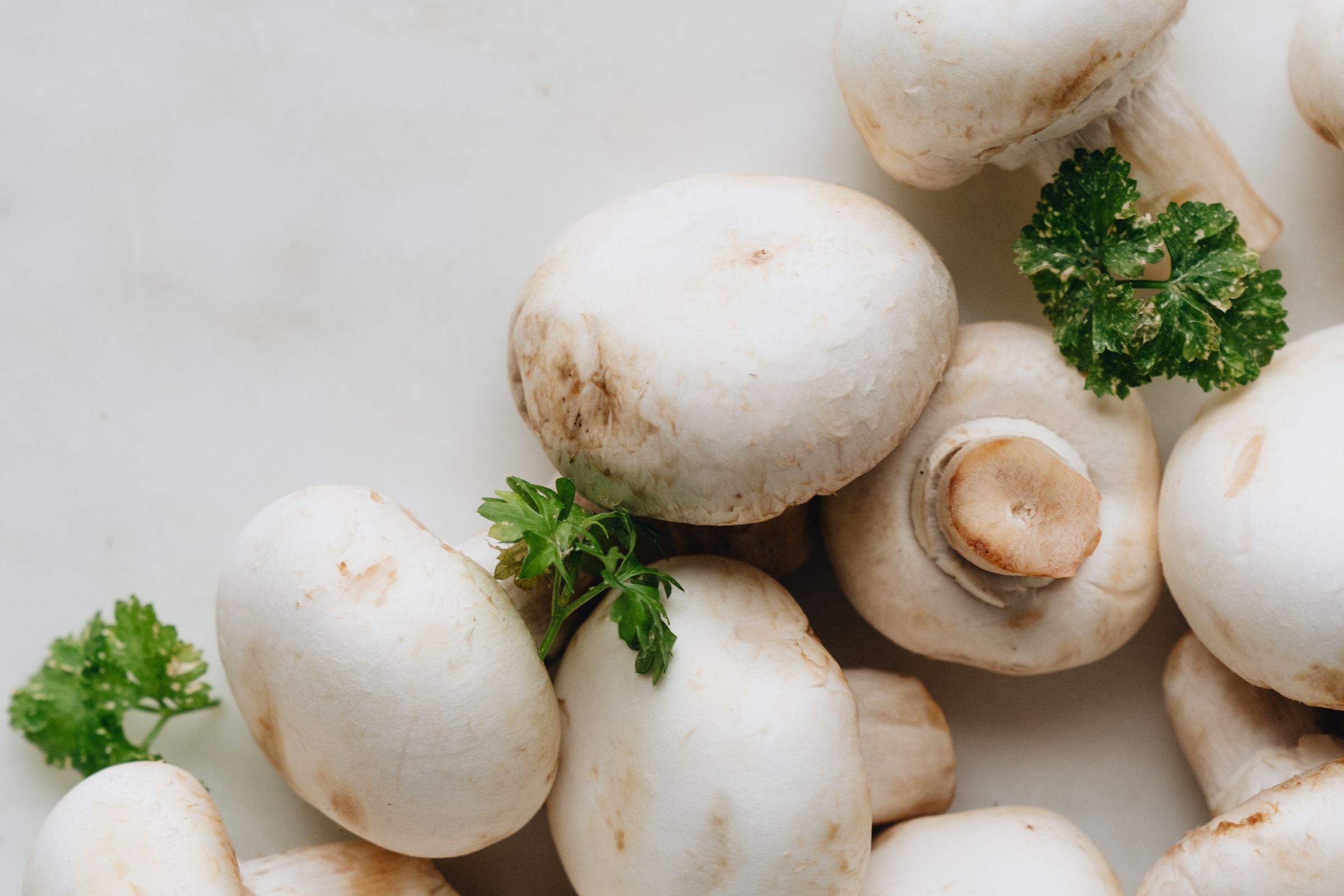
Agaricus bisporus is the principal cultivated species sold as the button mushroom and comes in forms ranging from white to dark brown. A rounded cap with the veil beneath it still closed is an important quality indicator in a young button mushroom. Mahina Vegan Table uses roasted button mushrooms in the Grilled Pineapple Burger and Grilled Cauliflower Steak.
Three clues for understanding button mushrooms
- White and brown button mushrooms may be different cultivated forms within the same species, Agaricus bisporus.
- Maturity is not determined by cap size alone; the condition of the veil and gills beneath the cap must also be considered.
- Their high moisture content and weak surface protection make them sensitive to drying, bruising and browning.
Into the story
Agaricus bisporus includes both white and brown forms
Commercial Agaricus bisporus ranges in colour from white to dark brown, with the white form the most widely distributed. A difference in colour does not automatically indicate a different species.
Cultivated lines within the same species can differ in cap colour and form. White and brown caps can therefore be understood as part of the diversity of cultivated forms within one species, rather than necessarily marking a boundary between mushroom species.
The condition of the cap and veil reveals more about maturity than size alone
Harvest maturity in button mushrooms is not determined by size alone. A rounded cap, an intact and closed partial veil, and the proportion of the stem are key criteria for assessing maturity and quality.
In a young mushroom, the partial veil joins the cap margin to the stem and covers the gills. As the mushroom grows, the cap expands and the veil opens to reveal the gills, so button mushrooms of similar diameter may be at different stages of maturity.
The gills beneath the cap are revealed as the mushroom grows
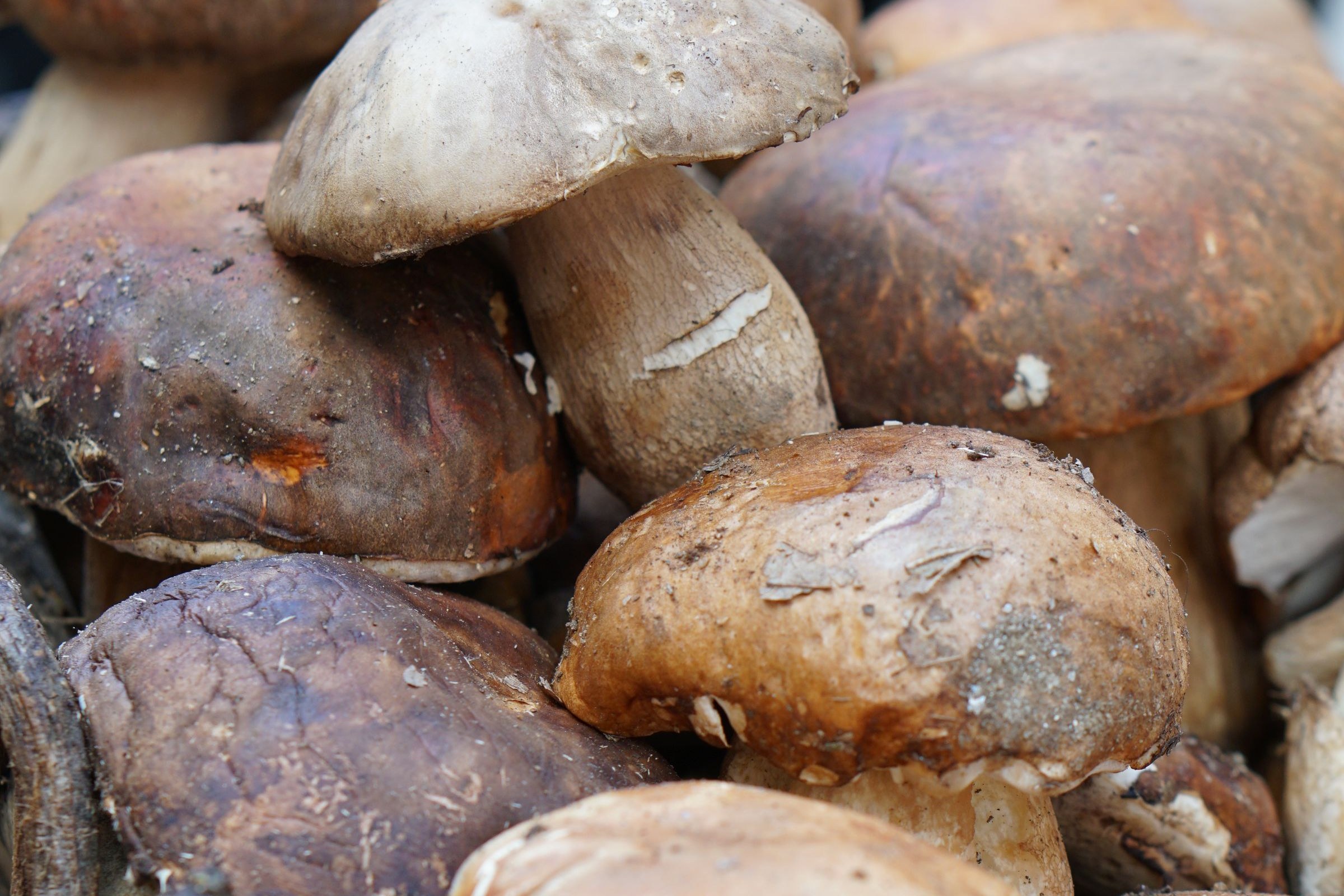
Unlike the pores beneath a porcini cap, a button mushroom has thin gills. A closed veil and smooth cap indicate a good young button mushroom, while exposed gills show that maturation has progressed.
Visible gills do not by themselves mean that a mushroom is inedible. In distribution, however, the degree to which the cap has opened is used to distinguish stages of maturity and visual quality.
High moisture content makes drying and bruising happen quickly
Fresh mushrooms have a high moisture content and no tough protective cuticle, leaving them sensitive to water loss and physical damage. Loss of weight and resilience, and drying across the cap surface, can appear relatively quickly.
Rough handling readily turns compressed areas brown. At home, check that water is not pooling inside the packaging and that the surface is not becoming excessively dry, and avoid placing mushrooms beneath heavy ingredients.
Browning is influenced by enzymes, damage and temperature
Tyrosinase, part of the polyphenol oxidase family, is involved in browning in button mushrooms. Physical damage and high storage temperatures accelerate changes in colour and texture, and rough handling makes brown spots more likely.
A naturally brown cultivated form is not the same phenomenon as browning on the surface of a white button mushroom. One is a genetically expressed cap colour; the other may be a quality change caused by damage and ageing.
Roasted button mushrooms in the burger and cauliflower steak
Mahina Vegan Table's Grilled Pineapple Burger combines a vegan meat patty, grilled pineapple, tomato, roasted onion and button mushrooms, and Ezabel lettuce. The mushrooms add their aroma and bite between the patty and roasted onion.
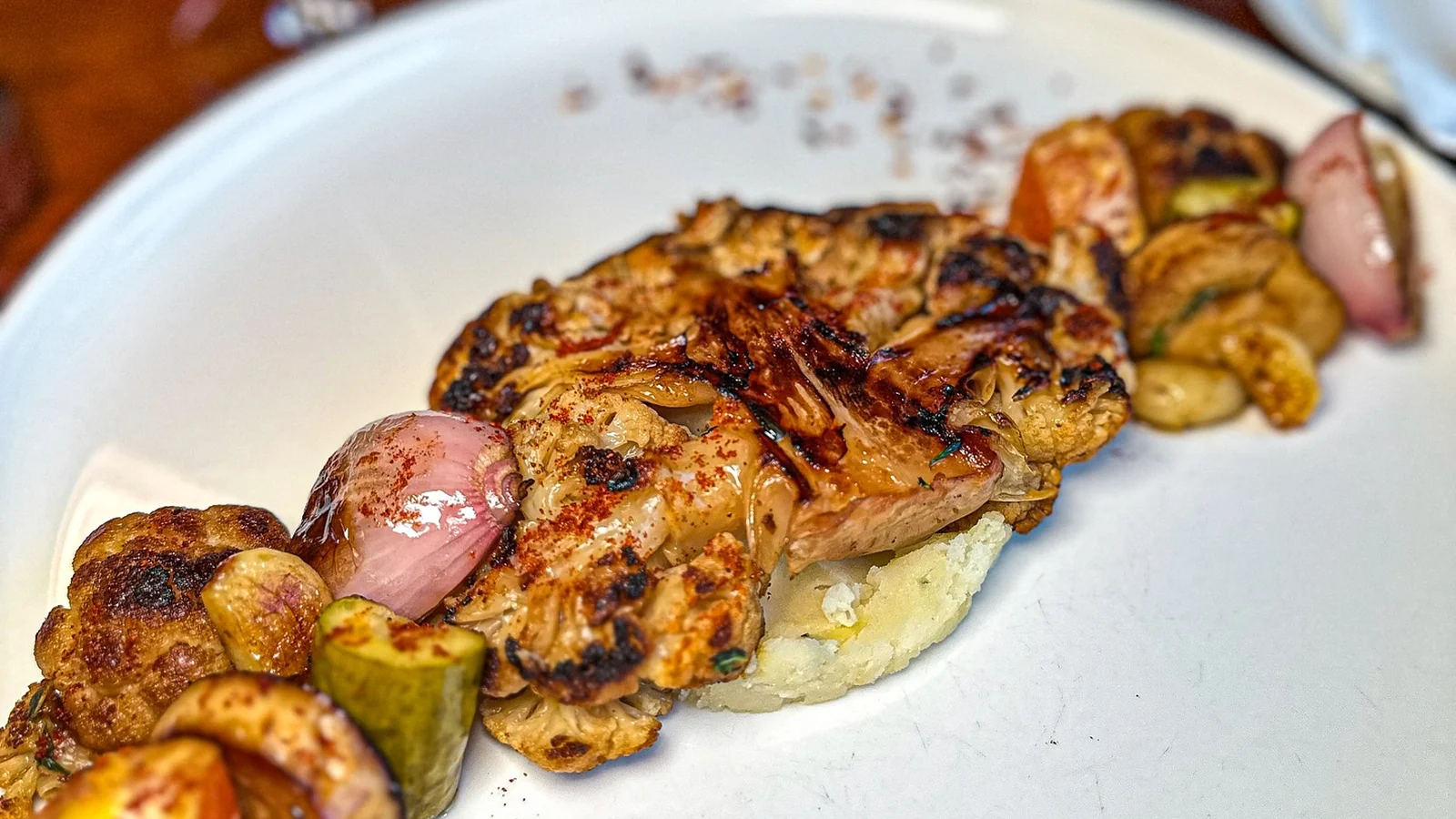
Button and king oyster mushrooms accompany the Grilled Cauliflower Steak. Knowing the firm structure of the button mushroom's cap and stem makes it easier to distinguish its form and texture from the cauliflower and king oyster mushroom on the plate.
Questions to ask when choosing and storing button mushrooms
- Are white and brown button mushrooms different species?
- Not necessarily. Agaricus bisporus includes both white and brown cultivated forms, and cap colour alone cannot establish that they are different species.
- Is a larger button mushroom more mature?
- Maturity is not determined by size alone. Consider the rounded form of the cap, whether the partial veil underneath remains closed, and how much of the gills is exposed.
- Why do button mushrooms turn brown so readily?
- They have a high moisture content and are sensitive to physical damage, while enzyme reactions involving tyrosinase and other enzymes contribute to browning in damaged tissue.
- Can button mushrooms be washed and then stored for a long time?
- Quality may decline more quickly if water remains on the surface. After purchase, avoid compression and pooled water, and prepare and wash the mushrooms close to the time they will be used.
Explore Mahina Vegan Table’s burger with a vegan patty, grilled button mushrooms and onions, and grilled pineapple.
View the Grilled Pineapple Burger