In this story
The short answer
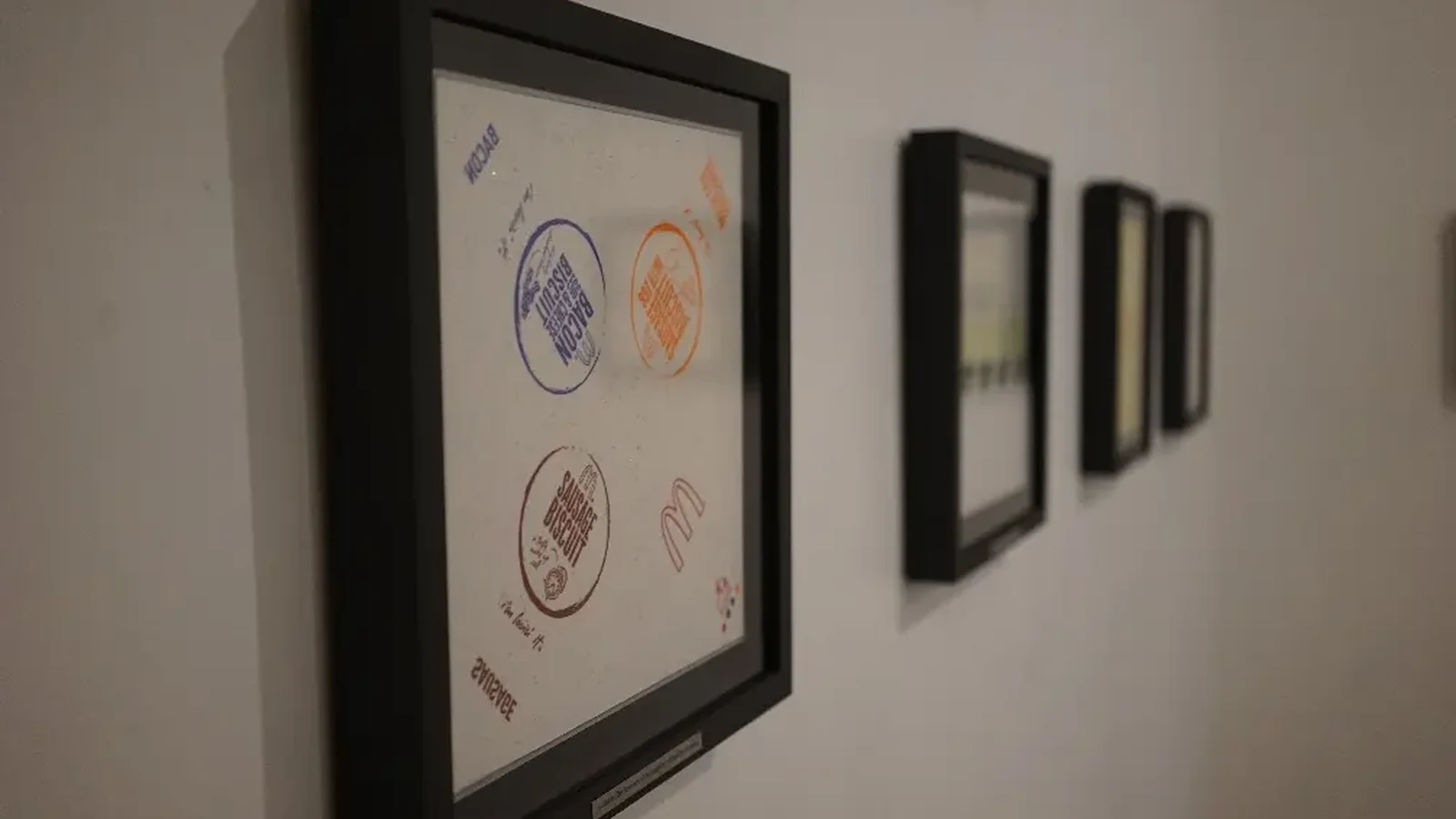
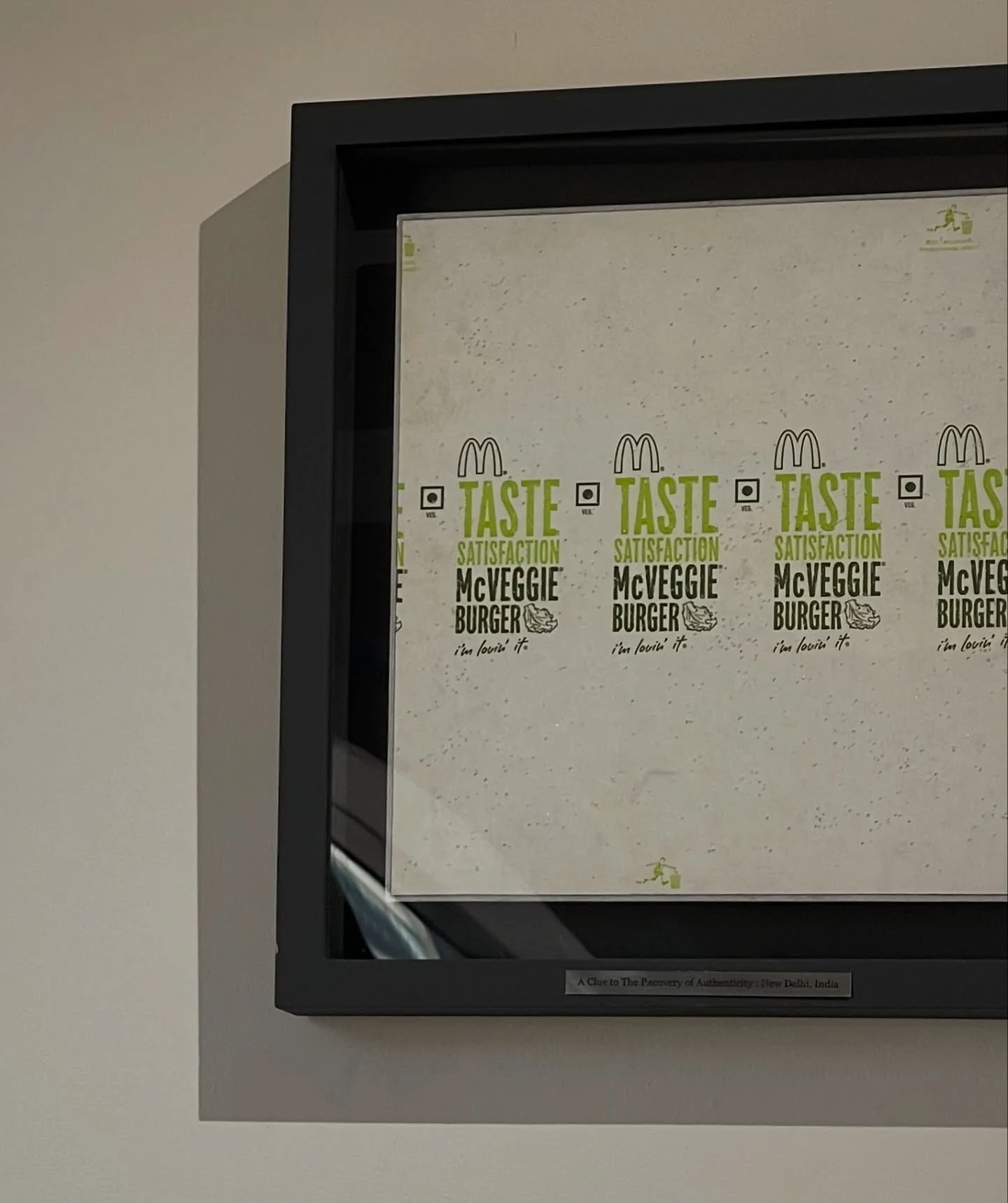
From a distance, the repeated arrangement of the works comes into view. Up close, you can see wrappers from different cities and the light reflected across their surfaces. Each work takes its title from the city and country where its wrapper was collected. As the lighting and your viewing angle change during a meal, the sparkle changes subtly as well. Begin with the overall arrangement, then look in turn at the materials, city names, and changing light.
What to Notice When Viewing the Works
- From a distance, you can see both the repeated arrangement of the 10 works and the graphic differences among the wrappers from each city.
- The “diamond dust” reflects light differently with each viewing angle, creating the sparkle across the works’ surfaces.
- Following the city names evokes how wrappers gathered across twenty countries passed through many hands on their way to Seoul.
- As lighting and sightlines change during the meal, the points of reflected light appear in different places.
Into the story
1. Start with the overall arrangement
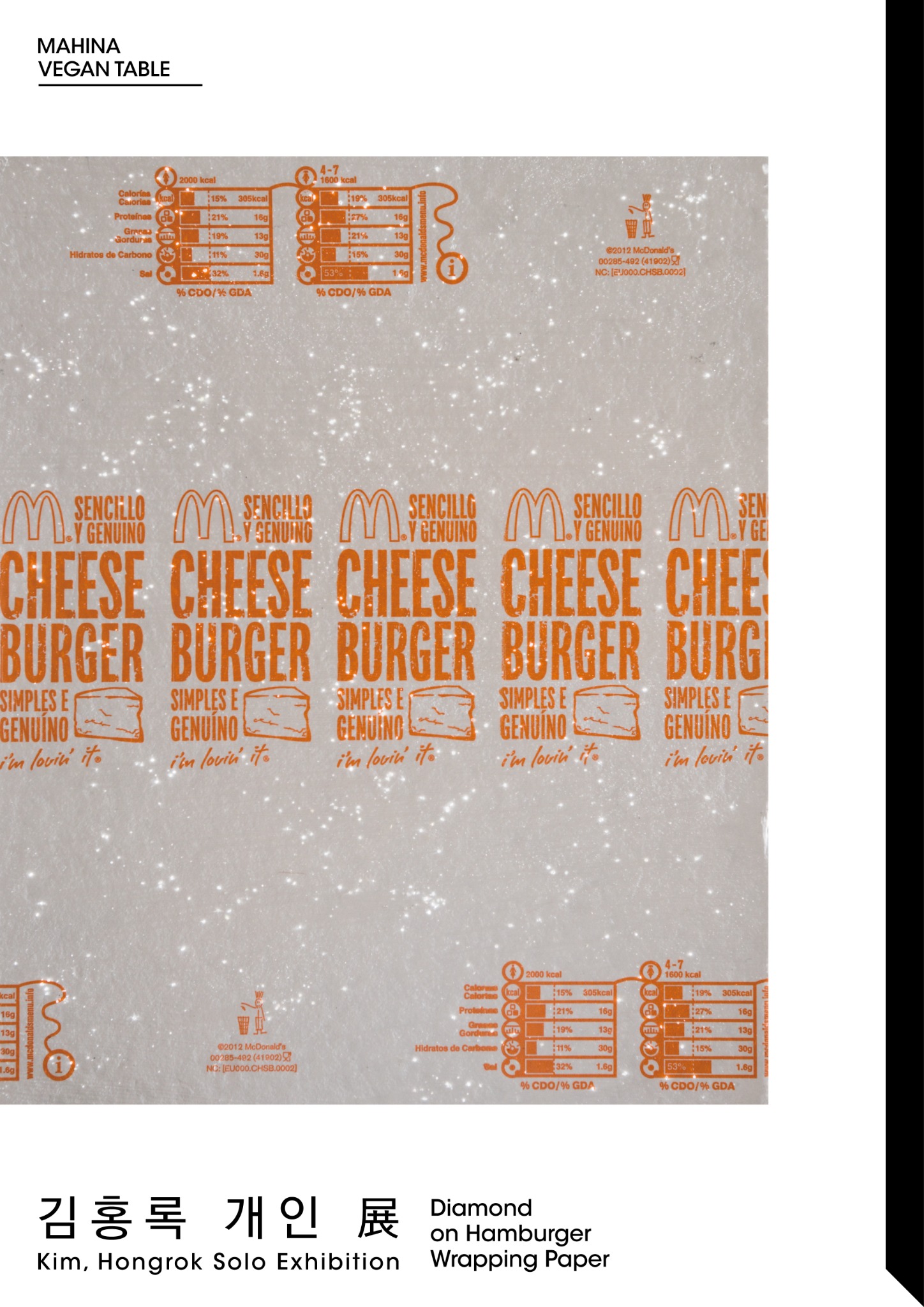
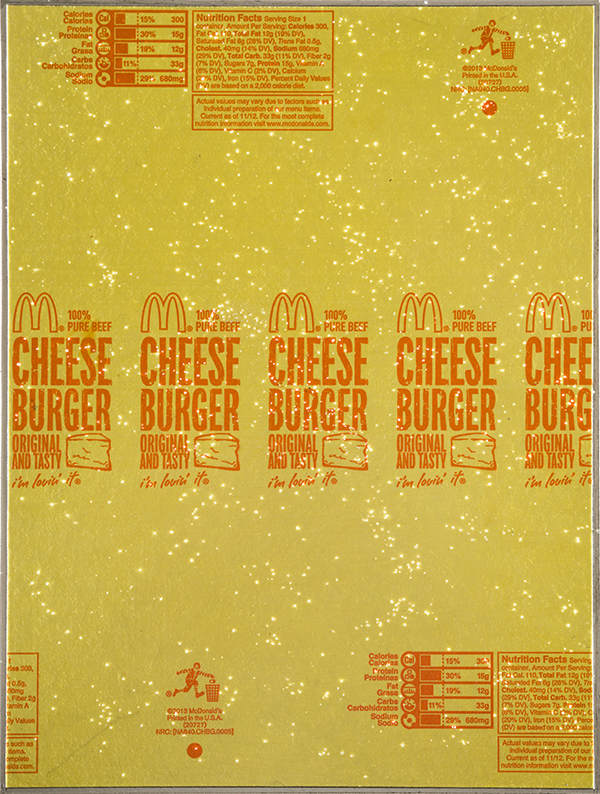
Kim Hongrok’s 2013 series A Clue to the Recovery of Authenticity: McDonald’s is on permanent display at Mahina Vegan Table. 10 works—Tokyo, San Francisco, Warsaw, Guangzhou, Madrid, Honolulu, São Paulo, Dubai, Prague, and New Delhi—are on permanent display at Mahina Vegan Table. The work information gives the year as 2013 and the medium as diamond dust on a hamburger wrapper.
Once seated, you can take in the arrangement of all 10 works across the wall at a glance. The wrapper and logo formats repeat, while the colours, lettering, and city-specific graphics differ, giving each work a distinct impression. Details of the individual city works are also available in Kim Hongrok’s works list on kimhongrok.com.
2. Compare the wrapper and reflective surface
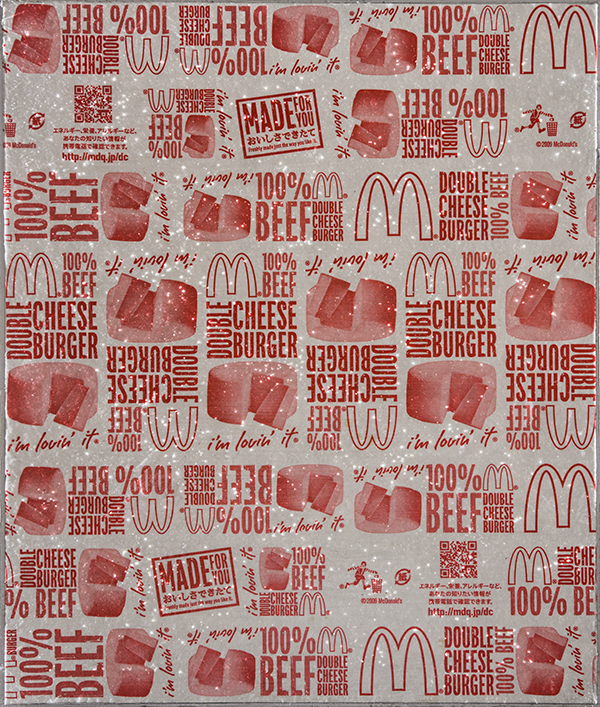
The works are made with hamburger wrappers and diamond dust. The diamonds used in the works are not large enough for commercial jewellery, but they are very small diamonds that retain their individual forms rather than a powder. Their many facets and angles reflect light in different directions as the viewing angle changes.
The artist added diamonds, a material of high economic value, to mass-produced wrappers discarded after use. The printed colours may command attention first, but when light reaches the surface, the contrast between the two materials becomes unmistakable.
3. The City Names in the Titles
The wrappers were gathered from twenty countries with help from numerous people, and each work was named for its collection city and country. His work list includes cities such as Anchorage, Athens, Atlanta, Buenos Aires, Chicago, Dubai, Fukuoka, Ho Chi Minh City, Seoul and Shanghai. The city names trace how wrappers collected in different places came together as a single series.
Following the city names along the wall evokes how wrappers collected across many parts of the world passed through many hands on their way to Seoul. Before the city is known, the logo and colour may dominate; afterwards, the place of collection and the journey become visible as well. The series begins to feel less like one brand image and more like a record assembled through many people’s participation.
4. A Series That Began with the Bussot Family’s Story
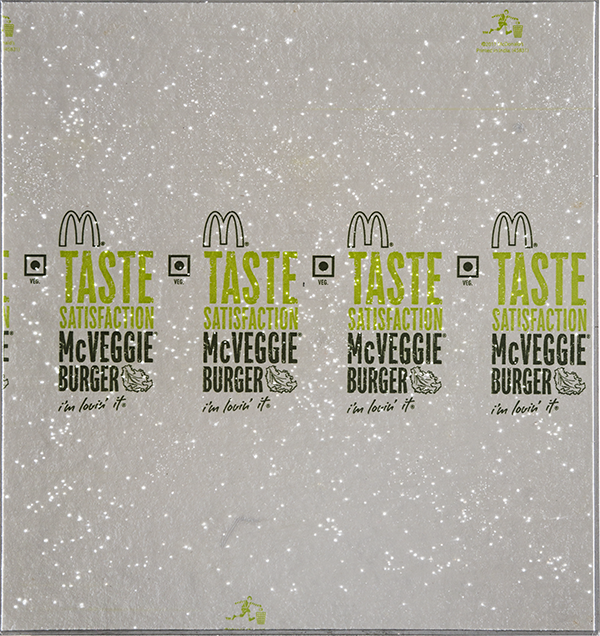
Kim Hongrok’s first solo exhibition, A Clue to the Recovery of Authenticity: Bussot, Raul, addressed the Bussot family’s 1993 raft journey from Cuba toward the United States. In 2013, the artist and the now-adult Raul Bussot Jr. spent five days on a reconstructed raft inside the gallery. The first food the Bussot family ate after arriving in the United States was McDonald’s. On the final day of the 2013 performance, the artist and Raul Bussot Jr. also ate McDonald’s food on the raft. This experience became the link to the second solo exhibition later that year.
The second exhibition ran from 9 to 31 October 2013, and its medium was diamond dust on hamburger wrapping paper. For the Bussot family, McDonald’s is remembered as the first food they ate after arriving in the United States; for someone else, it may be an ordinary meal. The same brand and object can carry different meanings and values depending on personal experience, place and time.
5. Light That Changes with Position and Viewpoint
As the meal continues, posture and line of sight change naturally. The surface may light up all at once or only in certain places depending on the direction of the lighting and where the viewer is seated. Even the same work changes as the location and intensity of each reflection moves.
As the viewing angle changes, the contrast between the disposable wrapper and the economically valuable diamonds also becomes clearer. New points of reflected light appear whenever the eye returns to the work during the meal.
View the art alongside a meal
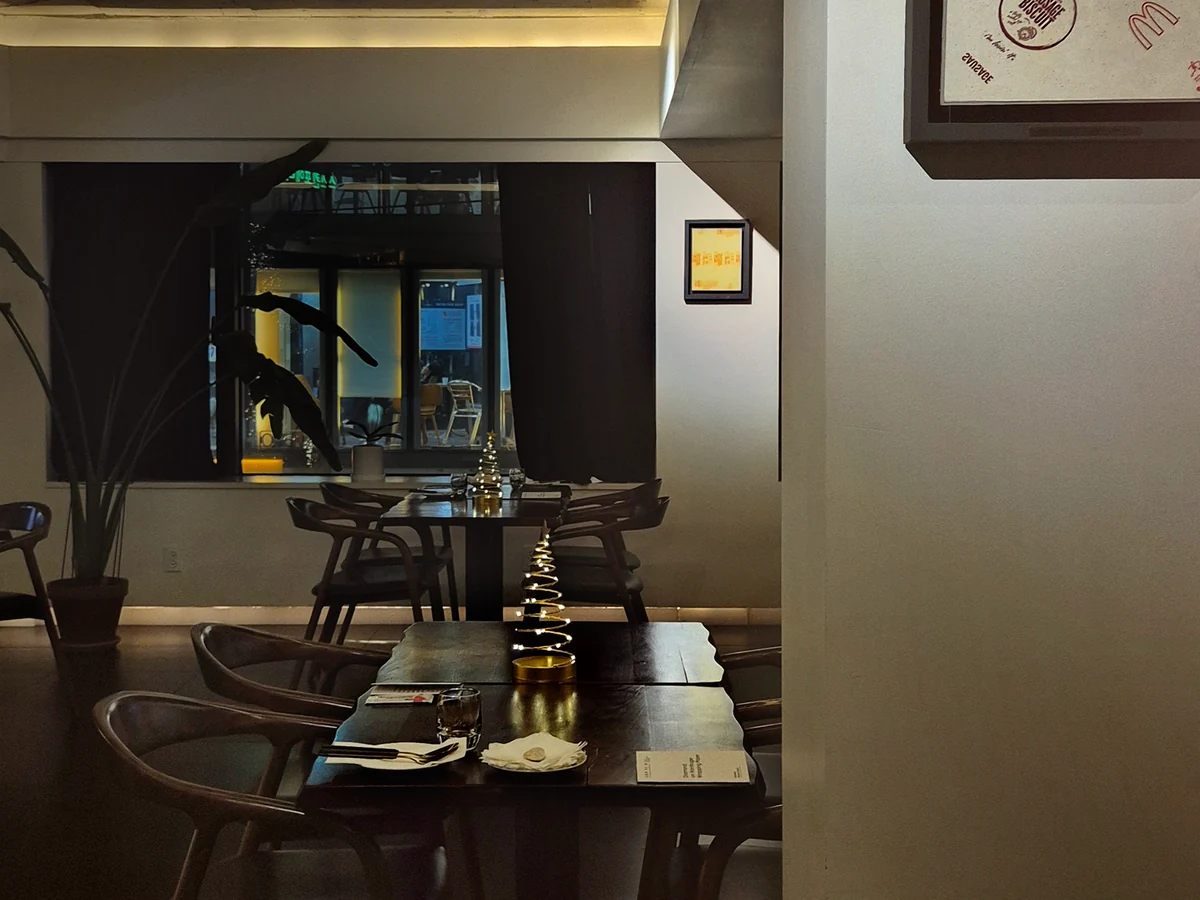
You may visit solely to see the exhibition. Because the works are displayed in the dining room, however, we recommend viewing them while enjoying a meal so that other guests can dine comfortably. If other guests are dining at the table in front of a work, please keep your distance rather than approaching closely or taking photographs. When taking a photograph, do not use flash or include other guests’ faces, and never touch the work.
Mahina Vegan Table is open Monday through Saturday for lunch from 12:00–16:30 (last order 15:50) and dinner from 17:00–21:00 (last order 20:20), and is closed on Sunday. You can view the works naturally while dining. Before visiting, please check the opening hours and current reservation availability.
Questions About the Works
- Did McDonald’s Participate in Making the Works?
- No. This is a solo work by Kim Hongrok; the McDonald’s hamburger wrapper is a material and the object from which the work’s story begins. The works were not produced in collaboration with McDonald’s.
- What do the tiny diamonds mean in the work?
- Kim Hongrok places diamonds associated with high price and exchange value on a wrapper discarded after use. When the surface catches light, the contrast between the two materials becomes immediately visible.
- Are the diamonds natural or laboratory-grown?
- Natural diamonds were used when the work was made in 2013. Although the medium is listed as “diamond dust on hamburger wrappers,” in these works the term refers to very small diamonds—not powder—that retain individual shapes and reflective surfaces.
- How Many Works Are on Permanent Display at Mahina Vegan Table?
- 10 works, from Tokyo through New Delhi, are on permanent display. The city name and details of each work are also available in Kim Hongrok’s works list on kimhongrok.com.
- Can I visit only to see the exhibition without dining?
- You may visit solely to see the exhibition. Because the works are displayed in the dining room, however, we recommend viewing them while enjoying a meal.
You can enjoy Kim Hongrok’s works alongside a meal at Mahina Vegan Table.
View Exhibition Information