
In this story
- Three Gymnopédies written in 1888
- Two left-hand gestures make the ground
- The right hand does not walk inside the accompaniment's boxes
- Slow is not the same as stopped
- A return to the same place carries a different harmonic memory
- Why keep quietly repeating music close
- Four questions about repetition in Gymnopédie No. 1
The short answer
Satie's Gymnopédie No. 1 is the first of three pieces written in 1888, and its score is marked ‘slow and painfully’. The left hand repeats a regular step, alternating low bass notes with chords above, but the position of the bass and the colour of the harmony keep changing. The right-hand melody breathes over them in phrases of different lengths. The frame repeats; the distance and colour within it do not, so repetition never becomes mechanical copying.
Three places to hear change within repetition
- All three Gymnopédies were written in 1888, and No. 1 moves in a slow triple metre.
- The left hand's bass–chord pattern may look unchanged, but the register of the notes and the composition of the chords keep shifting.
- The length and rests of the right-hand phrases pull against the accompaniment's regular tread and create a longer breath.
Into the story
Three Gymnopédies written in 1888
The autograph scores of the three Gymnopédies are held by the Bibliothèque nationale de France. No. 1 is dated 1888-2, No. 2 is dated 1888-3 and No. 3 is dated 1888-4; No. 1 first appeared in a journal in 1888-8. Satie's self-published first edition followed in 1895.
The origin of the unfamiliar word ‘Gymnopédie’ cannot be settled with a single explanation. Before pursuing the title's mystery, hear the piano's very simple tread. In place of a grand development, Satie asks us to spend time with small differences of harmony and melody inside a recurring frame.
Two left-hand gestures make the ground
The left hand sounds a low bass note, then places a chord above it, and repeats. ‘Low–high, low–high’ becomes the tread of the entire piece. Because the pattern is so clear, even a first-time listener quickly finds the ground beneath the melody.
The bass does not remain in one place, however, and the make-up of the chords changes. As the distance between the low note and upper chord widens and narrows, the sense of space changes too. Rhythm remains familiar while harmony moves, creating familiarity and strangeness at once.
The right hand does not walk inside the accompaniment's boxes
The right-hand melody does not begin a new sentence with every left-hand chord. Some notes linger, some phrases cross the bar line and rests arrive earlier than expected. It resembles someone speaking freely in thought over a regular set of footsteps.
First hum only the melody; on the second hearing, follow only the left hand. Bring them together on the third and notice when the end of a melodic sentence coincides with a harmonic change and when it does not. That displacement gives time to the simple pattern.
Slow is not the same as stopped
The French direction in the score of No. 1 is Lent et douloureux—‘slow and painfully’. The slow tempo need not mean pressing every chord into heaviness. It can mean allowing bass and chord to resonate fully without losing their alternating larger pulse.
Too slow, and the sentence falls into pieces; too fast, and the harmonic changes pass unnoticed. When comparing performances, look beyond the total duration and ask whether the left-hand tread continues while the right hand still has room to breathe.
A return to the same place carries a different harmonic memory
When a familiar melody returns over harmony that is not exactly the same, its emotional temperature changes. The listener recognises the melody while also sensing that its surroundings have shifted. Repetition does not reduce what has already been heard; it forms a frame in which difference becomes easier to notice.
Listen once to the opening and a similar melody later in the piece, one after the other. Compare just one thing: the bass position, the brightness of the chord or the time left after the melody ends. The instant a small difference is heard, repetition becomes part of the subject rather than a background device.
Why keep quietly repeating music close
Gymnopédie No. 1 draws attention away from volume and rapid virtuosity towards a recurring rhythm and small harmonic changes. The steady step creates a basis for comparison, while the moving bass and melody show that simplicity and lack of change are not the same.
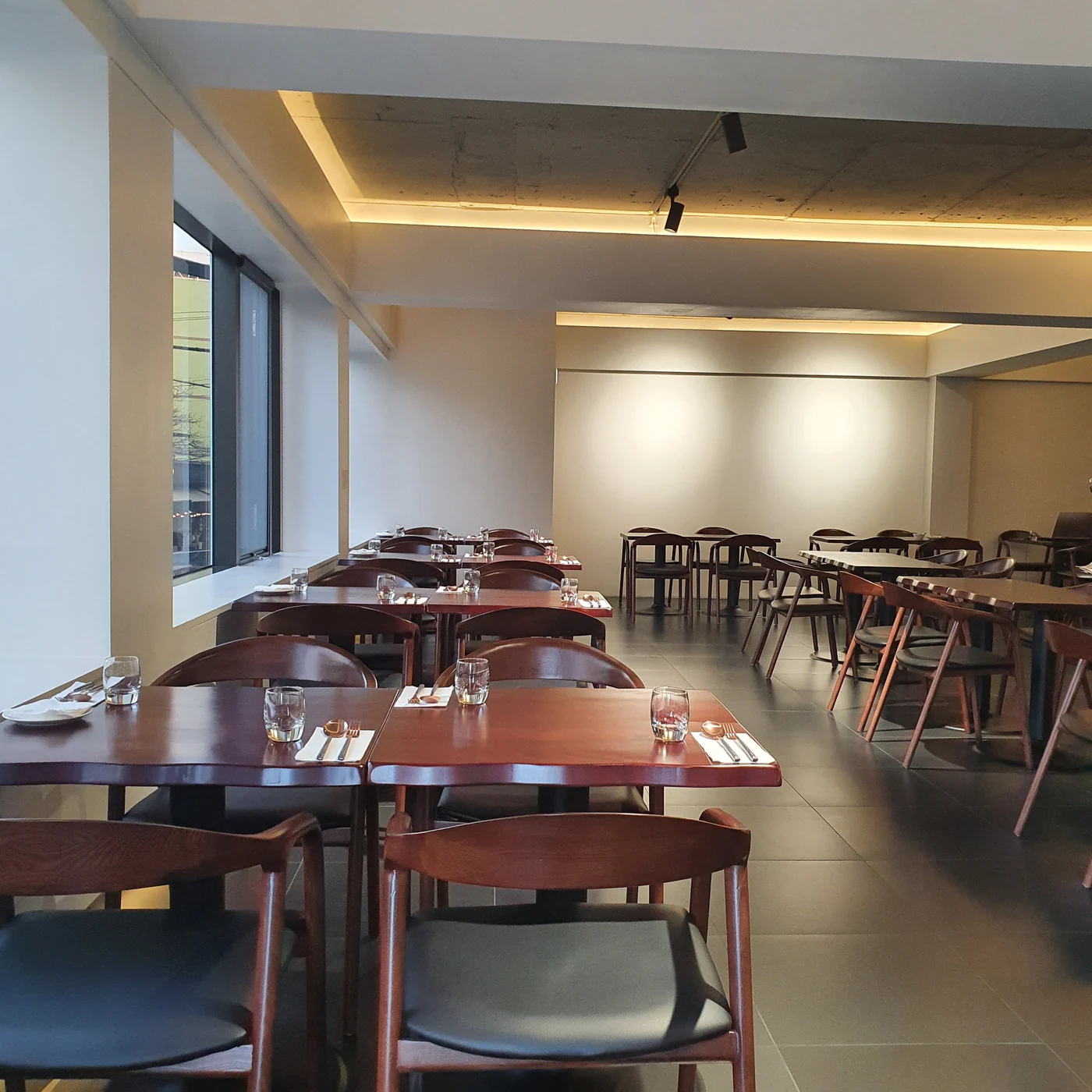
Mahina Vegan Table plays classical music in its dining space. This journal continues with accessible stories about the harmonic and melodic changes that can be discovered in classical works.
Four questions about repetition in Gymnopédie No. 1
- Is Gymnopédie the title of one piece?
- It is the collective title of three piano pieces Satie wrote in 1888. The frequently performed No. 1 is the first of them.
- Does the left hand repeat the same chord throughout?
- The rhythmic frame remains similar, but the bass and chordal make-up keep changing. The gesture repeats while the colour of the notes moves.
- Does ‘slow and painfully’ mean playing as slowly as possible?
- It is more than an instruction about speed. It is best understood as a character marking that shapes both the weight of the chords and the expression of the melody within a slow pulse.
- What is easiest to follow on a first hearing?
- First catch the left hand's two alternating gestures—a low bass and a chord above—then listen for where the right-hand sentences end over that tread.
Plan your visit and explore the space at Mahina Vegan Table.
Plan Your Visit to Mahina Vegan Table