In this story
The short answer
Words were later added to the English horn melody in Dvořák's New World Symphony: Goin' Home, created by William Arms Fisher in 1922. Earlier, when Dvořák was writing the symphony, the young musician Harry Burleigh sang him African American spirituals learned from his grandfather.
Into the story
A Young Man Waiting in the Snow to Hear Music
Burleigh grew up in Erie, Pennsylvania. His mother taught him music, and his maternal grandfather taught him African American spirituals. His grandfather had lived in slavery before buying his freedom. Burleigh sang at churches and local events and also studied piano and singing. He sang in the choirs of Erie's Episcopal cathedral, a Presbyterian church and a synagogue, working at several places because their services took place at different times. Songs learned from his family and music sung in local worship later led into his singing and arranging.
In his late teens, Burleigh wanted to hear the Hungarian pianist Rafael Joseffy so much that he waited outside a house in falling snow. It was the home of Elizabeth Russell, for whom his mother worked. Its guests were segregated by race, so he could not enter as a listener. He became ill, and when his mother learned the reason, she asked Russell to employ him as a doorman. Through this work, he heard musicians such as Teresa Carreño and Italo Campanini.
In 1892, Burleigh won a scholarship to the National Conservatory of Music in New York. Dvořák served as director of the same institution and frequently asked him to sing. According to Burleigh's later recollection, the composer, having worked during the day, listened after dinner. Burleigh sang the African American songs he knew. One of Dvořák's musical experiences in the United States was thus listening directly to another musician's voice.
The Debate over American Music
Jeannette Thurber, founder of the conservatory that invited Dvořák, wanted to train musicians in the United States. The school also offered admission to students of colour. Dvořák taught composition and conducted an orchestra. Outside the school, New York had many musicians and critics of German origin, with whom he conversed in German. He prepared the New World Symphony in an environment where a Czech composer taught American students while meeting colleagues from Europe.
In May 1893, Dvořák publicly argued that a distinct American compositional tradition could develop from African American melodies. Many musicians in the United States then took the German symphonic tradition as their standard. Harvard's John Knowles Paine thought the newspaper must have misreported Dvořák's remarks. The composer Amy Beach agreed with using folk music but questioned whether African American music represented the whole country. A debate arose over which music composers should learn from.
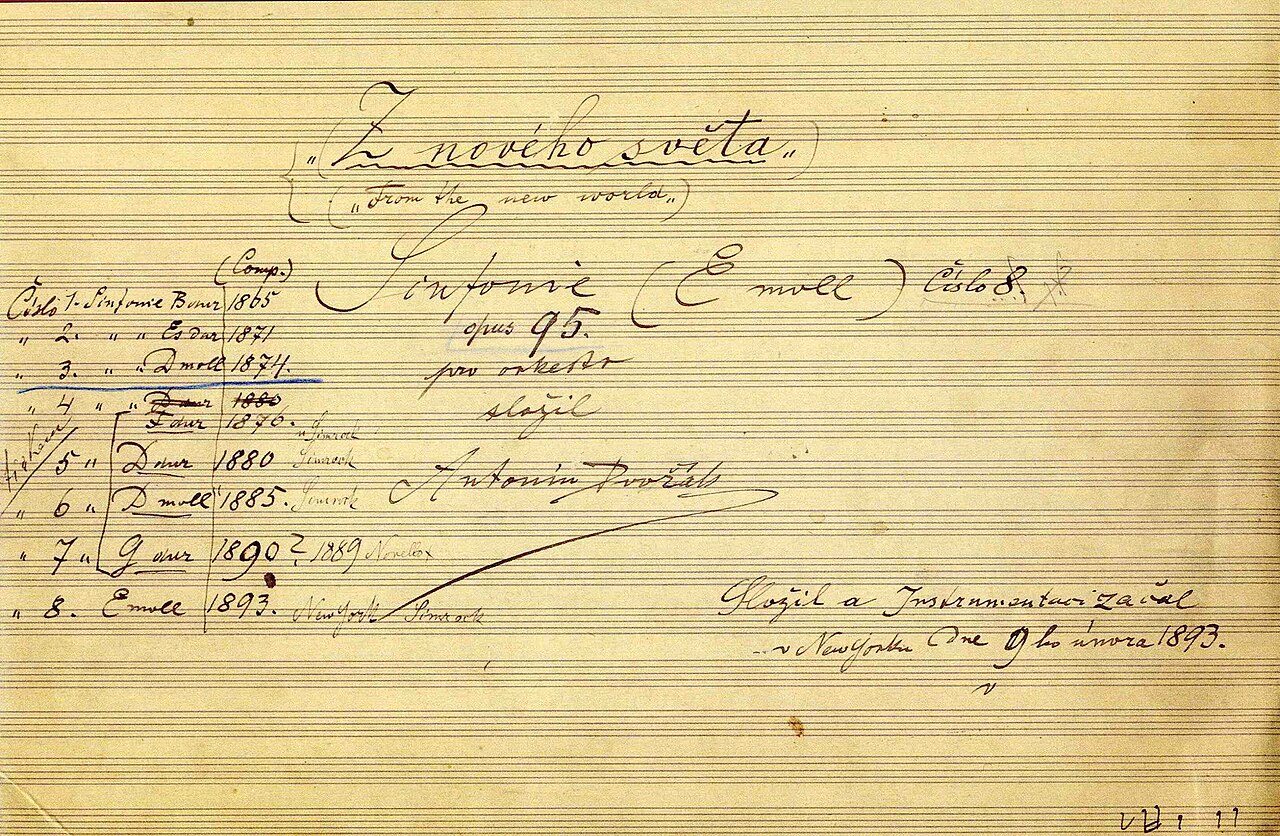
Dvořák had worked with both Czech folk music and Western compositional techniques. In songs he heard in America, he noticed melodies centred on five notes and syncopation. Syncopation changes the rhythm by stressing a position that would ordinarily be weak. His interest extended beyond familiar song titles to the ways melodies and rhythms were made. Drawing on songs Burleigh shared, Dvořák wrote new themes and developed them across a four-movement symphony.
A Symphony in 1893, a Song in 1922
The New World Symphony was completed in New York in 1893. The New York Philharmonic under Anton Seidl premiered it at Carnegie Hall on 16 December that year. The famous theme in the second movement, Largo, is a melody Dvořák composed. It is played by the English horn. Although its simple phrases can sound like an old folk tune, the song called Goin' Home came later. Hearing the same melody in a symphony and a vocal work today results from composition and arrangement at different times.
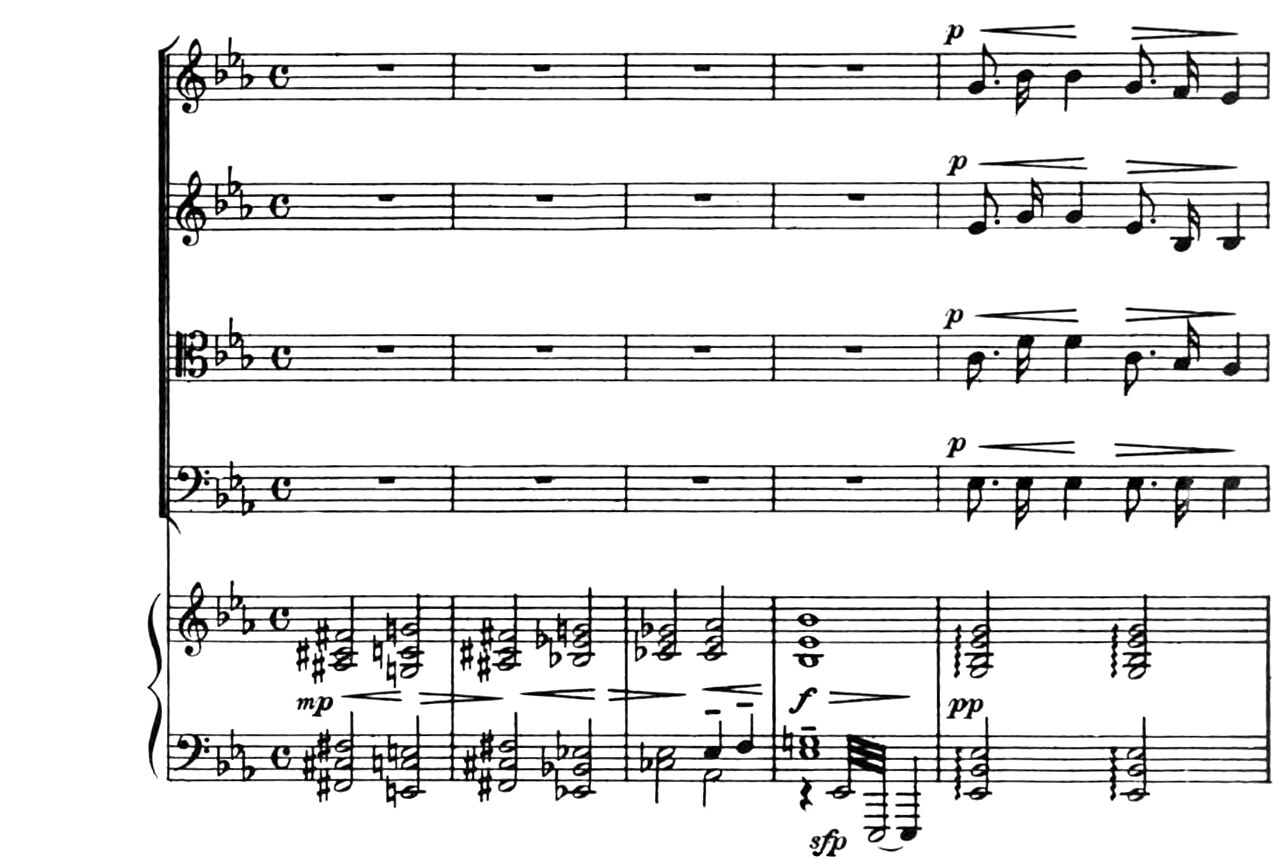
Fisher was an American musician who studied with Dvořák. He recalled that in 1922, while playing a piano arrangement of the Largo, words about going home came to mind. He developed them into lyrics and created Goin' Home, adding a human voice and words to the symphonic melody. Listeners who know the title about returning home can recall the song's meaning in the same tune. In this way, an orchestral piece published earlier also came to be remembered by the title of a song made later.
Fisher's Goin' Home was published by Oliver Ditson in Boston in 1922. An early score for low voice and piano survives. Its cover gives Dvořák's and Fisher's names alongside a description identifying the music as taken from the Largo of the New World Symphony. The singer performs Fisher's words, with a pianist accompanying in place of the orchestra. A melody once played by an orchestra was adapted for a solo singer and pianist to perform together.
A Czech-Speaking Village in America
After finishing the symphony, Dvořák spent the summer of 1893 in Spillville, Iowa. His assistant Josef Kovařík recommended his hometown for a holiday. The small village of Czech immigrants had a school and a church with services in Czech. When the children who had remained in Europe arrived in America, the family travelled there together by train. In letters to friends at home, Dvořák compared life in Spillville to staying in Vysoká in Bohemia.
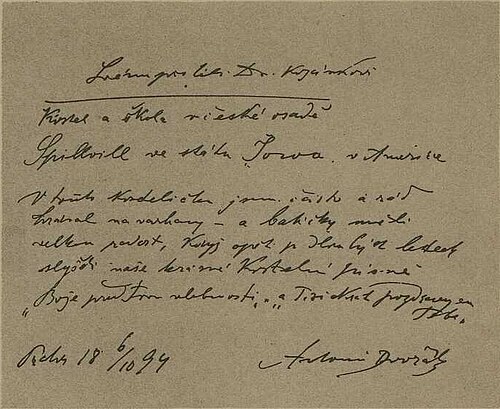
Dvořák took early morning walks and played the organ at St Wenceslaus Church. He composed in the morning and spent afternoons with his family or visiting nearby towns. In the evenings, he heard residents' accounts of settling in America. The village's older people welcomed his organ playing of familiar hymns. That summer, he wrote the American String Quartet and a string quintet. Composed beside reunited family and neighbours with whom he could speak Czech, the two works followed the symphony completed in New York as music representative of his American life.
The Later Music of the Man Who Sang to Dvořák
In 1892, Burleigh appeared at Carnegie Hall with soprano Sissieretta Jones. He continued as a singer and composer after leaving the conservatory. Later he sang his own songs there and experienced other musicians using his arrangements of spirituals in their performances. He was both the student who sang spirituals for Dvořák and a singer who sustained his own musical career by appearing on stage and composing. The student who shared those songs subsequently passed on the same musical tradition through performance and publication.
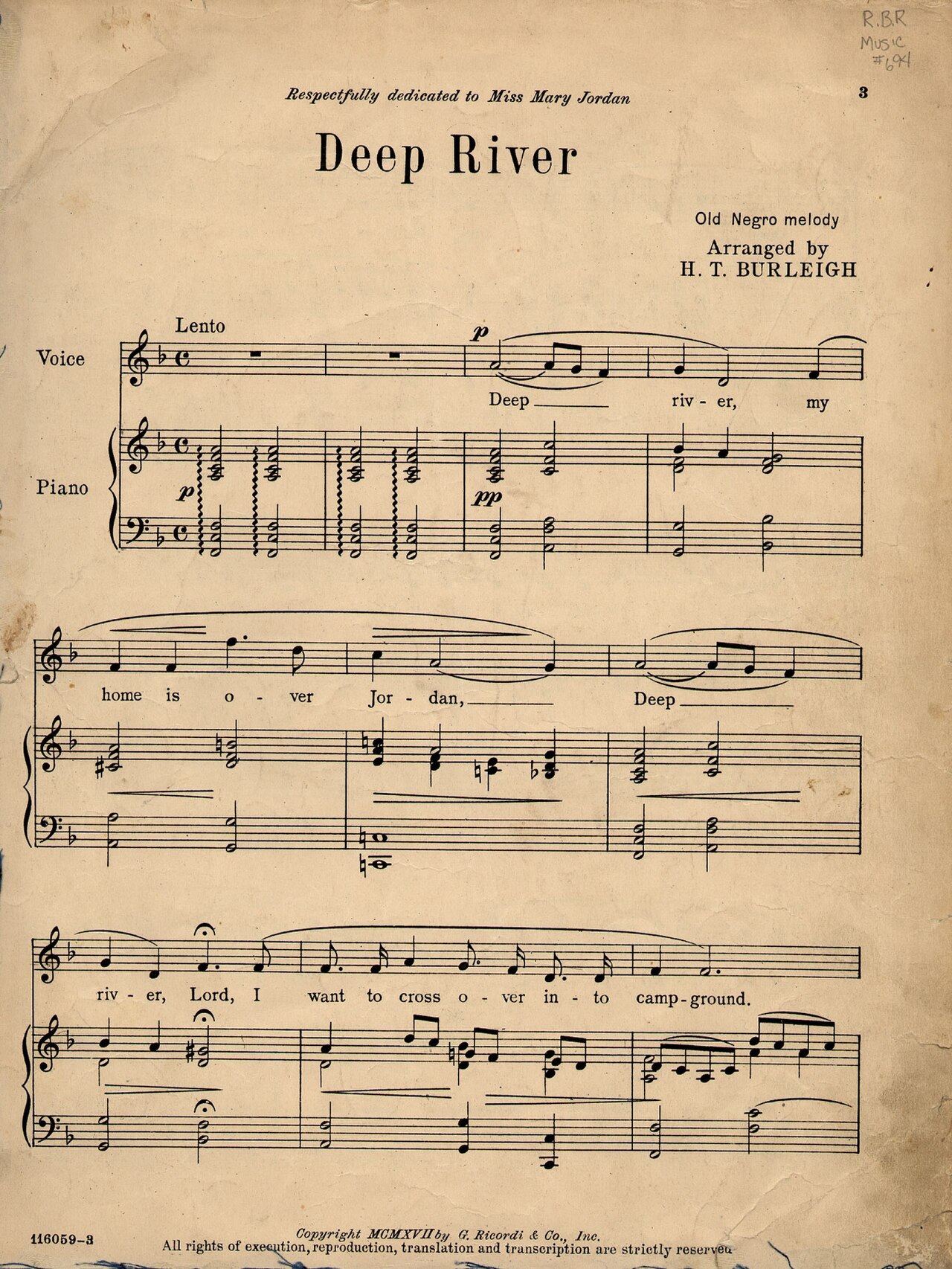
In 1894, Burleigh obtained a position as soloist at St George's Episcopal Church in New York. Some members opposed him because he was Black, but he sang there for many years. He also sang in another worship community, edited scores for a publisher and published his own songs and spiritual arrangements. When considering how spirituals influenced Dvořák's symphony, it is also worth examining Burleigh's later work. Arranging the songs he had learned from his family so they could be sung in concert was a continuing part of that work.
Burleigh's arrangement of Deep River was recorded in 1916, sung by baritone Oscar Seagle with orchestral accompaniment. His role in this recording was to arrange a traditional song for performance, rather than compose a new one. He prepared the inherited song in a form for a solo singer. Turning from the New World Symphony's Largo to this recording allows us to consider both the tradition Burleigh shared with Dvořák and his own arranging. Deep River and Goin' Home entered singers' repertoires by different routes.
The Largo Heard at Mahina
Mahina's lunch and dinner playlists include the opening of the Largo conducted by Mariss Jansons. At dinner, listeners also encounter a performance by Solti and one by the London Philharmonic. In the complete Largo, contrasting music follows the English horn melody before the opening tune returns.
Burleigh's arrangement of Deep River is another piece to seek out alongside the Largo. In Goin' Home, Fisher added new words to an orchestral melody. In Deep River, Burleigh adapted a traditional spiritual for solo voice and accompaniment. One moved from symphony to song; the other from a spiritual passed between people into concert repertoire. Scores published by Burleigh and Fisher carry their respective names, and singers continued performing their music. You might listen side by side to Goin' Home, whose melody is heard from both a symphony's English horn and a solo singer, and Deep River as passed on through Burleigh's arrangement.
Listening at Mahina
At Mahina, we play the Largo from the New World Symphony. Its melody might prompt you and your companions to talk about songs heard in your own hometowns. Such a conversation can add your memories to the exchange of songs between Dvořák and Burleigh.