In this story
The short answer
In Corelli's La Folia, violin and accompanying instruments vary a dance originating in Portugal. Corelli placed it at the end of his collection of violin sonatas published in 1700. Slow variations are followed by fast ones, and at the end he gives rapid notes to the accompanying instrument. Drawing on old dance material, the work demands skill from both soloist and accompanist.
Into the story
From Portugal Across the Iberian Peninsula
The folia is a dance much older than Corelli. Originating in Portugal, its earliest examples appear in the fifteenth century. Musicians subsequently played it repeatedly and added new variations. By the late seventeenth century, when Corelli lived, the name also denoted familiar material for Italian musicians. Behind the composer's name on a violin sonata is a history of dance passed on by many generations of dancers and musicians.
The folia was a popular dance developed on the Iberian Peninsula in the late Middle Ages. With roots in Portugal and widespread use in Spain, it occupied an important place in Iberian instrumental music of the seventeenth and eighteenth centuries. Savall brought folias from several periods together on one recording. Placing Diego Ortiz and anonymous music alongside works by Corelli and Marin Marais, he also performed music transmitted before the appearance of those famous composers.
The recording's instrumentation brings together several sounds supporting the dance. Savall played viola da gamba, while other musicians played vihuela, guitar, theorbo, harpsichord, organ and harp. In addition to a percussionist, players of castanets and bells took part. Musicians bowing or plucking strings, alongside keyboard and percussion players, added different sounds to the folia's repetitions. Savall's performances of Iberian music gather a much wider range of instruments than Corelli's violin sonata.
Twenty-Three Variations and the Accompanist's Turn
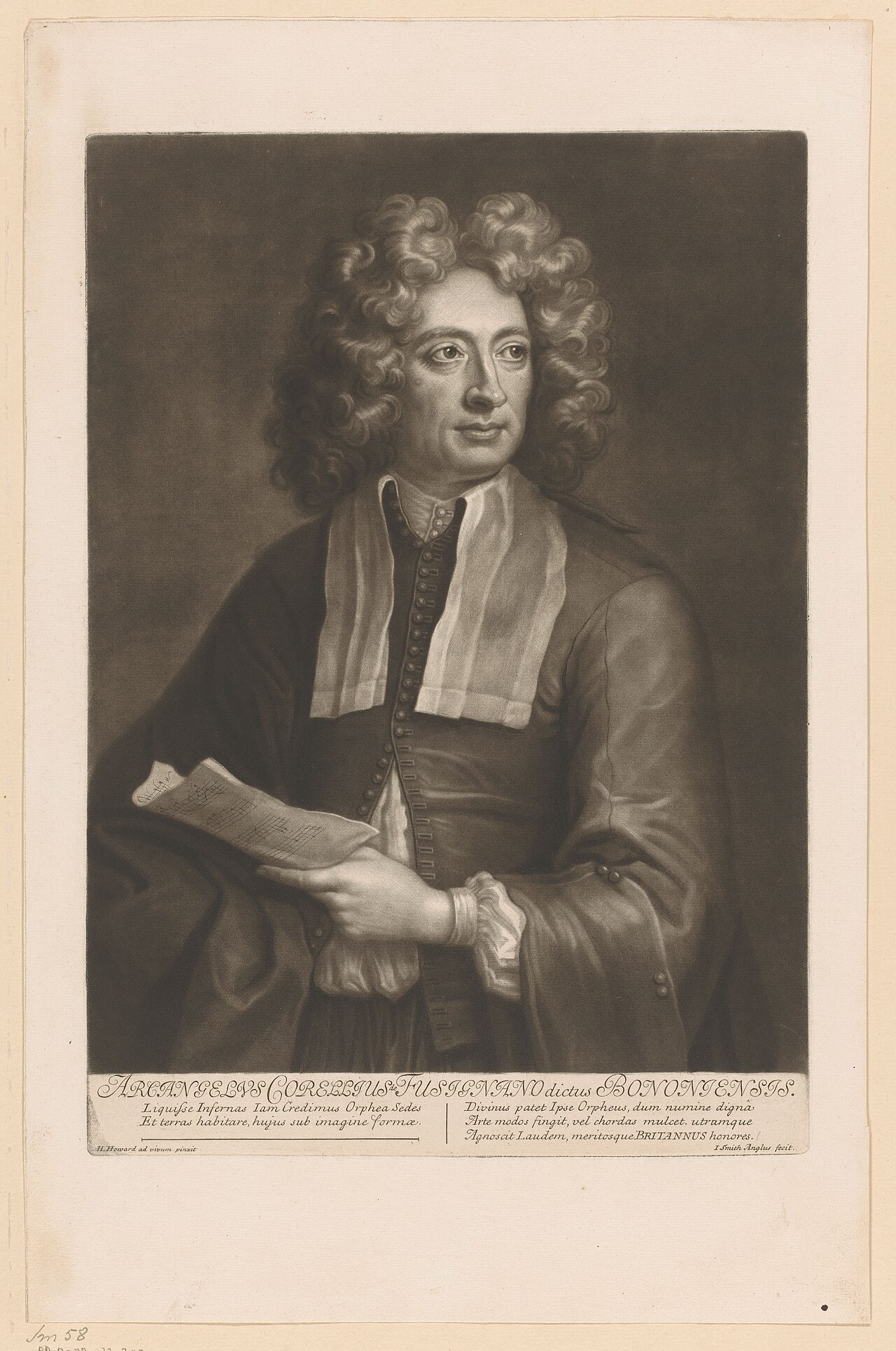
In 1700, Corelli published twelve violin sonatas as Op. 5 and dedicated them to Sophie Charlotte, Electress of Brandenburg. The final piece is the D minor sonata La Folia. More than forty subsequent editions of the collection appeared in the eighteenth century. Violin students sought out the music, and his pupil Geminiani also arranged it for a string ensemble. Mahina's lunch and dinner playlists include No. 12 of Op. 5 from a recording by the Purcell Quartet. The ensemble recorded the album at St Barnabas Church in London in May 1986.
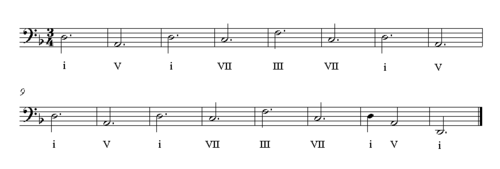
Twenty-three variations follow the theme of La Folia. The violin alternates passages of short, rapidly played notes with passages sustaining longer lines. Corelli places slow variations between fast-moving ones, changing the music's speed and character even as the same theme returns. At the end, rapid semiquavers appear in the basso continuo. Basso continuo accompanies a solo instrument by playing a bass line and harmony. Giving the accompanist busy fingerwork at the close means that the demands of the piece do not fall on the violinist alone.
French Music Based on the Same Dance
In 1701, the year after Corelli's sonata appeared, Marin Marais in France also included a folia in his second collection for viola da gamba. Its title, Folies d'Espagne, means Folias of Spain. Marais said that he had carefully refined the collection's continuo and that engraving the score had taken a long time. An Italian violin sonata and a French viola da gamba work used the same dance material at a similar time. Marais's piece contains thirty-two variations, nine more than Corelli's.
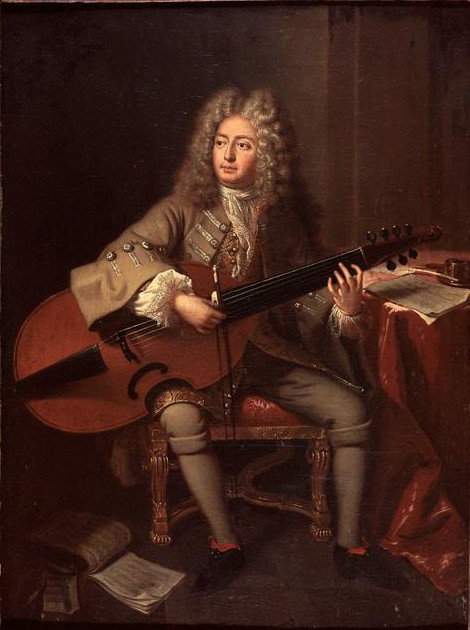
Marais used the viola da gamba's capacity to sound several strings together in chords. He interlocked the solo melody and bass accompaniment and added figures in some variations suggesting the action of strumming a guitar. Such guitar-like expression can also be heard in relation to the folia's origins in Iberian dance music. Treating the same folia, the composers used rapid violin figures and full viol chords in different ways. Marais embellished the dance material with the strings and chords of the instrument he played.
A Pupil Travels from Rome to London
Corelli's pupil Francesco Geminiani brought his teacher's music to Britain. After studying with Corelli in Rome, he moved to London at twenty-seven and later also worked in Dublin. His first concertos issued in London were arrangements of Corelli's sonatas rather than new compositions of his own. Corelli's music was then popular in Britain too. Geminiani adapted pieces for solo violin and accompaniment so that string ensemble players could share the music.
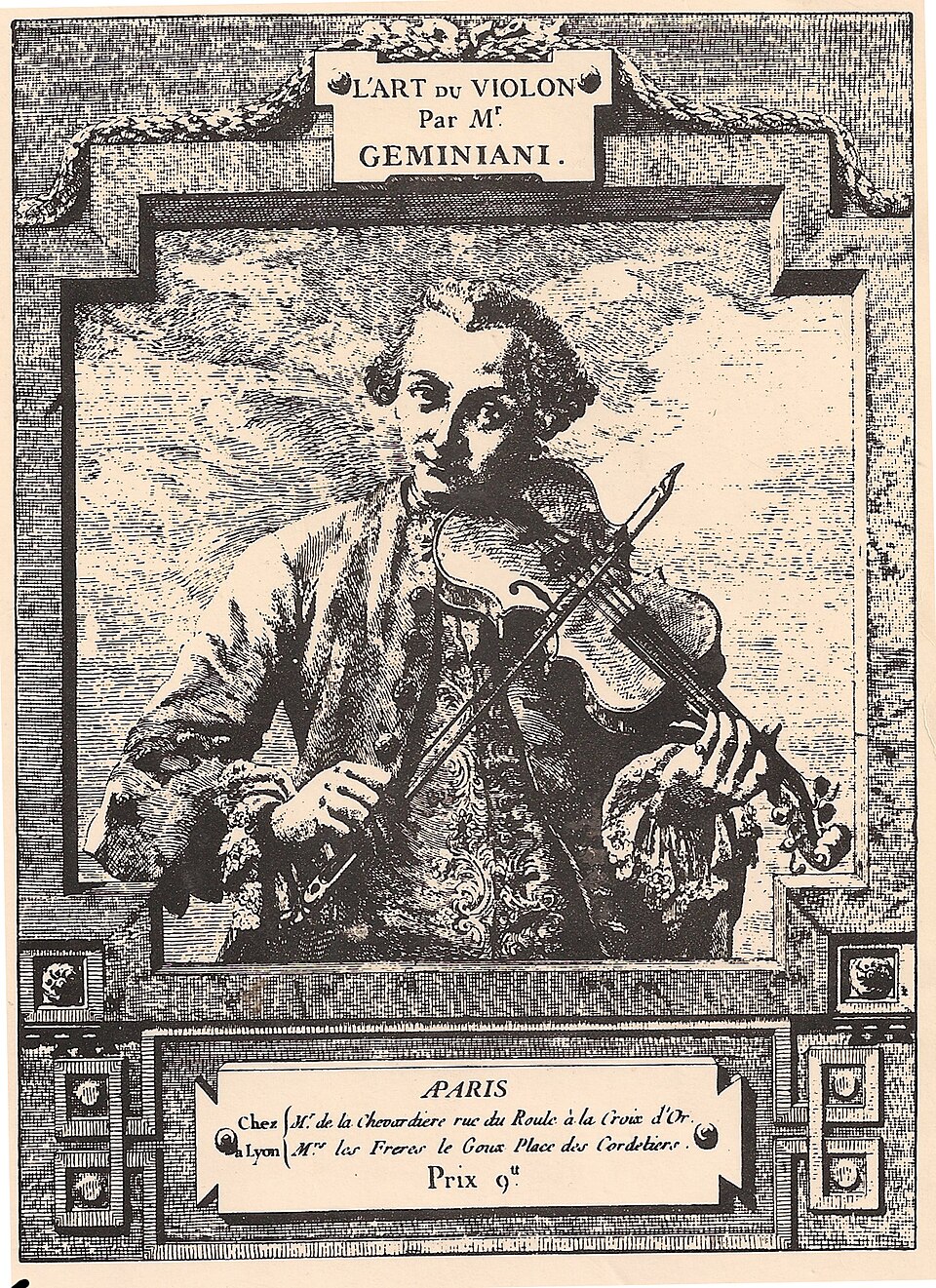
In adapting them for ensemble, Geminiani filled out harmony and counterpoint implicit in the original sonatas. Expanding the relationships between simultaneous melodic lines, he distributed music from the original solo and accompaniment parts among more string voices. More string instruments joined music originally handled by a single soloist. When performing Geminiani's F major concerto, Boston Baroque used ornaments from Corelli's original sonata. They placed that F major work and La Folia on the same album, performing together the results of his adapting different Corelli sonatas for an ensemble.
In Geminiani's La Folia, a small group of soloists alternates with a larger string group. The smaller group is called the concertino and the larger the ripieno. A dialogue between solo violin and accompanying instruments expands into exchanges between two groups. In a performance treatise written in 1749, Geminiani also recalled that his teacher had been particularly satisfied with composing La Folia. Corelli, who made a Portuguese dance into a violin sonata, and the pupil who gave that sonata to several strings applied different instrumentations to the same theme.
Another Folia by Vivaldi
Vivaldi also made the folia into variations, organising his work as one theme and nineteen variations. He kept the initial melody recognisable while changing rhythm, tempo, dynamics and the ways notes were connected or separated. Even when repeating the same theme, he redefined note lengths, force and playing speed. More than 150 composers have written music using this old melody. The practice of Corelli, Marais and Vivaldi choosing different instruments and numbers of variations continued afterwards.
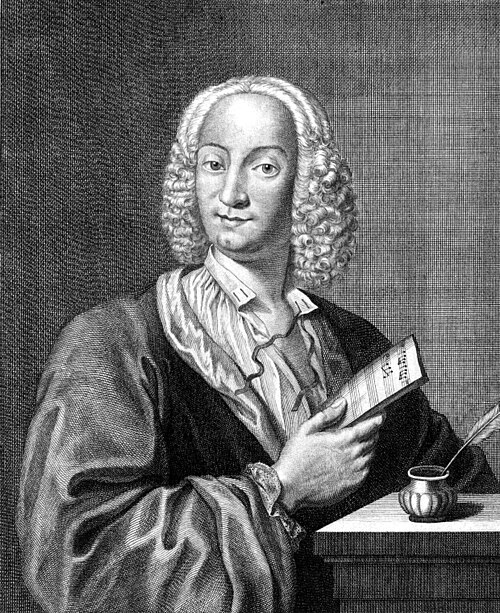
Vivaldi's folia belongs to Op. 1, published by Giuseppe Sala in Venice in 1705. The collection brings together twelve chamber trio sonatas. Vivaldi ended it with the folia, the same placement Corelli chose for his violin sonata collection. This chamber music could also be played at private musical gatherings in a home. Familiar dance material thus served as the final piece of chamber music played among nobles and music lovers.
Modern String Players Stamping Their Feet
In reworking Geminiani's La Folia, the American composer Michi Wiancko also gave string players percussion and foot-stamping. She included col legno, striking strings with the wood of the bow rather than its hair, and sul ponticello, bowing close to the bridge, to change the character of the string sound. Over the repeating folia harmony, the complete ensemble alternates with soloists, and small motifs pass from one player to another. String notes and the players' footsteps enter the same score.
Wiancko prepared a version for eleven musicians for a 2021 performance. Adjusting numbers to public-health regulations, she redistributed the music among the players. From Iberian musicians playing a dance, through soloist and accompanist in Corelli's sonata and Geminiani's two string groups, to Wiancko's foot-stamping musicians, the bodies and instruments handling the folia changed. In the Purcell Quartet track at Mahina, listeners encounter the variations Corelli wrote for violin and basso continuo within that long history. The accompanist's rapid closing notes are part of the role he prepared.
Listening at Mahina
Mahina's music includes Corelli's La Folia performed by the Purcell Quartet. Because the piece repeatedly varies the same theme, even a phrase or two heard during a meal can offer the pleasure of comparing how an earlier melody has changed.