In this story
- A moment when Debussy cannot be explained by ‘innovation’ alone
- The sarabande is a dance, so why can it sound almost motionless?
- Separating three layers in Michelangeli's recording
- A second song hidden beneath the melody
- The space between chords is part of the performance
- How not to hear quiet music as merely quiet
- Four questions about Rameau and the sarabande
The short answer
Hommage à Rameau is the second piece in Debussy's Images, Book 1, and the score marks its character as ‘slow and solemn, in the style of a sarabande’. Michelangeli's Debussy recording includes it alongside Reflets dans l'eau. Listen beyond the slow tempo itself: can the top, middle and bottom notes of each chord be heard separately, and how long does the space remain open before the move to the next chord?
Three clues to the slow sarabande
- This is the slow central piece of Images, Book 1.
- The Rameau of the title is the French Baroque composer Jean-Philippe Rameau, whom Debussy honours through the tread of a sarabande.
- In Michelangeli's recording, listen not only to the highest melodic line but also to how distinctly the inner voices and low bass move.
Into the story
A moment when Debussy cannot be explained by ‘innovation’ alone
In 1903, Debussy was deeply impressed by a performance of Rameau's opera Castor et Pollux. That experience formed part of the background to the slow Hommage à Rameau. Rather than reconstructing the past, Debussy recast the memory of an old dance in his own piano language.
The music does not require prior knowledge of Rameau. What matters is that Debussy was in dialogue with the past of French music even as he explored new tone colours. Treat the title not as a test of historical knowledge but as the image of new light falling on an old step.
The sarabande is a dance, so why can it sound almost motionless?
The sarabande is a slow dance in triple metre. Its pulse is clear here, but pressing every beat equally makes the music only heavy. Feel the centre of gravity lean subtly towards the second beat and then release; even the space between still chords begins to walk.
Rather than clapping the metre emphatically, imagine the body's weight gathering slightly on ‘two’ within ‘one–two–three’. As the melody extends, changes in the left-hand bass move the harmony like a change of colour across the floor of the same room.
Separating three layers in Michelangeli's recording
Michelangeli's Debussy recording includes both Reflets dans l'eau and Hommage à Rameau from Images.
In Michelangeli's performance, listen in turn to the highest note, the inner harmony and the low bass as each chord spreads. Comparing which sound arrives first and which remains longest makes the distance and balance between the three layers more distinct.
A second song hidden beneath the melody
On a first hearing, the highest melody is likely to dominate. On the second, let it go for a moment and listen to whether the inner notes remain in place or move by a step. These small changes inside the harmony are what keep the slow music travelling forward.
On a third hearing, follow only the bass. As the low notes change, the harmonies above may brighten or darken. Then bring all three layers together and notice which voice comes forward and which remains behind; this lets you judge the recording's balance with your own ears.
The space between chords is part of the performance
In slow music, simply delaying the next note can seem to create depth. The real tension lies less in the amount of delay than in how much of the previous chord's resonance remains when the next begins. Overlap too soon and the colour clouds; leave too much space and the sentence breaks.
Hear the same passage twice; the second time, listen not to the notes but to the time they take to disappear. When the next bass note enters just as the space falls quiet, silence becomes not an empty gap but a threshold where direction changes.
How not to hear quiet music as merely quiet
Hommage à Rameau can seem short on large events, yet weight is constantly shifting inside its chords. Slow music challenges new listeners not because nothing happens, but because the events are small. Choose the upper melody, an inner voice or the bass in turn, and those small movements become audible.
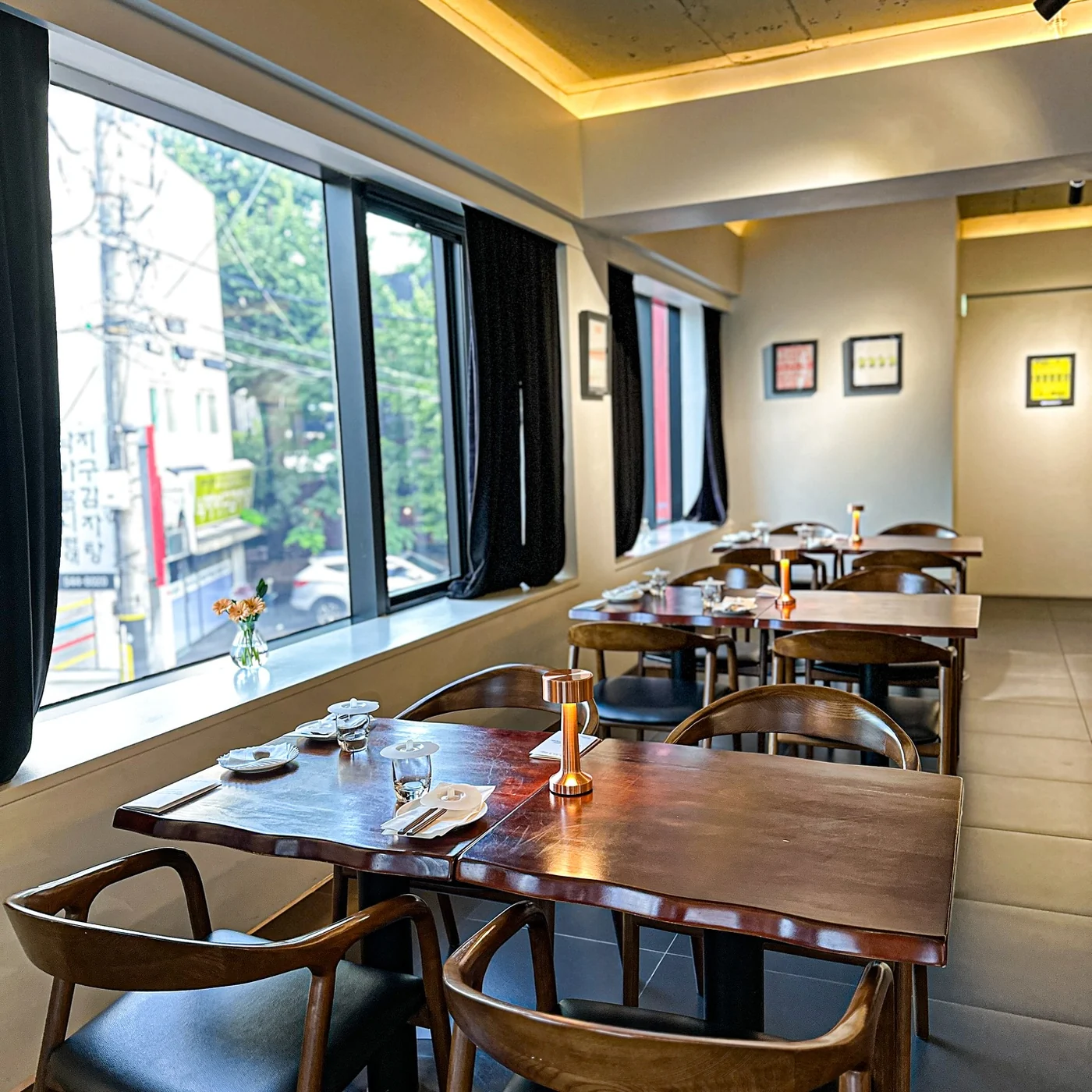
Mahina Vegan Table plays classical music in its dining space. Rather than listing famous melodies, the journal offers clues that help the upper line, inner voices and bass reveal themselves layer by layer when the same work returns.
Four questions about Rameau and the sarabande
- Who is the Rameau in the title?
- Jean-Philippe Rameau was a French Baroque composer and music theorist. Debussy connected the impression made by Rameau's music with this piano piece.
- What is a sarabande?
- It is a slow dance in triple metre. Here, its conventions register less as literal dance music than as a solemn tread and a shifting of weight.
- Does the Michelangeli album include all of Images, Book 1?
- No. It includes Reflets dans l'eau and Hommage à Rameau, but not Mouvement.
- What can I listen for to stay engaged with slow music?
- Do not follow only the melody. On one hearing choose an inner voice, on the next the bass, and finally the time it takes each chord to disappear.
Plan your visit and explore the space at Mahina Vegan Table.
Plan Your Visit to Mahina Vegan Table