In this story
- Thyme is a mint-family plant with small leaves
- Chemotypes differ even within the same species
- Not every thyme is dominated by thymol
- Small leaves are still affected by moisture loss
- Thyme's aroma need not cover the other ingredients
- Fresh thyme in the Grilled Cauliflower Steak
- Common questions about thyme
The short answer
One of the principal culinary thyme species is Thymus vulgaris. Within this single species, chemotypes differ in their dominant essential-oil compounds, including thymol, carvacrol, linalool and geraniol types. In the Grilled Cauliflower Steak, fresh thyme adds a herbal note to the roasted aromas of cauliflower, mushrooms, shallot and garlic.
Three clues for understanding thyme's aroma
- Thymus vulgaris is a small subshrub in the mint family and one of the principal culinary thyme species.
- Several chemotypes occur within the same species, distinguished by their principal essential-oil compounds.
- The quality of a fresh herb depends not only on its appearance but also on whether it retains its characteristic aroma.
Into the story
Thyme is a mint-family plant with small leaves
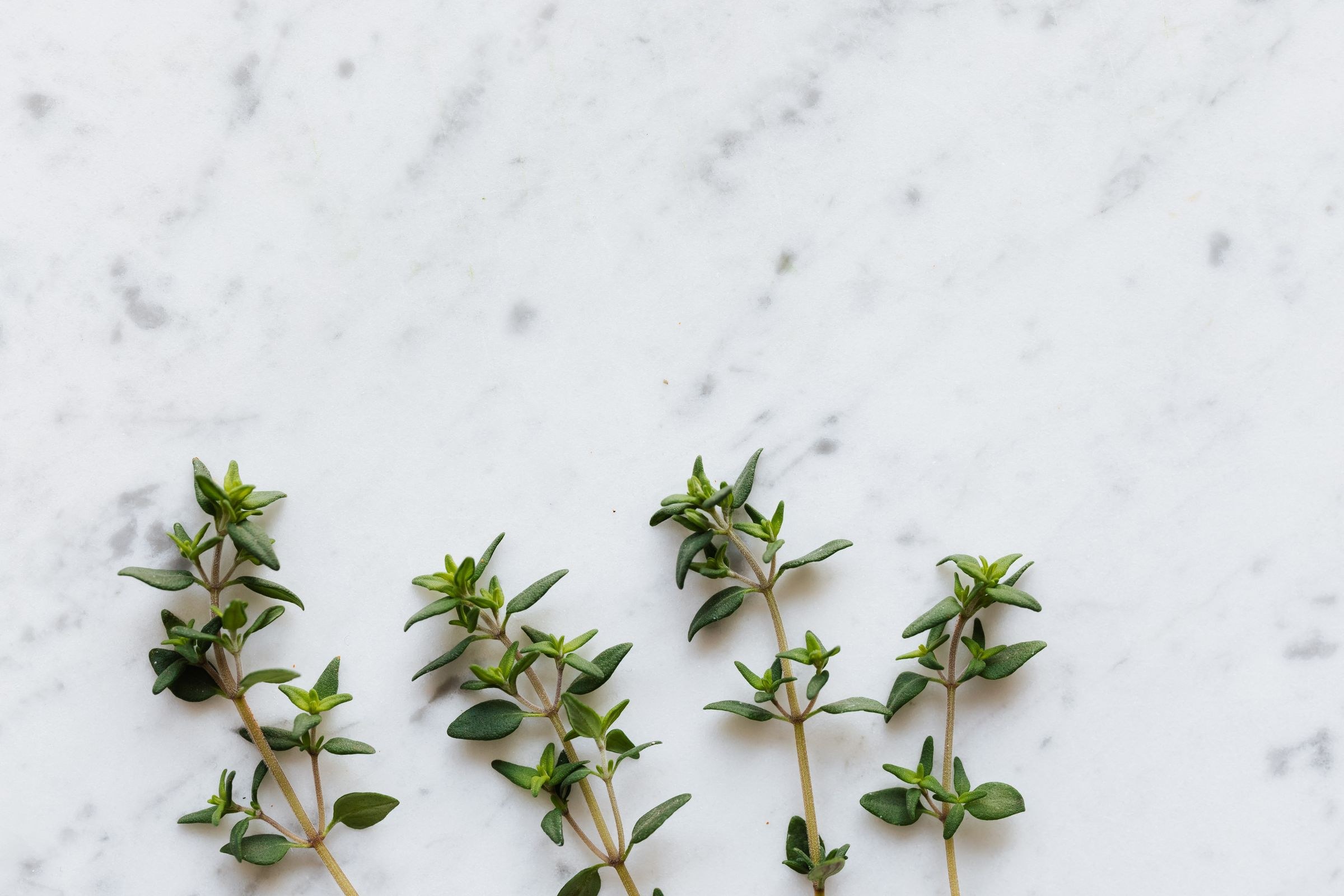
Thymus vulgaris is a subshrub in the mint family, native to south-western Europe and south-eastern Italy. Its slender stems become woody, and its small leaves grow in opposite pairs; it is one of the principal culinary thyme species.
The genus Thymus contains many species, while forms sold as lemon thyme may carry hybrid or cultivar names. Small leaves and a familiar common name do not mean that every plant is the same.
Chemotypes differ even within the same species
Linalool, geraniol, sabinene hydrate and thymol chemotypes have been identified in Thymus vulgaris from several parts of Europe. Adding carvacrol types and various mixed types reveals still greater chemical diversity.
A chemotype is defined by which compounds predominate in an essential oil. It helps explain why plants with the same scientific name can differ in the balance of sharp, floral and warm herbal notes.
Not every thyme is dominated by thymol
In a thymol chemotype of Thymus vulgaris, thymol and p-cymene may account for a large proportion of the essential oil. In linalool and geraniol chemotypes, by contrast, linalool or geraniol is correspondingly more prominent.
Although the compound thymol takes its name from thyme, not every thyme essential oil is centred on thymol. This is why variety and growing conditions matter more than reducing its aroma to a single word.
Small leaves are still affected by moisture loss
Fresh thyme has smaller leaves and firmer stems than tender leafy greens, but it continues to lose moisture after harvest. As the leaves dry or fall and the stems become excessively rigid, both the appearance and aroma of the fresh herb diminish.
Thyme is not classed among herbs that are especially susceptible to chilling injury, as basil is. Even so, essential oils and characteristic aroma can decline during extended storage, so colour and shape alone do not determine quality.
Thyme's aroma need not cover the other ingredients
Thyme does not become present only when used in abundance. Volatile compounds released from its small leaves can give a clear herbal direction even among ingredients with deep aromas, such as roasted vegetables and mushrooms.
When thyme joins the roasted aromas of cauliflower, mushrooms and garlic, it introduces a fresh green-herb contrast rather than repeating the same notes. The result differs from a composition dominated by one powerful ingredient.
Fresh thyme in the Grilled Cauliflower Steak
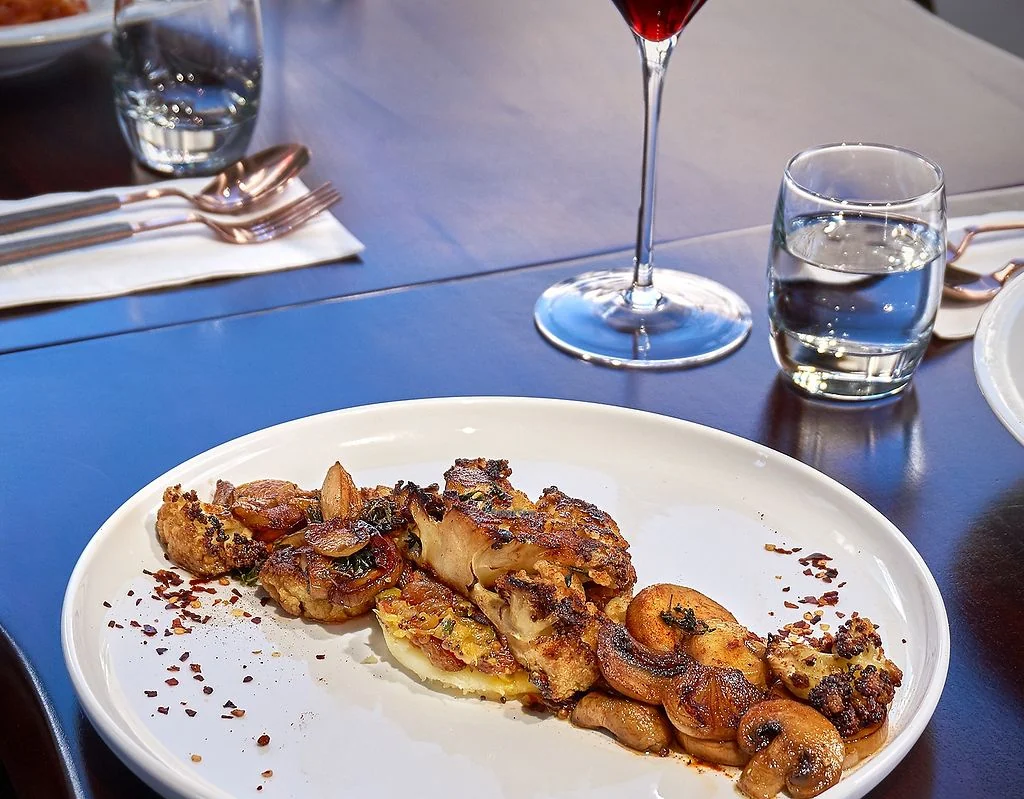
The Grilled Cauliflower Steak combines roasted cauliflower with house-made oil sauce, king oyster mushrooms, button mushrooms, shallot, mashed potatoes, orange, pickles, garlic, fresh thyme, red chilli and paprika powder.
Fresh thyme leaves a brief, distinct herbal note after the roasted aromas of cauliflower and mushrooms. Its freshness provides a contrast to the roasted notes that continue through the shallot and garlic.
Common questions about thyme
- Does thyme refer to just one plant?
- No. Thymus vulgaris is a principal culinary species, but the genus Thymus contains multiple species, hybrids and cultivars.
- What is a chemotype?
- It is a chemical type within one species, distinguished by the composition of the principal compounds in its essential oil.
- Is thymol the most abundant compound in every thyme?
- No. Alongside thymol chemotypes are carvacrol, linalool and geraniol chemotypes, among others.
- Can thyme and basil be stored at the same temperature?
- Basil is particularly susceptible to chilling injury, while thyme is not placed in the same category. The appropriate temperature differs from herb to herb.
Discover a dish that brings roasted cauliflower and two kinds of mushroom together with mashed potatoes, orange, pickles and fresh thyme.
View the Grilled Cauliflower Steak