In this story
- The notes it can reach matter more than the instrument's visible length
- Why was a reconstruction needed?
- The basset clarinet chosen by Sabine Meyer
- The simplest way to find the low notes
- In movement 2, breath comes before range
- When the same work opens again on a different instrument
- A first encounter with the basset clarinet
The short answer
Sabine Meyer recorded Mozart's Clarinet Concerto K.622 on a basset clarinet whose range extends below that of the standard A clarinet. Both the reconstructed basset-clarinet version and the traditional clarinet version are performed today; in the reconstruction, melodies can continue into lower notes. The distinction is not a contest between tone colours but a difference in how far one melodic line can travel from high to low.
Three ways into the lower register
- K.622 is studied and performed in both a reconstructed basset-clarinet version and the traditional version transmitted for ordinary clarinet.
- The basset clarinet's extended low register lets the end of a melody continue downwards instead of being transferred upwards.
- In Sabine Meyer's recording, listen to the colour and breath of passages that move quickly between high and low registers.
Into the story
The notes it can reach matter more than the instrument's visible length
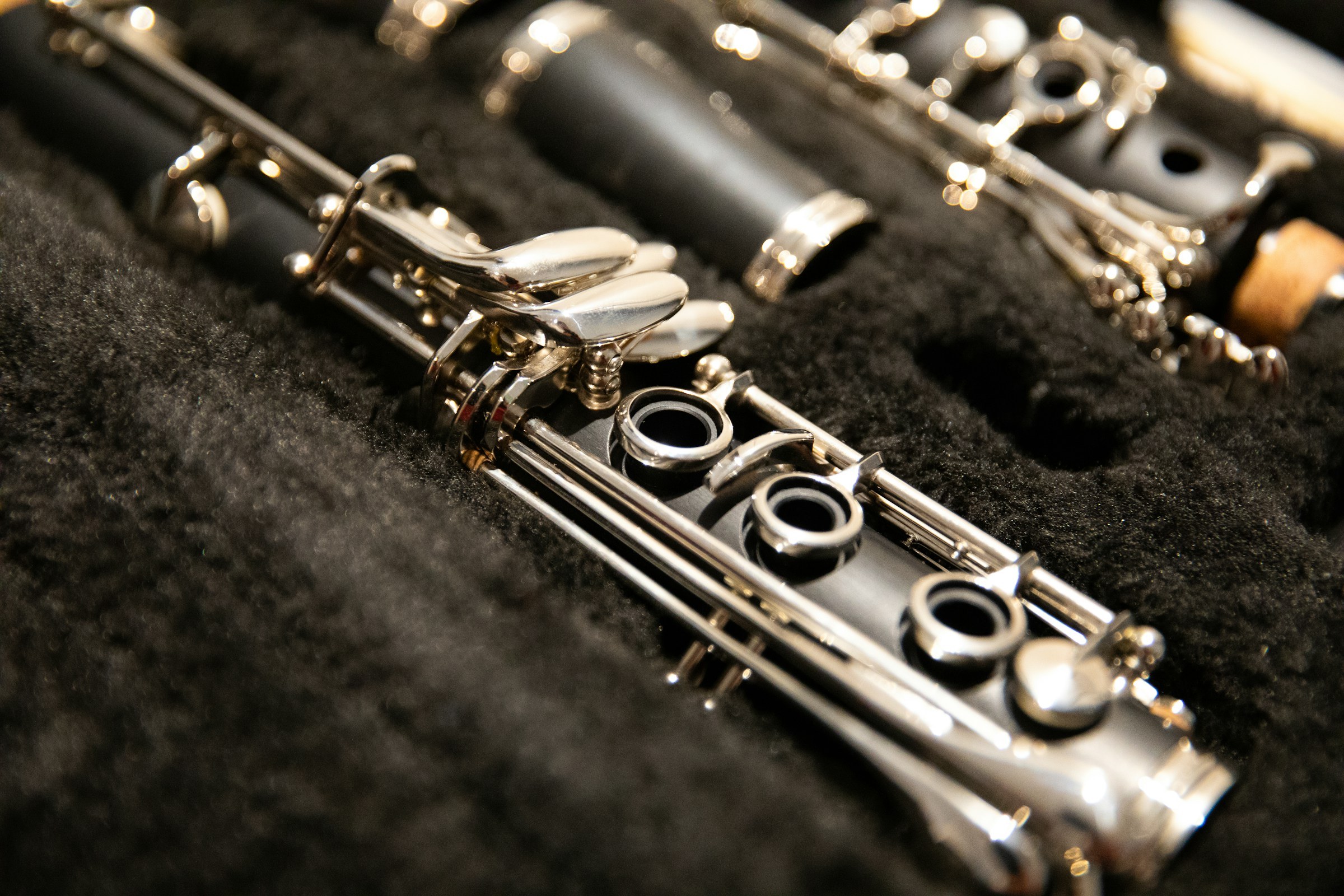
The basset clarinet has a longer bore than a standard clarinet and extra keys that extend its low range. It is not the same instrument as the similarly named basset horn. For K.622, there is no need to memorise classifications; the essential point is that the melody can descend farther than expected.
A low note does more than create a ‘darker’ effect. When a sentence that begins high continues all the way down without changing direction midway, the grammar of the melody itself changes. It gains the range of one person speaking the same sentence in both a high and a low voice.
Why was a reconstruction needed?
Mozart's complete autograph score does not survive. The reconstructed basset-clarinet version draws on early printed sources, the surviving K.621b sketch, the construction of the instrument and melodic parallels. The reconstruction and the traditional version are transmitted in separate scores.
It is therefore more accurate to understand the reconstruction as the most persuasive restoration of the lower register from the surviving evidence, rather than claiming that it perfectly recovers the original. The traditional version also carries a long performance history, and the two versions offer different interpretations.
The basset clarinet chosen by Sabine Meyer
Sabine Meyer performed the concerto on a basset clarinet with an extended low register. The Staatskapelle Dresden joined her under the direction of Hans Vonk.
When listening to Meyer, do not try to mark every low note. Begin with the smoothness of the movement between high and low registers. Then compare the same passage in a standard-clarinet version to judge how the basset clarinet's wider range changes the melody's direction.
The simplest way to find the low notes
In movement 1, find a phrase in which the soloist moves quickly before suddenly settling lower. Passages transferred upwards to fit the instrument's range in the traditional version keep their downward direction in the reconstruction. Alternating brief extracts from the two versions makes the difference clearest.
In the rondo of movement 3, the returning bright theme is interspersed with passages in which the soloist travels widely between high and low notes. Rather than giving the low notes extra weight, listen for whether the two registers connect within a single breath; this reveals the breadth of the instrument more naturally.

In movement 2, breath comes before range
Movement 2 of K.622 is an Adagio and appears in both the reconstructed and traditional versions. In this slow movement, the long melodic line and the rests at the ends of phrases matter more than the surprise of the lowest notes.
The clarinet speaks a sentence and the orchestra answers briefly. Follow where the player breathes and the sound no longer seems to appear and disappear abruptly; it connects through a current of air. The basset clarinet's low notes sound most natural when they belong to this long breath.
When the same work opens again on a different instrument
Questions of edition and instrument are not barriers that make classical music harder; they offer a reason to hear a familiar work again. You may prefer the standard-clarinet version or feel more at ease with the basset clarinet's lower lines. What matters is the pleasure of hearing the difference for yourself.
Mahina Vegan Table's classical stories do not prescribe a single answer; they leave a question for the next hearing. Just as one low note can change the weight and direction of an entire melody, we continue to look for new distinctions inside familiar works.

A first encounter with the basset clarinet
- Are the basset clarinet and basset horn the same instrument?
- No. Both are associated with a lower register, but they differ in construction, tuning and use.
- Does Mozart's autograph full score of the concerto survive?
- No complete autograph full score of K.622 survives. The present reconstruction is based on early sources and a related sketch.
- Is the standard-clarinet version incorrect?
- No. The traditional version has been performed for a long time and today exists alongside the reconstructed version.
- What is the easiest way to hear the difference?
- Play the same passage of the same movement first in a standard-clarinet version and then in a basset-clarinet version. Compare whether the end of the melody is transferred upwards or continues downwards.
Plan your visit and explore the space at Mahina Vegan Table.
Plan Your Visit to Mahina Vegan Table