In this story
The short answer
The globe artichoke is a plant in the Asteraceae family whose young flower head is eaten before it fully blooms. The fleshy bases of the bracts and the central receptacle are the main edible parts; if the bud grows too far and the bracts open, the tissues can become tough and fibrous. In the Autumn Special Course, artichoke is presented with special carrot purée, beet purée, assorted mushrooms and grilled grapefruit.
Three clues for understanding artichokes
- An artichoke is an Asteraceae plant whose young flower head is eaten before it opens fully.
- The tender bases of the overlapping bracts and the receptacle at the centre are its principal edible parts.
- A mature but still tightly closed bud is an important standard for texture and quality.
Into the story
An artichoke is a flower head in the Asteraceae family
Cynara cardunculus is a perennial in the Asteraceae family, native to the Mediterranean region. The globe artichoke is a cultivated form derived from this species and was formerly treated under the separate species name Cynara scolymus.
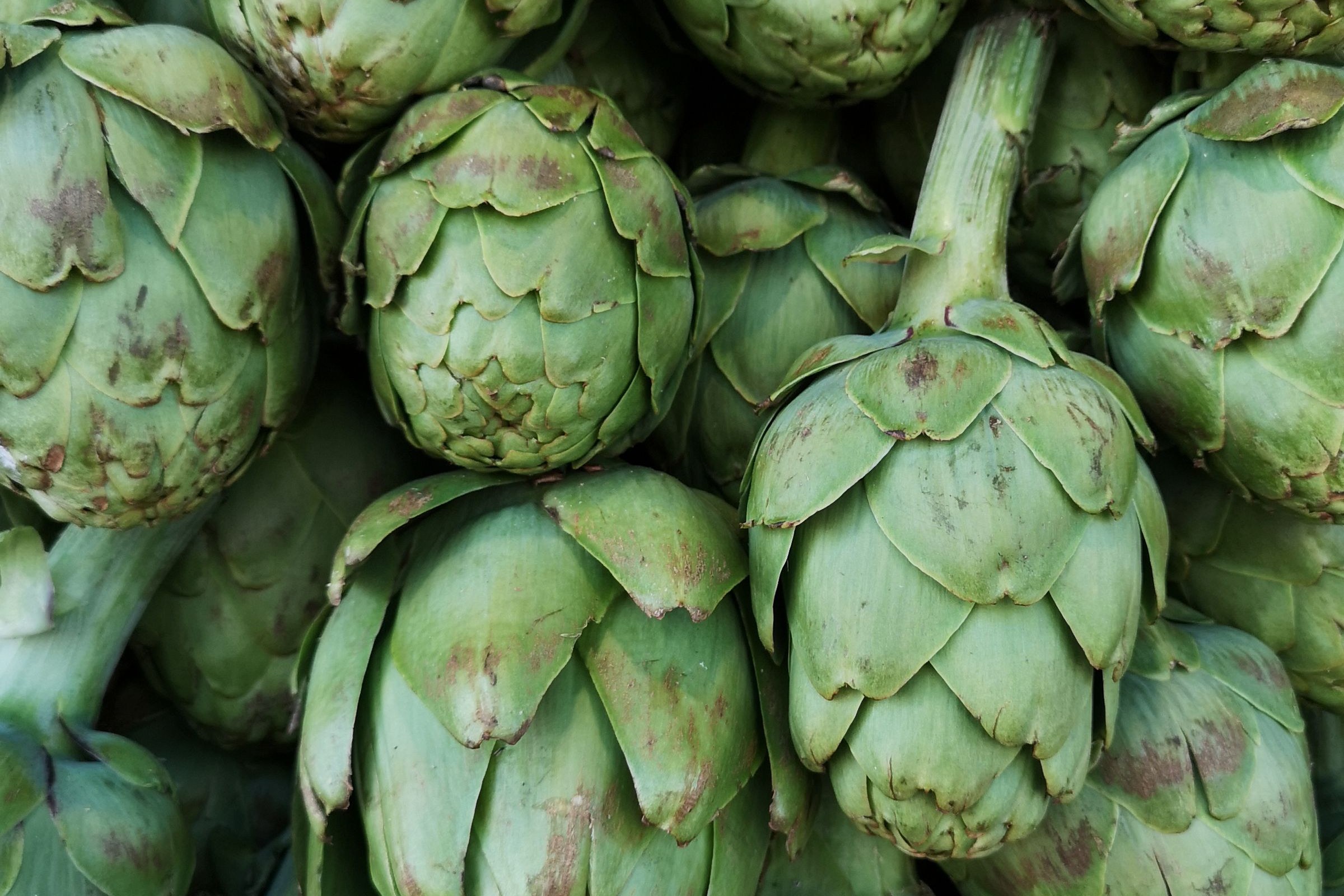
The rounded artichoke encountered as a vegetable is not a single fruit. It is the entire flower head, harvested as a firm bud before its many small florets open on a shared receptacle.
The scale-like layers are bracts
The leaf-like structures that surround an artichoke in scale-like layers are bracts. They enclose the small florets within and protect the young flower head from opening.
The outer bracts are firmer and more fibrous, while the proportion of tender tissue increases towards the centre. Eating the fleshy base of each bract follows from this structural difference.
The broad base at the centre is the receptacle
Beneath the bracts, the broad, fleshy area at the centre is the receptacle. It is the base on which the small florets develop and connects to the tender centre commonly called the artichoke heart.
Above the receptacle develops a downy mass of immature florets. Distinguishing this part, known in English as the choke, from the firm outer bracts makes the artichoke's edible structure easier to understand.
Artichokes are harvested before the bracts spread
An artichoke is an immature edible flower bud whose bracts meet in a cone-like form; size and a firm, compact structure are quality indicators. In an overgrown bud, the bracts may spread and the tissues become tough and stringy.
Harvesting before flowering is not merely about preserving a round shape. To retain the tender tissues of the young bracts and receptacle, the flower head must be harvested before it opens fully.
Bud size and form differ by cultivar
Artichoke cultivars include Green Globe and Imperial Star. Green Globe is characterised by large green buds and large hearts, while Imperial Star produces medium-sized plants with several deep-green buds.
Other cultivars differ in colour and form, including types with purple bracts. Whatever their appearance, the basic structure remains the same: the bracts and receptacle of a young flower head are eaten.
Artichoke in the Autumn Special Course
Main 3 in the Autumn Special Course is artichoke served with special carrot purée and beet purée. Grilled grapefruit, mini onions, chanterelle mushrooms, king oyster mushrooms and button mushrooms complete the composition.
The tender textures of the artichoke bracts and receptacle contrast with the resilience of the mushrooms. The bright bitterness of grilled grapefruit and the flavours of the carrot and beet purées add further dimensions to the artichoke's texture and aroma.
Common questions about artichokes
- Is an artichoke a fruit?
- No. It is a young flower head harvested before it opens fully.
- Which parts of an artichoke are eaten?
- The fleshy bases of the bracts and the receptacle at the centre are its principal edible parts.
- What is the downy part inside an artichoke?
- It is a mass of small florets beginning to develop above the receptacle, known in English as the choke.
- Why choose an artichoke with tightly closed bracts?
- If the flower bud grows too far and the bracts spread, the tissues may become tough and more fibrous.
Explore the Autumn Special Course, featuring artichoke, assorted mushrooms, grilled grapefruit, special carrot purée and beet purée.
View the Autumn Special Course