In this story
The short answer
Variation 18 of Rachmaninoff's Rhapsody on a Theme of Paganini is made by inverting a melody from the original violin work. Rising notes descend and descending notes rise as a minor-key theme becomes a song in a major key. Mahina's lunch and dinner playlists include this variation performed by Cécile Ousset. Among twenty-four variations, its familiar melody appears where the piano sings first and the strings take over.
Into the story
A Theme Taken from a Violin Caprice
Paganini organised his Caprice No. 24 for unaccompanied violin as an A minor theme and eleven variations. The first part of this short theme contains four rapid semiquavers. Rachmaninoff took the theme from Paganini's final caprice and made twenty-four variations for piano and orchestra. Mahina's two playlists also separately include Caprice No. 24 played by Salvatore Accardo. The original for one violin and the rhapsody for piano with orchestra are linked by the same theme.
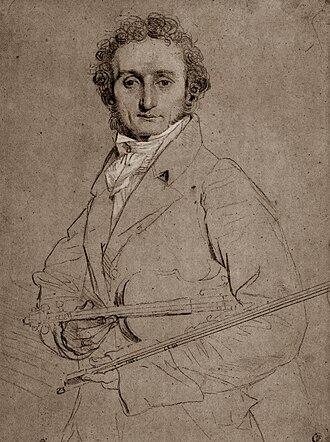
Before Rachmaninoff, Schumann, Liszt and Brahms also reworked Paganini's music. Notes written for a violinist's virtuosity became material for composers at the piano. Rachmaninoff joined a short introduction and twenty-four variations into one continuous work. Compared with his earlier music, this late composition features more concise, sharp figures and prominent dissonances. Around the long singing line of Variation 18 are variations in which soloist and orchestra exchange rapid notes.
A Lakeside House Between Concert Tours
Leaving Russia late in 1917, Rachmaninoff travelled via Stockholm and Copenhagen to the United States. He began a professional pianist's life of touring several cities each year. He also made recordings, signing his first recording contract with Victor in 1920. In 1930, he decided to build Villa Senar beside Lake Lucerne in Switzerland. A musician continuing his concert tours was establishing a home where he could spend summers with his family.
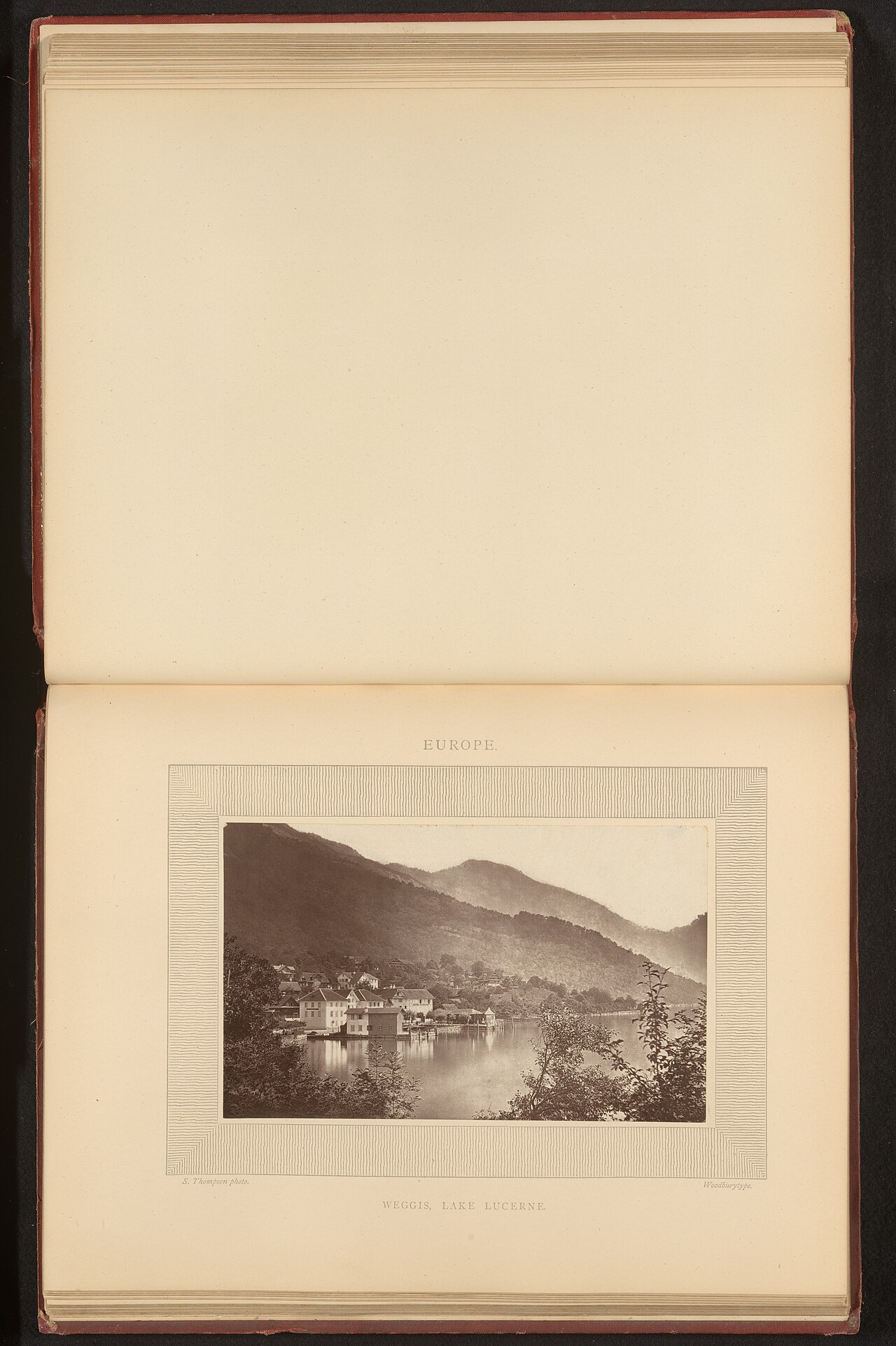
Rachmaninoff asked his architect to make the studio the best room in the house. He wanted a large window overlooking the lake and promptly commented on plans sent to him in New York. Instead of wallpaper, he wanted the walls finished smoothly and painted. Around the time he moved into the new house in 1934, the grand piano Steinway had given him for his sixtieth birthday also arrived. He placed it in his studio. Letters exchanged with the architect and a new piano were part of the summer in which he finished the rhapsody.
Establishing the house did not proceed entirely smoothly. Having lost money in the global economic crisis, Rachmaninoff sent a telegram from New York in January 1933 ordering construction postponed, then requested structural work again three weeks later. At the lake, he also bought a large motorboat and spent time on the water. When he completed the rhapsody the following summer, he described it as a small recompense in relation to the money spent building the house. The composer finishing music in his new studio also spoke of the rhapsody in relation to what the house had cost.
A Variation Before the Theme and a Medieval Chant
At the beginning of the rhapsody, Variation 1 precedes the theme. After a short introduction, piano and orchestra present the bass line underlying Paganini's theme. The two violin groups then play the original theme in unison. Rachmaninoff changes the order, presenting a first variation before the complete theme. Instead of opening with the complete violin melody, he first places short, sparse notes supporting it. When the theme appears, the violins carry the melody and the piano adds accents.
Variations 2 to 5 continue through rhythmic energy, while Variation 6 gives the piano freer music. In Variation 9, the strings use col legno, striking the strings with the wood of the bow. Soloist and orchestra confront one another with different rhythms. Variation 10 then takes on a march character, and in Variation 11 the piano plays a brilliant cadenza. Changing playing methods, metre and the soloist's role from one variation to another creates music of several characters from the same theme.
The Dies irae, introduced in Variation 7, returns in later variations. It is a liturgical melody transmitted from the Middle Ages, used in Catholic worship to sing of death and judgement. Rachmaninoff used it in several variations alongside Paganini's theme. The older material gathered in the rhapsody includes both a solo violin theme and a chant sung in worship. Music testing the virtuosity of one instrument and a melody sung by many people alternate within a single composition for piano and orchestra.
Variation 18 at the End of the Slow Section
In the middle, Variations 12 and 13 become triple-time dances in D minor. Variations 14 and 15 use F major, with the fifteenth played mostly by the piano alone. After Variations 16 and 17, a long melody in D flat major appears in Variation 18. Having passed through fast variations and cadenzas, the soloist now connects notes as if singing. Rachmaninoff, choosing different keys and metres for successive variations, wrote the eighteenth so that piano and strings would take the same melody in turn.
Variations 12 to 18 can be understood as the music corresponding to a concerto's slow section. The eighteenth is the longest among them. The piano plays the first twelve bars of melody before the strings join. As more string instruments take up the passage first sung by the soloist, the instrumental forces expand. The final six variations follow the eighteenth. The rhapsody thus brings together a fast opening, slow middle and fast concluding music within one composition.
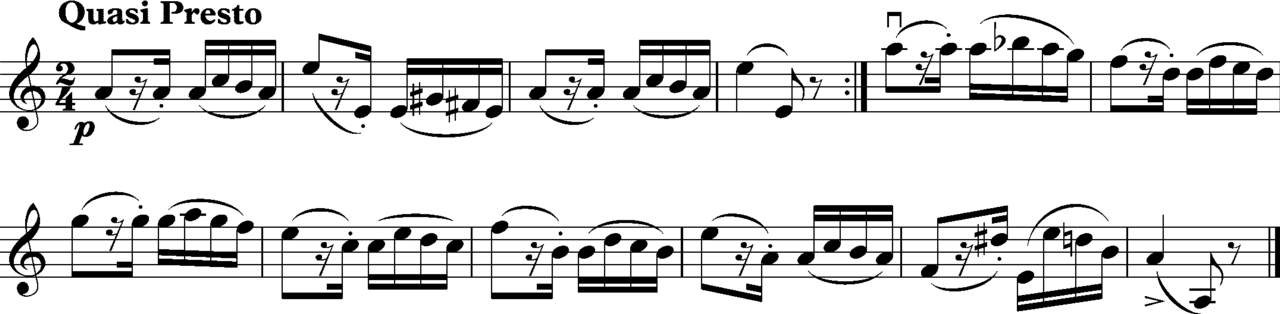
The central technique behind Variation 18 is melodic inversion. An interval that rose is changed to descend, and one that descended is written to rise. Rachmaninoff combines these changes of direction with major-key harmonies. Although using the notes of Paganini's theme, the variation becomes a new, extended singing melody. This piano passage is marked Andante cantabile. Cantabile instructs the musician to play in a singing manner.
The piano presents the melody simply, and after the strings take it up, the music unfolds on a larger scale. Here the composer reduces rapid piano notes and gives it a long melodic line. Rather than leaving the soloist to sing throughout alone, he also passes the same melody to the string ensemble. The technique of inverting the original violin theme and the instrumental change from piano to strings occur together in this variation.
A Premiere Played by the Composer and a Ballet
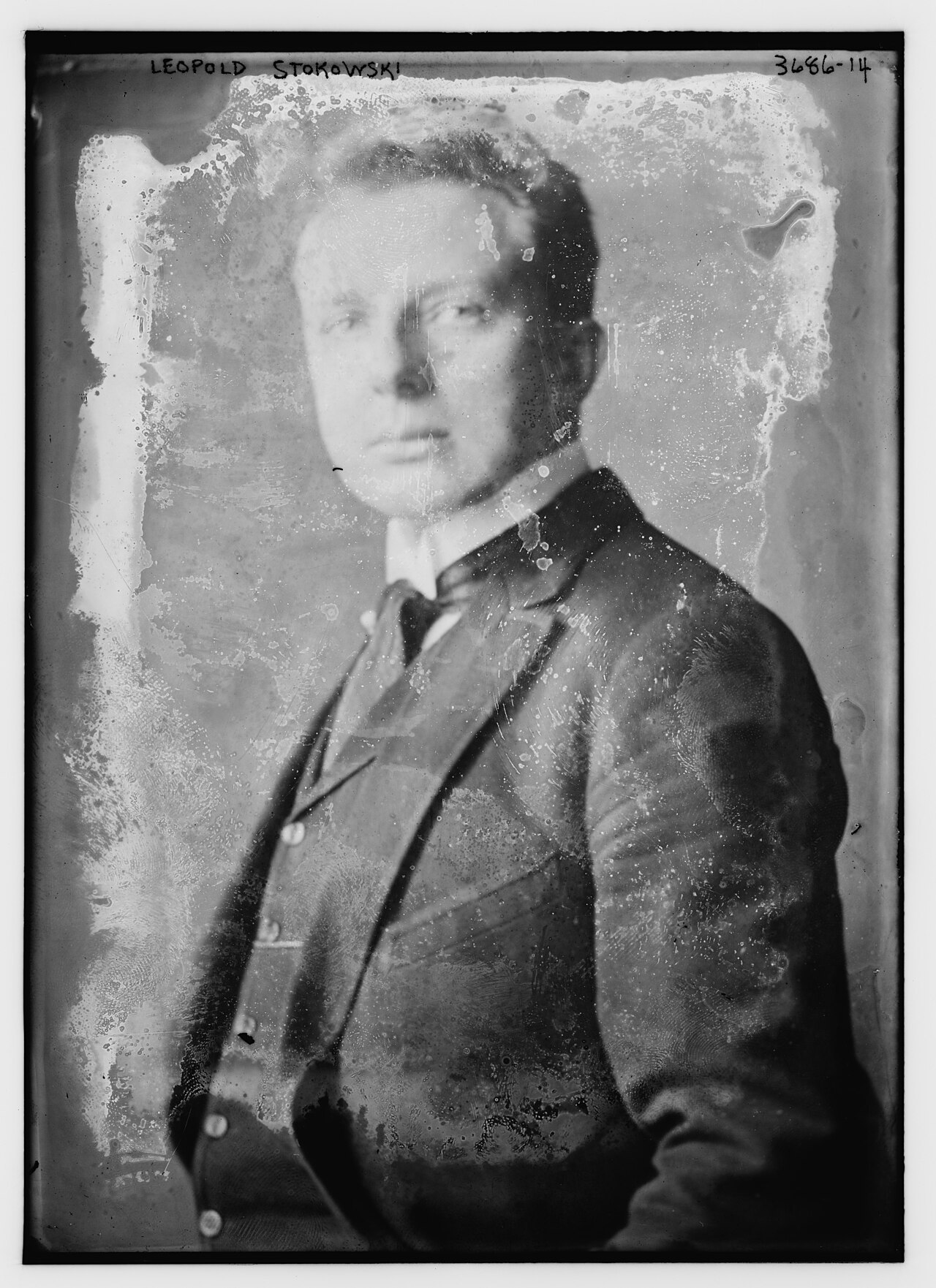
Rachmaninoff played the piano at the Baltimore premiere on 7 November 1934. Leopold Stokowski conducted the Philadelphia Orchestra. After writing a new work for piano, the composer added it to his concert tours. He also recorded it with the Philadelphia Orchestra that year. The Swiss summer in which he completed the rhapsody was followed by the American autumn in which he performed it. As a pianist, he played the exchanges between solo instrument and orchestra that he had determined as a composer.
In 1939, the choreographer Mikhail Fokine made the ballet Paganini using the rhapsody. A story proposed by Rachmaninoff dealt with the legend of the devil surrounding the violinist. Rumours prompted by Paganini's remarkable virtuosity became a stage narrative. Performed in London, the ballet added characters and movement to the violin theme and chant of death. The theme of Paganini's solo piece passed through variations for piano and orchestra into music for dancers as well.
Rachmaninoff could not attend the ballet premiere at London's Covent Garden because he had been injured in a fall at Senar. That year also brought his final British performances and his departure from his Swiss home for the United States. In August 1939, after performing in Lucerne, he left Senar for good. Summers in the house where he wrote Variation 18 ended on the eve of war, while the rhapsody remained a work performed and danced by pianists, orchestras and dancers.
Variation 18 Performed on Its Own
Today Variation 18 is also widely performed separately from the complete rhapsody. Publishers have issued scores for solo piano, violin and piano, cello and piano, and woodwind instrument and piano, among other combinations. These arrangements give a melody originally exchanged between piano and orchestra to two players or a soloist. Mahina's playlists include Variation 18 played by Cécile Ousset. The long song made by inverting Paganini's violin melody and passing it to the strings enters the music accompanying a meal as an independent excerpt.
Listening at Mahina
Mahina's lunch and dinner music includes Variation 18 played by Cécile Ousset. Paganini's Caprice No. 24 is also in the playlists, so when you encounter both pieces, you might compare the original theme with the melody made by turning it upside down.