In this story
- Espresso Quantities and Ingredients
- A Sequence for Tasting Espresso
- Black Espresso Drinks
- Espresso Drinks with Plant-Based Milk
- Iced Drinks, Desserts and Alcoholic Coffee Drinks
- Ordering Coffee in Different Countries and Cities
- Distinguishing Similar Drinks
- Ordering Phrases That Express Your Preferences
- Decaf and Caffeine
- Ordering Vegan Espresso Drinks
- Frequently Asked Questions
- Espresso and Vegan Affogato at Mahina
Espresso concentrates rich aroma and flavor into a small serving.
Espresso Quantities and Ingredients
Espresso drinks differ in coffee dose, beverage yield, added ingredients and finished drink size.
- Coffee dose: Find out how many g of dry ground coffee are used.
- Espresso yield: Find out how many g or mL are collected at the end of extraction.
- Added ingredients: Check whether the drink includes water, warmed plant-based milk, foam, chocolate, ice, plant-based ice cream or alcohol.
- Finished drink size: Check the total cup volume in mL.
Brew Ratio
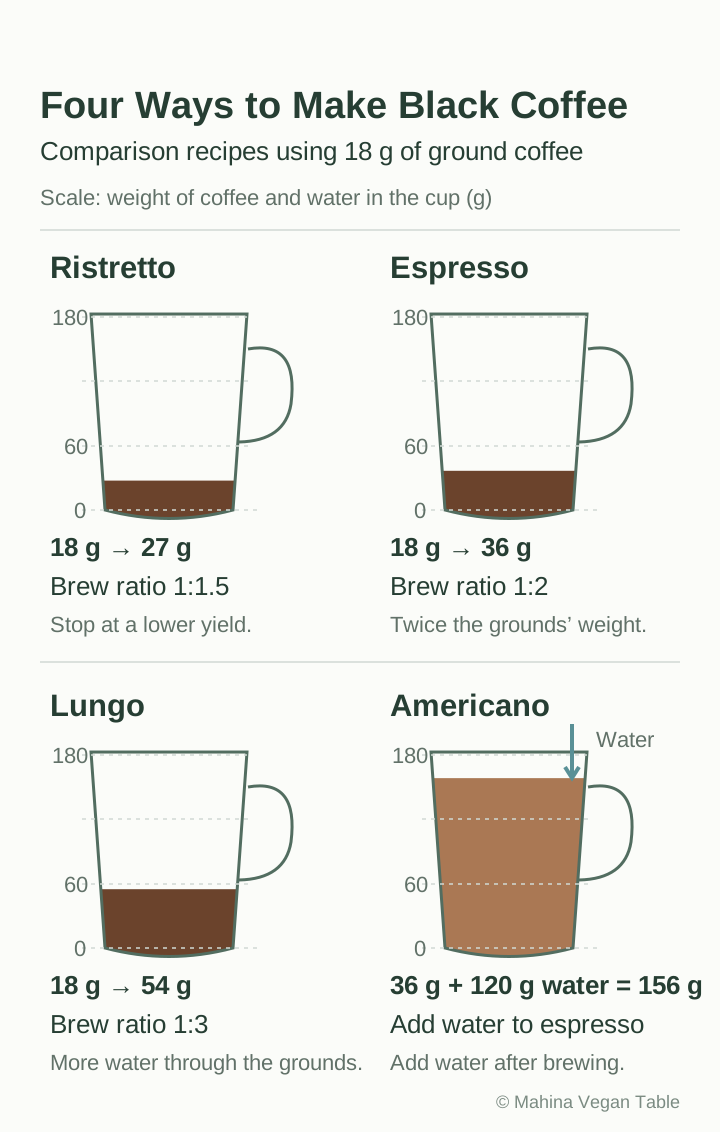
Brew ratio compares the weight of dry coffee with the weight of espresso collected in the cup.
- 18g of coffee producing 27g of espresso gives a ratio of 1:1.5.
- 18g of coffee producing 36g of espresso gives a ratio of 1:2.
- 18g of coffee producing 54g of espresso gives a ratio of 1:3.
In a 2017 survey of 275 baristas, a commonly used recipe was 18–20g of coffee producing 36.5g of espresso, approximately a 1:2 ratio. U.S. baristas made up 76% of respondents.
Single and Double Shots
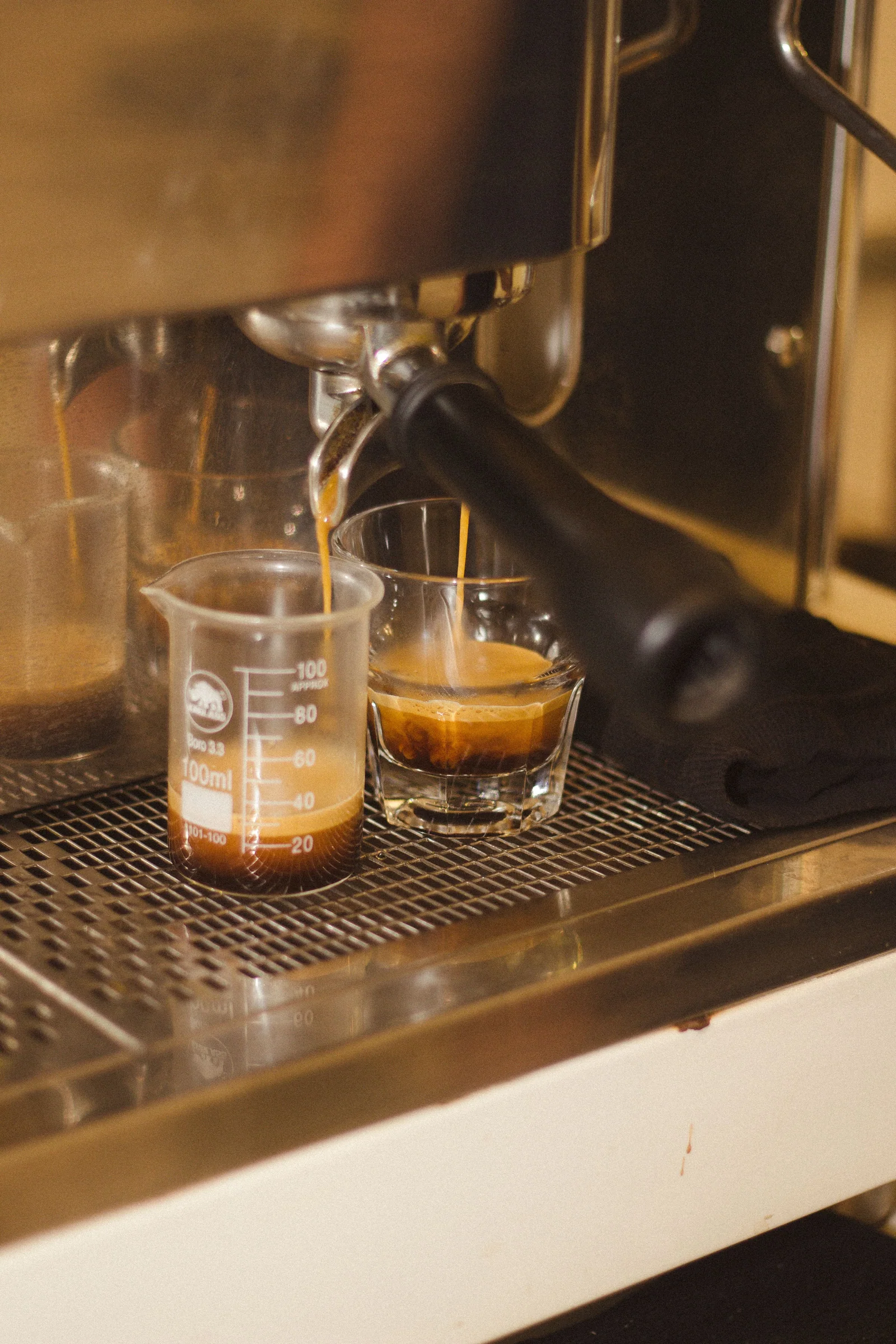
Single and double originated as a distinction between one serving and two. Today, their meanings are not uniform. Some cafés serve the entire output of one double-basket extraction as their standard espresso; others serve the output from one side of a double spout as a single.
Where the entire double-basket output is served in one cup, the standard espresso is already a double shot. Knowing the dose and beverage yield alongside the terms single and double makes serving sizes easier to compare.
A Sequence for Tasting Espresso
Check the Coffee and Recipe
When trying unfamiliar beans, ask whether the serving is a single or double, how much espresso reaches the cup and which coffee is used.
Refresh Your Palate with Water
A little water first can reduce lingering flavors from food or other drinks, making the espresso's aroma and flavor easier to assess. Use water as needed when comparing tastes.
Smell the Aroma and Let It Cool
When the cup arrives, first smell the aroma rising from its surface. Do not rush if it is too hot. As the temperature falls, the balance of sweetness, acidity, bitterness and aroma can change. Taste it hot, slightly cooled and cooler still to follow the changes within one cup.
Stir Gently to Even Out the Concentration
Freshly extracted espresso may not have an even concentration from top to bottom. Reach the bottom with a spoon and stir gently two or three times to reduce differences between the first and last sips. To experience the crema's texture separately, take a sip before stirring, then compare after mixing.
Crema volume and persistence depend on coffee species, roast level, freshness, grind and extraction conditions. Evaluate not just the foam on the surface but also the balance and texture you experience when drinking.
Take Small Sips to Explore Texture and Finish
Focus on aroma and mouthfeel in the first sip, then consider the balance of sweetness, acidity and bitterness. Taking your time over several sips reveals how the flavor changes as the temperature falls and what lingers afterward.
Add Sugar or Plant-Based Milk to Taste
Tasting the espresso unadorned first makes its own balance easier to appreciate. You can then add sugar or plant-based milk and compare which flavors soften and which aromas become more noticeable.
Black Espresso Drinks
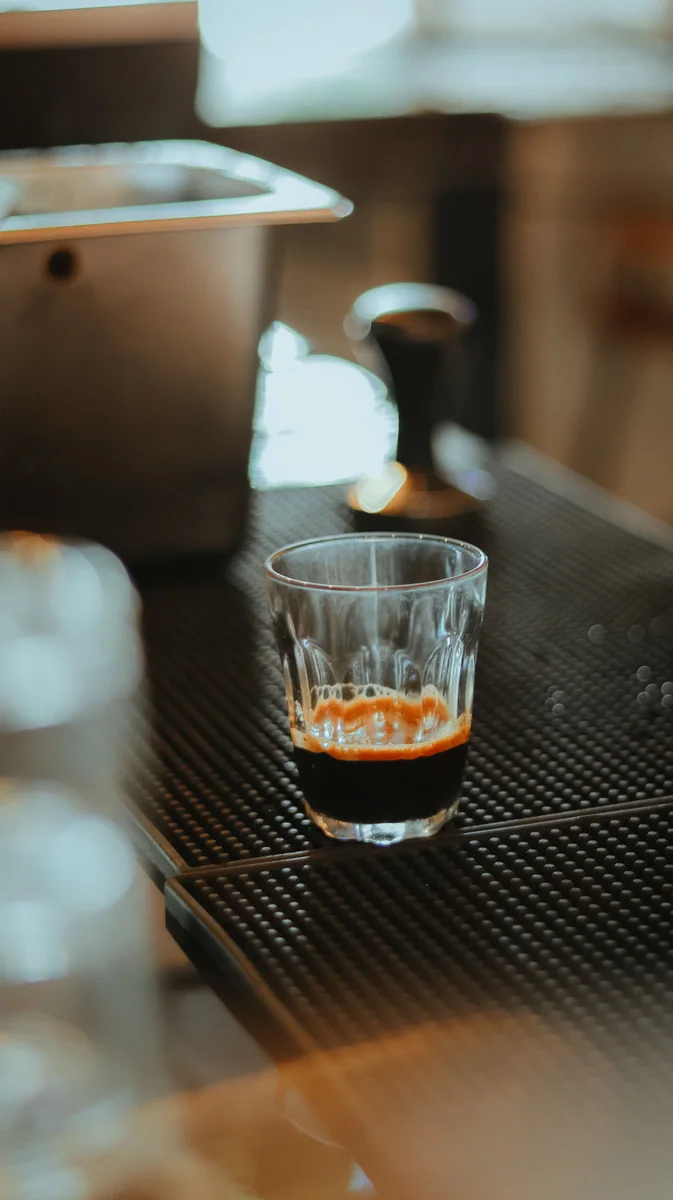
Black coffee's strength and volume can be changed by adjusting extraction yield or adding water afterward. Ordering terms also vary by region.
| Drink | Common Composition | What Varies by Café |
|---|---|---|
| Espresso | Concentrated coffee extracted briefly under pressure | Dose, yield and whether it is a single or double |
| Café Solo | Black espresso ordered in Spanish-speaking regions | Cup size and shot count by country and region |
| Doppio | Double espresso | Whether it combines two singles or is the full output of one double basket |
| Ristretto | A shorter extraction with a smaller yield from a similar coffee dose | Whether grind size changes too, and the ratio at which extraction stops |
| Normale | The café's standard-length espresso | The house dose and yield |
| Lungo | A longer extraction that passes more water through the coffee bed than espresso | Yield and extraction time |
| Caffè Crema | A long coffee served in a larger cup in German-speaking and Central European regions, among others | Whether it uses a long extraction or water added afterward |
| Bica / Cimbalino | Terms used to order espresso in Portugal | Regional differences in yield and extraction time |
| Abatanado | A Portuguese term for the same coffee dose served in a larger cup | Whether more water passes through the grounds or is added afterward |
| Café Allongé | A term for a longer coffee in French-speaking regions | Whether it is a longer extraction or diluted with water |
| Kleiner / Großer Schwarzer | Viennese single or double black espresso | Extraction length and the scope of the term Mokka |
| Verlängerter | A Viennese espresso with added hot water | Water quantity and accompaniments |
| Cafecito / Café Cubano | Strong Cuban-style coffee with sugar | Espresso machine or moka pot, and sweetness |
| Colada | A Miami-style order of around 4–6 shots of sweetened coffee shared in small cups | Actual shot count and number of people sharing |
| Americano | Espresso with added hot water | Shot count, water quantity and pouring order |
| Long Black | An Australian and New Zealand drink made by pouring espresso onto hot water | Shot count and finished volume |
| Short Black | Espresso on Australian menus | Whether the standard serving is a single or double |
Modern cafés often describe ristretto as roughly 1:1–1:1.5 and regular espresso as 1:1.5–1:2.5, although the ratios used vary by café.
Americano and Long Black Compared
Both can be made from espresso and water. An americano usually adds water to espresso, while a long black pours espresso onto hot water. Differences in water quantity, shot count, pouring order and mixing change both concentration and surface crema.
The strength of a long black or americano depends on shot count and water quantity. A double shot with 120g of water has a different concentration from a single shot with 200g of water.
Espresso Drinks with Plant-Based Milk
Many drinks, including lattes and cappuccinos, traditionally use dairy milk or cream. Vegan cafés replace them with plant-based milks such as oat, soy or almond, and plant-based cream. Even with the same espresso shot, its prominence changes substantially between a 90mL and a 350mL drink, or between a thin layer of foam and a generous one.
Microfoam has a fine, smooth texture with minimal large bubbles. Different plant-based milks produce different foam and sweetness, so consider the milk used as well as the drink's name.

| Drink | Basic Composition | What to Check in a Plant-Based Version |
|---|---|---|
| Espresso Macchiato | Espresso with a small amount of warmed plant-based milk or foam | Whether liquid milk, foam or both are added |
| Latte Macchiato | Espresso added to a larger quantity of warm plant-based milk | Type of plant-based milk, cup size and shot count |
| Cortado | A small drink combining espresso with a little warm plant-based milk | Actual ratio and type of plant-based milk |
| Gibraltar | Espresso and warmed plant-based milk in a small glass | How it differs from a cortado, and glass size |
| Piccolo Latte | Espresso or ristretto with a small amount of warmed plant-based milk | Cup size and standard shot count |
| Flat White | Espresso with thin, smooth foam | Single or double, cup size and foam depth |
| Cappuccino | Espresso, warmed milk and a relatively generous layer of foam | Type of plant-based milk and actual finished volume |
| Caffè Latte | Espresso with a larger quantity of warmed plant-based milk and a thin layer of foam | Shot count and total volume |
| Café au Lait | Coffee with warm plant-based milk | Whether the base is espresso or filter coffee |
| Mocha / Mocaccino | Espresso with chocolate and warmed plant-based milk | Whether the chocolate and toppings are also plant-based, and the sugar content |
| Marocchino | Espresso, foam and cocoa or chocolate in a small glass | Ingredients in the chocolate and foam |
| Café Noisette | A French term for espresso with a little warm milk | Plant-based milk quantity and whether flavored syrup is included |
| Café Crème | Traditionally coffee with cream or dairy milk | Whether plant-based cream or milk can be substituted |
| Garoto / Pingo | Portuguese coffee with warmed plant-based milk in a small cup | Plant-based milk quantity and temperature |
| Meia-de-Leite | A Portuguese coffee drink served in a larger cup | The actual ratio of coffee to plant-based milk |
| Galão | A Portuguese coffee drink served in a tall glass | The proportion of plant-based milk and foam |
| Wiener Melange | A slightly extended coffee with warm plant-based milk and foam | Quantities of water, plant-based milk and foam |
| Kleiner / Großer Brauner | A Viennese black coffee accompanied by cream or milk | Whether plant-based cream or milk can be served separately |
| Kapuziner | Traditionally Viennese coffee with a little cream | Whether plant-based cream can be substituted |
| Franziskaner | Traditionally Viennese coffee with water, dairy milk and whipped cream | Whether both dairy ingredients are replaced with plant-based versions |
| Cortadito | Strong sweetened coffee with a little warmed plant-based milk | Whether sugar is standard, and the amount of plant-based milk |
| Café con Leche | Coffee with warmed plant-based milk in Spanish-speaking regions | Regional differences in the coffee base and finished volume |
Flat White and Latte Compared
A flat white is usually served in a smaller cup than a latte, with a higher proportion of coffee and a thin, smooth layer of foam. Actual cup sizes range from 150–240mL, and the standard shot may be single or double. Comparing shot count, cup size and foam depth within the same café makes the distinction clearer.
Coffee, Plant-Based Milk and Foam in a Cappuccino
The familiar description of one-third espresso, one-third warmed plant-based milk and one-third foam makes the components easy to understand, but actual recipes are more varied. Cup size, milk texture and foam depth change the coffee's strength and mouthfeel.
Espresso Macchiato and Latte Macchiato Compared
An espresso macchiato adds a little warmed plant-based milk or foam to espresso. A latte macchiato adds espresso to a larger quantity of plant-based milk. The names are similar, but the principal ingredient and relative amounts are almost reversed.
The Name and Ingredients of Café Noisette
Café noisette is a French espresso drink with a small amount of warm dairy milk. A vegan version uses plant-based milk. “Noisette” means hazelnut in French. Some cafés also use this name for a drink with flavored syrup, so check the ingredients if you have a nut allergy.
Iced Drinks, Desserts and Alcoholic Coffee Drinks
| Drink | Possible Plant-Based Composition | What to Check |
|---|---|---|
| Espresso con Panna | Espresso topped with plant-based whipped cream | Cream ingredients, sugar and stabilizers |
| Café Viennois | Coffee topped with plant-based whipped cream | Coffee brewing method and cup size |
| Affogato | Espresso poured over plant-based gelato or ice cream | Whether eggs or dairy are used, and any nut ingredients |
| Shakerato | Espresso shaken with ice to create foam | Whether sugar or syrup is standard |
| Iced Espresso | Espresso with ice | Whether it is brewed directly onto ice or cooled before pouring |
| Iced Americano | Espresso with water and ice | Shot count and finished volume |
| Iced Latte | Espresso with cold plant-based milk and ice | Type of plant-based milk and whether sugar is added |
| Freddo Espresso | A Greek drink made by mixing espresso with ice to chill it | Shot count and sweetness |
| Freddo Cappuccino | Chilled espresso topped with cold-frothed plant-based milk | Type of plant-based milk and sweetness |
| Greek Frappé | Instant coffee, cold water and ice shaken to create foam | It is not espresso; check whether sugar or plant-based milk is added |
| Espresso Tonic | Espresso with tonic water and ice | Sugar and quinine in the tonic, and pouring order |
| Caffè Leccese | Espresso or moka-pot coffee with ice and an almond beverage | Sugar and nut allergies |
| Barraquito / Zaperoco | A combination of plant-based milk, plant-based condensed milk, liqueur, lemon and cinnamon | Regional naming and whether alcohol is included |
| Einspänner | Strong coffee topped generously with plant-based whipped cream | Whether water is added, shot count and the cream's sugar content |
| Fiaker | A Viennese double espresso with sugar and a spirit | Type and strength of alcohol, and whether cream is included |
| Caffè Corretto | Espresso with a small amount of a spirit | Type and quantity of alcohol |
| Irish Coffee | Coffee with Irish whiskey, sugar and plant-based cream | Usually considered a coffee cocktail rather than an espresso drink |
Ordering Coffee in Different Countries and Cities
Even within one country, recipes vary between cities, generations and traditional or modern cafés. The plant-based milks and creams in the tables describe vegan adaptations of traditional drinks.
| Region | Names You May Encounter | How the Drinks Differ | What to Check |
|---|---|---|---|
| Italy | espresso, ristretto, lungo, macchiato, corretto | Extraction length, foam or alcohol | Shot count, plant-based milk availability and type of alcohol |
| Australia and New Zealand | short black, long black, flat white, piccolo | Shot count, water-pouring order, plant-based milk and foam | Shot count, cup size and plant-based milk |
| Portugal | bica, cimbalino, abatanado, garoto, meia-de-leite, galão | Regional terms, cup size and plant-based milk quantity | Espresso yield and finished beverage volume |
| France | expresso, allongé, noisette, crème | Long black coffee, or small or large additions of plant-based milk | Long extraction or added water, plant-based milk and flavored syrups |
| Spain and the Canary Islands | solo, cortado, leche y leche, barraquito, zaperoco | Plant-based milk, plant-based condensed milk, liqueurs and spices | Whether both milk ingredients are plant-based and alcohol is standard |
| Greece | freddo espresso, freddo cappuccino, frappé | Chilled espresso versus instant coffee | Sweetness, plant-based milk and coffee base |
| Miami's Cuban Coffee Culture | cafecito, colada, cortadito, café con leche | Sweetened coffee, sharing size and plant-based milk | Sugar, number of people sharing and plant-based milk quantity |
| Vienna and Austria | Schwarzer, Brauner, Verlängerter, Melange, Einspänner, Fiaker | Shot count, water, foam, cream and alcohol | Plant-based ingredients and actual quantities |
| Modern Korean Cafés | Americano, latte, flat white, Einspänner | Recipes and serving sizes vary between cafés even under the same name | Standard shots, cup volume, sugar and toppings |
Italy
Italy has both espresso made to traditional certification standards and the varied recipes of modern cafés. Ristretto is short and concentrated; lungo passes more water through the grounds than a standard espresso. Macchiato traditionally adds a little dairy milk, while corretto adds a little liqueur. A vegan macchiato can follow the same composition with a small amount of plant-based milk or foam.
Drinking customs also vary by city and occasion: a quick morning coffee taken standing, cappuccino with focaccia, or espresso accompanied by water are among the many examples.
When ordering, ask whether the standard espresso is a single, which ratio is used for ristretto and which spirit goes into the corretto.
Australia and New Zealand
Short black is widely understood as espresso, while long black is espresso poured onto hot water. Piccolo combines espresso and warmed milk in a small glass; flat white adds fine, thin foam. Vegan versions use plant-based milk. Australian descriptions sometimes specify a single shot for a flat white, while New Zealand descriptions sometimes specify a double.
The flat white is closely associated with the coffee cultures of Australia and New Zealand. Both countries have claimed its origin, and today it is widely enjoyed as espresso with a thin layer of fine-textured foam.
Australian cappuccinos sometimes have a dusting of cocoa. Checking the cocoa or chocolate powder for animal-derived ingredients helps ensure the drink is vegan.
Portugal
In Portugal, espresso is often called bica. Bica is associated mainly with Lisbon and the south, and cimbalino with Porto, although actual ordering terms overlap by region and café.
Garoto combines coffee and warm milk in a small cup, meia-de-leite in a larger cup and galão in a tall glass. Vegan versions substitute plant-based milk. Abatanado refers to the same coffee dose served in a larger cup.
The story that bica originated as an acronym for a Portuguese phrase meaning “drink it with sugar” is not an established etymology.
France
In French-speaking regions, allongé refers to a longer black coffee, and noisette to coffee with a small amount of warm milk. Traditional café crème can contain cream or dairy milk, so check whether a plant-based version is available. Some cafés equate allongé with americano and noisette with macchiato on their menus.
Café viennois refers to coffee with whipped cream. For a vegan order, check that the whipped cream is plant-based. You can also ask whether an allongé is a longer extraction or diluted with water, and which plant-based milk or cream is used in noisette and crème.
Spain and the Canary Islands
Café solo, cortado and café con leche appear in many Spanish-speaking regions. In La Palma, solo is described as espresso, cortado natural as coffee with a little dairy milk, and leche y leche as coffee with both dairy milk and condensed milk. For vegan versions, check that cortado uses plant-based milk and leche y leche uses both plant-based milk and plant-based condensed milk.
Tenerife's barraquito traditionally layers condensed milk, liqueur, coffee, dairy milk and foam, lemon and cinnamon. A vegan version needs both plant-based condensed milk and plant-based milk. The names zaperoco, barraquito especial and barraquito can refer to different compositions, so also check for liqueur and alcohol.
Greece
Freddo espresso mixes espresso with ice and is served in a tall glass. Freddo cappuccino adds cold foam, made with plant-based milk for a vegan version. It is different from simply pouring a hot cappuccino over ice.
Greek frappé is made by shaking instant coffee and cold water into foam, then adding ice. Ask whether sugar or plant-based milk is included. Its coffee base differs from freddo espresso. Traditional Greek coffee, boiled in a small pot, is another distinct preparation.
Cuba and Miami
Miami's Cuban coffee culture includes strong coffee with sugar and drinks shared among several people in small cups.
- Cafecito or café cubano serves strong coffee and sugar in a small cup.
- Colada usually serves approximately 4–6 shots with small cups for sharing.
- Cortadito adds a little warmed milk to sweetened coffee. A vegan version uses plant-based milk.
- Café con leche combines strong coffee and warmed milk. For a vegan order, check whether plant-based milk can be substituted.
These coffees can be made with an espresso machine or a stovetop moka pot. Miami's small service windows, called ventanitas, are places both to order coffee and to meet people.
Vienna and Austria
Viennese coffeehouse culture was added to Austria's national inventory of intangible cultural heritage in 2011. Sitting at marble tables to read newspapers, lingering and meeting people remain part of the coffeehouse tradition.
Kleiner Schwarzer or Kleiner Mokka denotes a single espresso; Großer Schwarzer or Großer Mokka a double. Verlängerter adds hot water to espresso. Kapuziner and Franziskaner traditionally use cream or dairy milk, so vegan orders require checking for plant-based substitutions. Fiaker may include double espresso, sugar and a spirit such as slivovitz or rum.
Melange commonly adds warmed milk and foam to a slightly extended strong coffee; Einspänner tops strong coffee with whipped cream. Quantities of water, coffee and foam vary by café. For vegan versions, check that the milk and whipped cream are plant-based.
Modern Korean Cafés
Korean cafés widely use names such as americano, latte, flat white and Einspänner. Recipes and serving sizes differ between cafés even for drinks with the same name. Checking standard shot count, cup size and the inclusion of syrup or cream makes choosing easier. For vegan drinks, review the ingredients of both the plant-based milk and toppings.
Distinguishing Similar Drinks
| Similar-Looking Group | Shared Features | What the Name Alone Does Not Tell You | What to Ask When Ordering |
|---|---|---|---|
| espresso · café solo · bica · cimbalino · short black · Kleiner Schwarzer | Small black espresso drinks | Regional terminology, single or double and yield | How many g of coffee are used and how many g are produced |
| cafecito · café cubano and other black coffees | Small, strong black coffee | Sugar and brewing equipment | Whether sugar is already included, and whether a machine or moka pot is used |
| macchiato · noisette · cortado · garoto · Brauner · cortadito | Strong coffee with a little warmed plant-based milk | Milk quantity, foam and standard sweetening | Type of plant-based milk and whether sugar is standard |
| americano · long black · allongé · abatanado · Verlängerter · lungo · caffè crema | Black coffee larger than a standard espresso | Long extraction, added water, pouring order and shot count | Whether water passes through the grounds or is added afterward |
| latte · flat white · café crème · café au lait · galão · meia-de-leite · Melange | Coffee with a relatively large quantity of warmed plant-based milk | Coffee base, cup size and foam | Shot count, plant-based milk and total volume |
| con panna · café viennois · Einspänner | Coffee and whipped cream | Water, shot count and sugar in the cream | Whether the cream is plant-based, and the amounts of coffee, water and cream |
| iced coffee · freddo espresso · freddo cappuccino · frappé | Cold drinks that may have foam | Espresso or instant coffee, plant-based milk and sugar | Which coffee and plant-based milk are used |
| caffè corretto · Fiaker · barraquito | Coffee that may contain alcohol | Alcohol, sweetened concentrated milk or cream, and sugar | Type and quantity of alcohol, and whether every ingredient is plant-based |
Ordering Phrases That Express Your Preferences
You can describe your preferred coffee quantity, strength, foam texture and sweetness with phrases like these.
- “How many grams of coffee do you use for your standard espresso, and what is the approximate yield?”
- “Is the standard shot a single or a double?”
- “How much hot water is added?”
- “Could you recommend a small drink with little plant-based milk and a distinct espresso flavor?”
- “I'd prefer a thin, smooth texture rather than thick foam.”
- “Does it normally include syrup or chocolate?”
- “Is the plant-based milk you use unsweetened?”
- “Do you handle nuts, soy and dairy with the same equipment? I'd like to check because I have an allergy.”
- “Can it be made decaf?”
Decaf and Caffeine
Total caffeine per cup depends on coffee species, dose, grind and extraction conditions. Cup size and perceived strength alone do not reliably indicate caffeine content.
Decaf is not completely caffeine-free, and the amount remaining varies with the coffee and brewing method. If you must strictly limit caffeine for health reasons, ask whether testing data for the beans is available and follow medical advice.
Ordering Vegan Espresso Drinks
Drinks containing only espresso and water have the simplest ingredient lists. For drinks with additional ingredients, such as lattes, mochas and affogatos, check in the following order.
- Confirm that plant-based milk is used.
- Check that chocolate, caramel, syrup, whipped cream and gelato are also plant-based.
- Check for toppings containing honey or animal-derived additives.
- If you do not want sweetness, ask whether the plant-based milk and syrups are sweetened.
- If you have a severe allergy to soy, nuts, gluten or other ingredients, ask whether steam pitchers, spoons and blenders are shared.
Ordering may be simpler in a dedicated vegan café, but people with severe allergies should still check ingredients and equipment separately.
Frequently Asked Questions
Do I have to drink espresso in one go?
No. There is a custom of drinking it quickly to experience its aroma and texture over a short period, but waiting is safer if it is too hot. Following the changes in aroma and flavor as it cools is also a good way to enjoy it.
Should I skim off the crema or stir it in?
It depends on what you want to explore. To reduce concentration differences between the first and last sips, stir gently down to the bottom. To experience the crema's aroma and texture separately, compare before and after stirring. A large amount of crema alone does not make a good shot.
Does ristretto contain less caffeine than lungo?
The name alone does not tell you. Ending extraction earlier with the same dose may change the total caffeine extracted, but changes to beans, dose, grind and time also change the result. Exact content requires testing.
How does a flat white differ from a latte?
A flat white generally comes in a smaller cup than a latte, has a higher proportion of coffee and features thin, even foam. Comparing shot count and cup size within the same café makes the difference clearer.
Is café au lait the same as caffè latte?
Both combine coffee and warmed plant-based milk, but café au lait may use filter or French-press coffee. Caffè latte usually has an espresso base. Even when ordered plant-based, the coffee base and milk quantity can differ.
Are cortado and cortadito the same?
Both can combine strong coffee with a little warmed plant-based milk. Miami-style cortadito often uses sweetened strong coffee, while cortado elsewhere may be unsweetened. Check both the plant-based milk and standard sugar when ordering.
What exactly is an Einspänner?
It generally tops strong coffee with a generous amount of whipped cream, but shot count, water and cream sweetness vary by café. A vegan Einspänner uses plant-based whipped cream, and Korean cafés offer various coffee-to-cream proportions.
Is a colada an espresso for one person?
In Miami, a colada is approximately 4–6 shots of sweetened coffee served with small cups to share with family or friends. Actual volume and sweetness vary by café, so check the total shot count and how many people will share.
Does switching to plant-based milk make a drink vegan?
Drinks containing only espresso and milk, such as a latte, can be made vegan with plant-based milk. For mocha, affogato or Einspänner, also check the chocolate, gelato and whipped cream. If you have allergies, ask about the equipment used as well.
Is decaf completely caffeine-free?
No. A small amount usually remains. The exact number of mg in a particular cup cannot be established without testing that coffee with the actual recipe.
Espresso and Vegan Affogato at Mahina
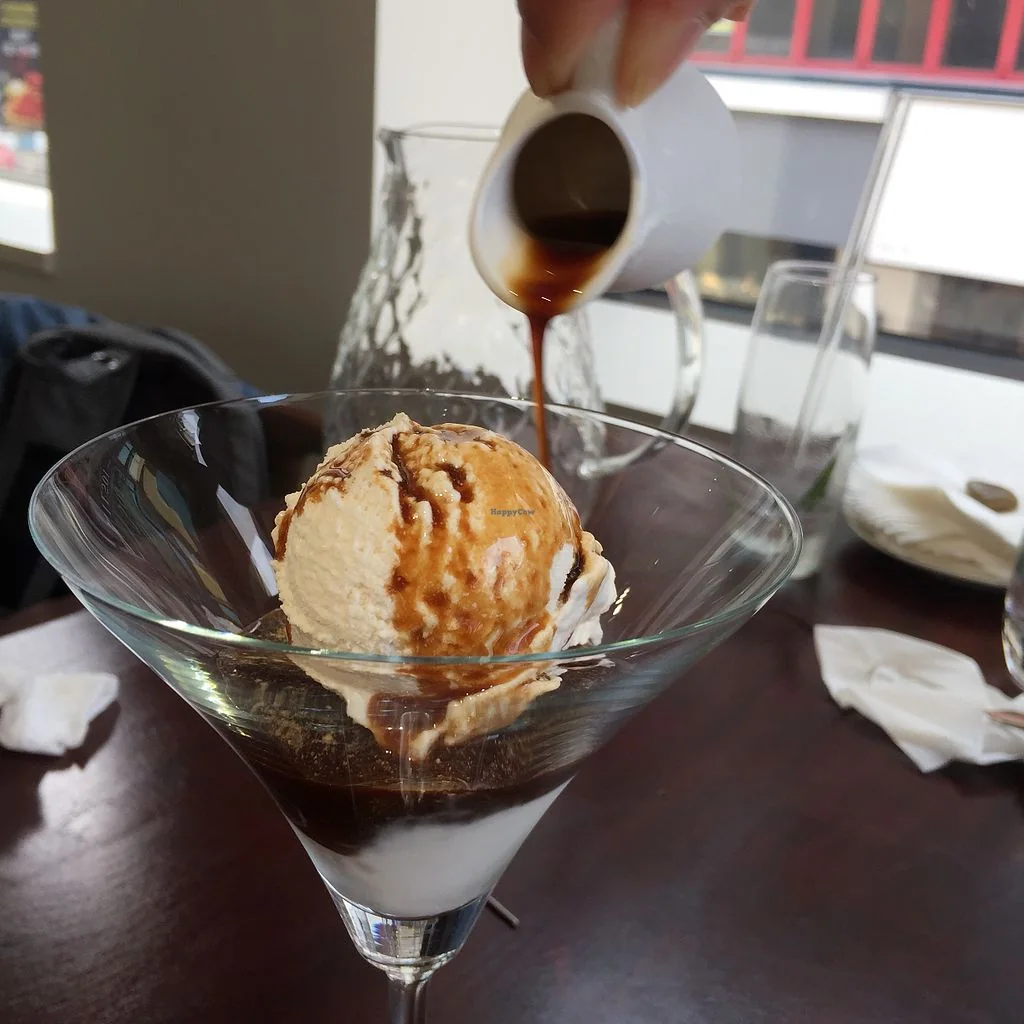
Mahina's espresso uses a blend containing 1% Hawaiian Kona coffee. Enjoy it on its own in a small cup, or poured over plant-based ice cream as a vegan affogato. In an affogato, hot coffee and cold ice cream come together, changing in temperature and texture as they mingle.
For a leisurely exploration of Kona's aroma and flavor, you can also enjoy a 100% Hawaiian Kona single-origin pour-over.